New-age Web automation software uses the infusion of AI and codeless approaches to improve Web testing processes. As a result, these capabilities revolutionize software development as we know it. Due to the rise in popularity of these tools, 70% of enterprises are expected to actively use AI-augmented testing by 2025.
Today’s no code software testing tools guarantee comprehensive and easily scalable test coverage for all your Web application functionality requirements. Consistent and reliable test results across the SDLC is a USP of testing solutions like Qyrus’ Web automation software. Its centralized testing architecture facilitates agile development and corrective action in real-time.
Qyrus’ feature-rich UI enables you to seamlessly accelerate Web application testing capabilities. Boost user conversion and retention with the platform’s customizable reporting features.
Based on cloud-native architectures, Qyrus’ software testing solution includes Web browser automation tools that fast-track development initiatives. These integrated browser automation tools also provide added capabilities to improve Web testing across platforms.
In this session of The Qyrus Test-pert, join Anuradha Neeraje and learn how to:
Improve Web testing builds and eliminate manual tests
Consolidate your test scripts for reuse
Formulate predictive bug diagnosis and mitigation
Access real-time metrics and visual test results
Enhance UI testing flexibility with Web automation software
Below this text is an iFrame with a True Random Number Generator.
Swap to the iFrame in order to click the "Generate" button!
Learn how Deep Learning AI, and Machine Learning Models can help you shift left You want to ensure high-quality and bug-free applications. But here’s the struggle: conventional software testing methods are just unable to keep up with the pace at which you’re releasing. You’re potentially facing delayed releases, reduced product quality, and higher costs.
But what if the testing landscape could be transformed into something simpler? What if we used AI and Machine Learning to redefine and refine the parameters of coverage and detection? All of this, and more, is what this blog will talk about, as we explore how AI systems are in high demand, and how they are helping change modern testing landscapes for the better.
Current testing methods have their limitations Delivering high-quality, reliable software is no one man’s feat. It requires efficient collaboration across various teams and processes throughout the testing cycles. These include monitoring the standardization of testing practices, managing distributed test environments, and coordinating efforts among team members located in various locations. Let’s take a deeper dive into some other such challenges:
Application Development is Fragmented When there are hundreds or thousands of applications, usually driven by new acquisitions, they lead to fragmented testing of Agile development. This in turn makes the testing process time-consuming and resource-intensive.
Complex Frameworks make testing time-consuming Code-based testing requires complex frameworks that are time-consuming to maintain, difficult to scale, and challenging to integrate.
Complex Infrastructures Require more In-Depth Testing Due to its complexity, the proliferation of operating systems and devices requires significantly increased testing infrastructure. This leads to higher costs.
Collaborating with Siloed Teams is Difficult When different teams work in isolation from one another, making it difficult to test end-to-end user and customer journeys, especially when dealing with large amounts of data. This also causes communication breakdown, duplication of efforts, and inconsistency in testing.
Inadequate Testing Results Cause Higher Risks Lack of testing expertise, insufficient resources, time constraints, and lack of automation leads to inadequate testing results. This often becomes a challenge for organizations as it causes defects that go unnoticed, performance issues that are not identified, and compliance issues not meet regulatory requirements.
Improving Test Coverage with AI and ML Achieving comprehensive test coverage has been a longstanding challenge in software testing. AI and ML have opened new possibilities to overcome this. According to a recent study by MarketsandMarkets, the global AI in software testing market is expected to reach $1.7 billion by 2025, with a compound annual growth rate (CAGR) of 33.7%. Leading players in this space include Google, Microsoft, IBM, and innovative startups such as Applitools and Functionalize.
Here is how AI and ML tools can help you stay ahead of the curve, especially when you’re working with multiple applications at once:
Accelerate Testing across Web, Mobile, and APIs By automating testing processes, teams can achieve comprehensive test coverage, identify potential issues, and ensure the reliability of their web applications. Through AI and ML-powered web automation tools, large engineering teams are empowered to build, test, and deploy higher quality, error-free web applications faster and more efficiently.
Power Through with Codeless Testing Codeless automation capabilities help enhance application quality and improve speed to market. With codeless automated testing, teams can validate code functionality without the need for extensive manual coding. This streamlined approach saves time and effort while ensuring the reliability and security of the software and its integrations.
AI-backed Automated Testing Leveraging AI and ML tools to provide advanced capabilities for test automation through harnessing AI algorithms, teams automatically identify and fix test scripts, comprehensively test mobile applications, and analyze test data. These AI-driven features improve application quality, increase efficiency, and reduce time to market, ensuring reliable and high-performing software.
Reduce Costs of Manual testing The increased adoption of AI and ML in software testing brings promising cost-saving opportunities. By automating repetitive and time-consuming tasks, organizations can optimize their testing efforts, reduce the need for extensive manual testing, and speed up the overall testing process
Overall, these accelerated testing processes powered by AI and ML tools allow for faster time-to-market and increased productivity.
Shifting Left with AI Software Testing Shift Left is a practice intended to find and prevent defects early in the software delivery process. The idea is to improve quality by moving tasks to the left as early in the lifecycle as possible.
With AI and ML projects in the picture, software testing, and shifting left, is transforming software testing, enabling organizations to achieve comprehensive test coverage and detect defects early in the software development life cycle. With industry leaders like Google, Microsoft, and IBM investing in AI-powered testing solutions, the market is poised for exponential growth.
Comprehensive test automation solutions powered by AI and ML provide global engineering teams with the tools they need to ship more reliable software. The power of AI and ML when combined with Quality Assurance, Centralized Reporting, Deep Machine Learning Models, System Intelligence, and Seamless Integrations will truly redefine software testing processes for the better. Qyrus is at the forefront of the shift towards AI and ML-powered software testing. With its innovative platform, and patented AI Algorithms to build its all-in-one testing platform. In fact, here are some patented Qyrus features used by global engineering teams every day to test software faster:
Automated Test Maintenance with Healer Qyrus’ antidote for test flakiness, brittleness, and fragmentation, Healer is a lifesaver for testers. It reduces efforts in areas like script maintenance with its self-healing capabilities. Healer utilizes AI to detect test step changes and perform automatic script corrections. It reduces script rebuilding efforts in case of UI changes or redevelopment initiatives. This eliminates situations like manual object identification and determination of locator values in case of “object not found” errors.
Exploratory Testing with Rover Rover is a cutting-edge autonomous testing solution that uses deep reinforcement learning to generate intelligent tests, eliminating the need for human involvement. It operates as a fully automated black-box testing solution, requiring only your application. Rover generates and executes real-time test inputs effortlessly, without relying on an expert tester to determine testing scope, timing, or inputs. It represents a groundbreaking advancement in testing.
AI-Based Conversational Interface Testing with BotMetrics Qyrus’ BotMetrics is a Conversational BOT Testing Platform, an AI that tests an AI. It provides users (“a chatbot developer”) the ability to test their bot in a highly automated and regressive manner. BotMetrics provides AI capabilities specifically tailored for testing AI-based conversational interfaces. With BotMetrics, companies can efficiently validate and enhance the quality of their AI-driven conversational interfaces without the need for exclusive test script development.
Natural Language Test Building with QyrusBot QyrusBot, a powerful tool offered by Qyrus, enables natural language test building. Testers can write or speak their test cases, streamlining the test creation process and enhancing productivity.
If you would like to streamline the software testing processes powered by AI and ML to see significant improvement in software development outcomes and produce high-quality code, try Qyrus for free now.
We’re excited to present this week’s Feature Friday, where we unravel the transformative power of Qloudbridge in the realm of software testing. Qyrus, the driving force behind cutting-edge testing solutions, has expanded its offerings to include desktop application testing through Qloudbridge. In this edition, we’ll delve into the seamless integration, effortless script creation, and improved testing experience that Qloudbridge brings to testers, developers, and business technologists alike.
Amy: Qloudbridge is Qyrus’ testing brought to the desktop! Now, users can perform desktop application testing right on their own machines! No longer is desktop application testing segregated from the world of codeless automated testing. Qyrus is bringing the testing to you!
Jorell: With the help of QSpy, testers can find locator values for the desktop application testing. Testers don’t have to have the values before the test creation, and the creation of these scripts is just as easy as on our cloud-based platform.
What is Qloudbridge’s overall impact on the testing process?
Amy: Well, desktop-based testing is something that our clients and prospects have been constantly asking for. Qyrus already offers the ability to test web and mobile applications alongside APIs, but desktop testing was a hole in our defenses in a way.
Jorell: Now with the addition of Qloudbridge, we will see improvements in all aspects of testing when it comes to testing desktop applications. Users can build tests quicker, execute them in a better fashion, and receive comprehensive and robust reports.
How might Qloudbridge help testers, developers, and business technologists? What value can this feature bring?
Jorell: Testers are able to now quickly test desktop applications just like they are able to test their web and mobile applications! And when it comes to developers, that means that they get better and more timely feedback on their desktop applications under development. If some bug exists, it can be caught much quicker.
Amy: Testing web and mobile applications can be hard enough, but without a platform like Qyrus to test those applications, it would be undoubtedly harder. That was the case with desktop application testing, as well, that is until we released Qloudbridge. Now, business technologists can even take the testing into their own hands using our intuitive platform!
Does the same or similar functionality exist without Qyrus, and how do competitors address similar problems?
Amy: Desktop testing exists out there, but nothing quite as comprehensive as Qyrus! We are the all-in-one platform and one-stop shop for all your testing needs! That means that we can not only help you with your web and mobile application testing but also with your desktop now! And it’s all centrally located on one platform.
How do you see Qloudbridge impacting day-to-day operations across organizations?
Jorell: The speed at which testers are able to build and execute these tests for their desktop applications is unparalleled to what it most likely was previously. Now, with things being so much quicker, testers have more time to focus on other tasks. These could be looking for edge cases and scenarios and expanding test coverage, as well as improving their testing ecosystem overall.
Amy: Furthermore, using Qloudbridge, testers can expand their testing coverage to include business processes that require integrations with desktop-based applications like SAP. And at the end of the day, everything on Qyrus ties together. Whether it’s the web, mobile, or desktop application testing or testing APIs and end-to-end business processes, Qyrus has you covered!
As we conclude this Feature Friday, we have witnessed the immense impact of Qloudbridge on the testing landscape. By bringing desktop application testing to the fingertips of users, Qyrus has addressed a crucial need within the industry. Testers can now build and execute tests faster, developers receive timely feedback, and business technologists gain control over the testing process. Qloudbridge has become an invaluable tool, revolutionizing day-to-day operations across organizations and ensuring comprehensive testing coverage for desktop applications.
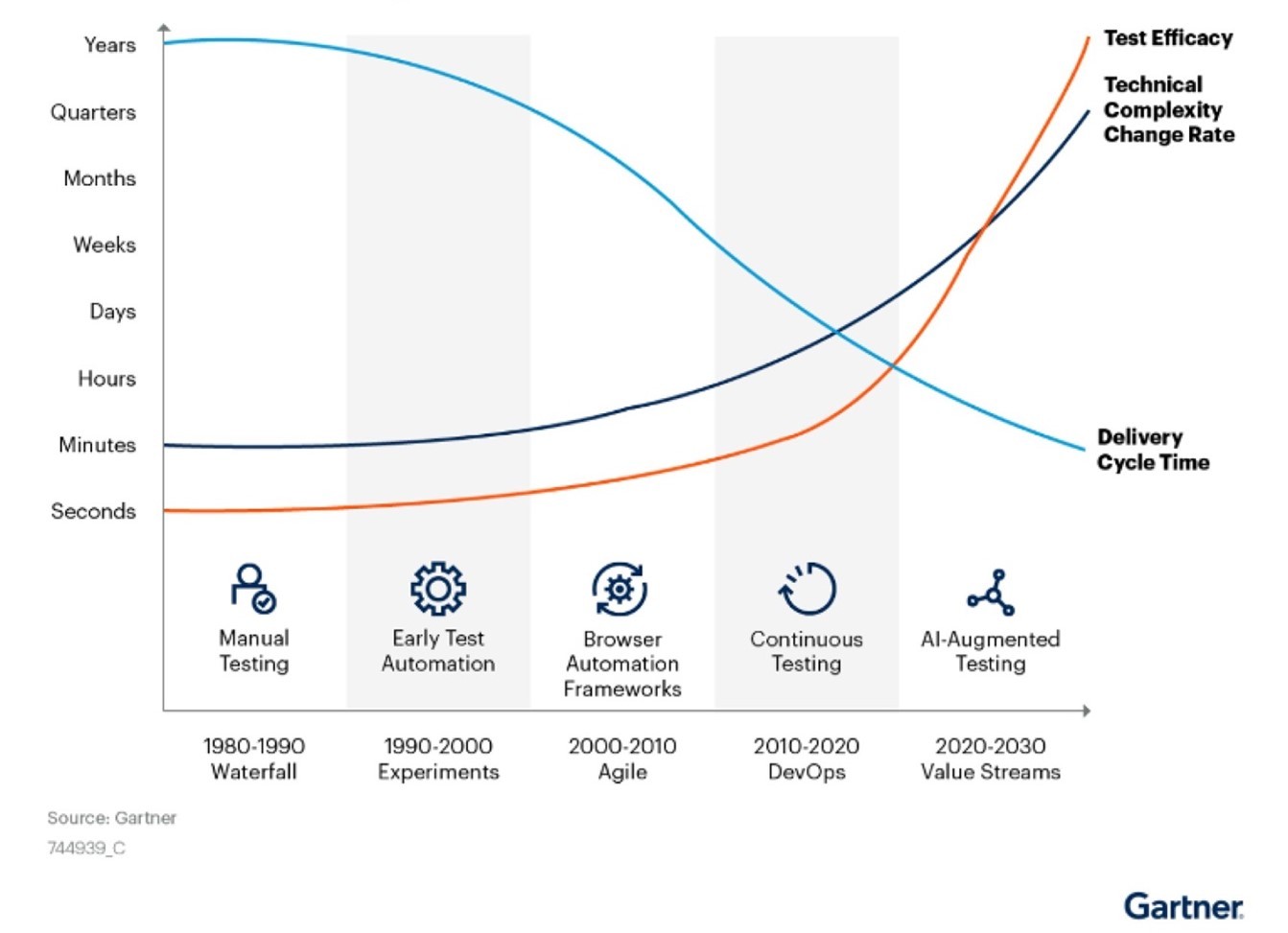
Quality assurance (QA) has come a long way since the manual testing days of the 80s. Today, the use of AI in test automation accelerates QA at a never-before-seen scale. For instance, 30% of developers now leverage AI and machine learning for testing requirements.
Industry research indicates that AI-augmented software testing will be in active use by 70% of enterprises by 2025. This study estimates that businesses that fail to capitalize on AI in test automation by that time might spend twice as much on testing and defect remediation.
Rise of AI in Test Automation Software quality standards are a major driver behind the increase in the adoption of AI test automation tools. An ever-shrinking go-to-market window creates quality issues that hamper digital transformation. Integration of AI in automation testing solutions mitigates such business risks. The use of AI in automation testing spans across Web, mobile, and API test environments. When combined with infrastructure options like device farms, these solutions ensure ideal test outcomes.
Evolution of Software Testing (Source: Gartner)
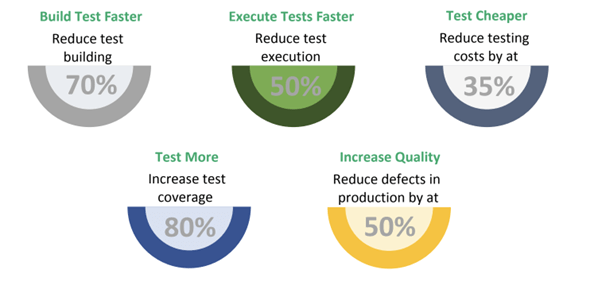
Modern AI-based software testing tools like Qyrus offer the following capabilities:
Advantages of AI in test automation Acceleration of test processes without compromises or manual intervention is the best advantage of using AI-augmented automation. Cost savings are a natural outcome of AI-enabled test automation tools.
Leveraging AI for software testing is a quantum leap compared to older options like browser automation frameworks or continuous testing. These test automation tools can also be leveraged for end-to-end assessment of AI-infused applications.
Considering the complexity of AI-infused applications, AI software testing tools fully automate test building and data generation. These can be executed at scale to account for all use cases.
Rover – Rover is an exceptional, cutting-edge autonomous exploratory testing solution that leverages deep reinforcement learning to generate tests with remarkable intelligence, eliminating the need for human involvement. Representing a groundbreaking advancement in the field of testing, Rover operates as a comprehensive and fully automated black-box testing solution that solely necessitates your application. It effortlessly generates test inputs in real time and executes them seamlessly, without any reliance on an expert tester to determine the scope of testing, the timing, or the necessary inputs.
Healer – Qyrus’ antidote for test flakiness, brittleness, and fragmentation, Healer is a lifesaver for testers. It reduces efforts in areas like script maintenance with its self-healing capabilities. Healer utilizes AI to detect test step changes and perform automatic script corrections. It reduces script rebuilding efforts in case of UI changes or redevelopment initiatives. This eliminates situations like manual object identification and determination of locator values in case of “object not found” errors.
QA potential of Rover and Healer AI-enabled tools like Rover and Healer are ideal for performing comprehensive functional tests without human intervention. The power of AI software brings in the following set of advantages:
Faster, stable UI tests: The significant efforts that go into UI tests affect overall development turnarounds. AI software testing features like Rover use dynamic locators to avoid such delays. It relies on the analysis of how users interact with each element’s attributes to create a real-time list of location tactics. This translates to no more testing failures due to changes in element attributes.
Access user behavior insights: In addition to mapping user journeys across a mobile application, Rover is an ideal solution to visualize navigational flows for the creation of newer tests. Such use cases of AI in test automation are also ideal to capture mobile device performance metrics.
Prevent flaky tests: Many man-hours are spent on failed functionality tests and related troubleshooting – even in software testing automation environments. Self-healing features like Healer use the predictive capabilities of AI in test automation to avoid such issues. Easy availability of deployable locator types and values in case of failure ensures a quick return to base functionality.
Learn from production data: The use of AI in automation testing is ideal to kick off knowledge management initiatives that utilize production data. Qyrus’ rich AI feature set observes and learns from app usage patterns. QA teams can harness this rich knowledge base to design new tests that improve product efficiency.
Improve defect tracking: Errors in test outcomes are common in unobserved test environments. Prevent such instances with the use of AI in test automation. In this case, Healer monitors scripts for errors and initiates timely changes that augment defect-tracking capabilities.
Leverage visual testing: Manual methods of visual Web page validation introduce a high probability of errors. Reliance on AI in automation testing is valuable for such design assessments. The healer is ideal for proactively monitoring application bugs and errors for visual validation. It prevents error-free UI access for users.
Enhance API quality: API tests call for a high degree of expertise and usage of multiple tools. AI test automation tools streamline the massive data analysis requirements associated with API testing. A case in point is the Qyrus platform, which uses a codeless taxonomy-driven interface to make the tester’s life easier and more efficient. The GUI also allows the reuse of functional API tests for the creation of business processes.
Unlock the AI-rich future Dynamically changing application requirements can be major setbacks for conventional test automation environments. The adoption of AI in test automation use cases mitigates such challenges.
Ensure simpler, smarter, and scalable AI software testing capabilities with Qyrus’ comprehensive software test automation platform. Contact us today to discover the rich benefits that AI can bring to your software testing environment.
Welcome to this week’s Feature Friday, where we take a journey through the captivating history of Qyrus. Today, we delve into the roots and inspiration behind the name of this innovative platform, drawing from ancient Greek mythology and the concepts of luck, opportunity, and the perfect moment. Join us as we explore the humble beginnings and the driving force that fuels Qyrus to push the boundaries of software automation testing.
Where does the name “Qyrus” come from?
Tim: Qyrus, a name derived from the ancient Greek words “Caerus” or “Kairos,” holds deep significance in its mythological origins. Caerus was the god of luck and opportunity, embodying the belief in seizing the right moment to achieve success. Likewise, Qyrus seeks to provide businesses with the perfect opportunity to accelerate the growth of their products through software automation testing. We embrace the “spirit” of Caerus, constantly striving to help businesses thrive.
Suraj: The name Qyrus also resonates with the concept of “kairos” in Greek, meaning “the right, critical, or opportune moment.” This idea aligns perfectly with our mission to empower organizations to harness the power of automated software testing in the most impactful way. We understand that the success of a product often hinges on seizing the opportune moment to deliver flawless user experiences and maximize efficiency.
Tim: But beyond that, we also understand the seemingly boundless digital growth that’s coming to the marketplace. Even before COVID, the shift was happening. Now, because of COVID, the shift has been accelerated. Practically everything is at some level digital. Qyrus comes along at the “right” or “opportune” moment to help with this shift.
What has been the driving force behind Qyrus’ innovation?
Tim: From our humble beginnings, Qyrus has always been driven by a passion for pushing the boundaries of automated software testing. We recognized the need for a platform that would enable businesses to overcome testing challenges and optimize their development and release cycles. This ignited a spark within us to create a solution that combines cutting-edge technology with a user-centric approach.
Suraj: And, our platform is no code. Users are not required to have coding knowledge prior to getting started on Qyrus. We are committed to staying at the forefront of the industry, continuously adapting, and evolving to meet the constantly evolving demands of software testing. We firmly believe that by embracing emerging technologies and listening closely to our users’ needs, we can help shape the future of software automation testing.
How has Qyrus transformed the landscape of software automation testing?
Suraj: Qyrus has revolutionized the way businesses approach software automation testing. By providing a comprehensive and intuitive platform, we have empowered organizations to streamline their testing processes, increase efficiency, and deliver higher-quality software products. Our commitment to simplicity, reliability, and continuous improvement has enabled us to build a community of users who trust Qyrus to accelerate their growth and achieve their testing goals.
Tim: With Qyrus, businesses no longer have to navigate the complexities of software automation testing alone. We have created a platform that combines cutting-edge technology with user-friendly interfaces that enable testers, developers, and business technologists to collaborate with one another seamlessly. By being a no-code-focused platform and simplifying the testing process, Qyrus has opened up new possibilities and opportunities for organizations to achieve excellence in their software development lifecycle.
Now you know a little more about the history of Qyrus and its profound connection to ancient Greek mythology. The name “Qyrus” symbolizes the essence of luck and opportunity, encapsulating our mission to provide businesses with the perfect platform to accelerate their growth through software automation testing. Join us next week as we learn more about this amazing platform and its wide array of capabilities and features. Thanks!
User expectations from apps, websites, and their associated brands are at an all-time high. For instance, 79% of your users are unlikely to return if your website performance is subpar.
It is essential to make every micro-moment count!
Smartphone adoption is witnessing a constant rise worldwide. The number of smartphone users grew from 3.6 billion in 2016, to 6.6 billion as of 2022. As per industry projections, we will have 7.6 billion smartphone users worldwide by 2027. If we consider just the U.S. population, these users check their smartphones 352 times every day. That is almost every three minutes. At the same time, over 255 billion mobile app downloads have been made across the world in 2022.
Amid this competition, your app or website has just one shot at making the cut. This is where customer experience and optimal app performance differentiate your role as a tester or developer.
Intelligent testing capabilities significantly improve customer experience. Such capabilities enable business change with lower risk and higher quality levels. This is where testing options like device farms enhance your QA team’s toolkit.
That Elusive CX Factor Today, development and testing teams face stringent release turnaround expectations. User experience is a common casualty of the relentless pressure to introduce new features and updates. Software testing using device farms delivers optimal user experiences in such environments.
Poor software quality is expensive from a financial standpoint as well. Recent estimates indicate that the cost of poor software quality in the U.S. amounts to USD 2.41 Trillion as of 2022. The average cost of an hour’s IT downtime can be around USD 336,00 for businesses. Emerging legislation and industry guidelines will further escalate tangible losses attributable to poor software quality.
Unwavering quality standards and the need to reduce risk are given to software testers. In addition to the ever-increasing shortage of skilled QA professionals, multiple testing challenges hinder such objectives.
On the app and website fronts, the issues that impact customer experience testing includes:
Mobile device fragmentation due to different OS versions
Different screen resolutions
Frequent new device launches
Varying software upgrade cycles
Challenges with early comprehensive testing (in the dev stage)
Mobile application security
Simulation of real user conditions (for example, network bandwidth, permissions testing, or geolocation scenarios)
Different application types (Native and hybrid)
Consistent user experience
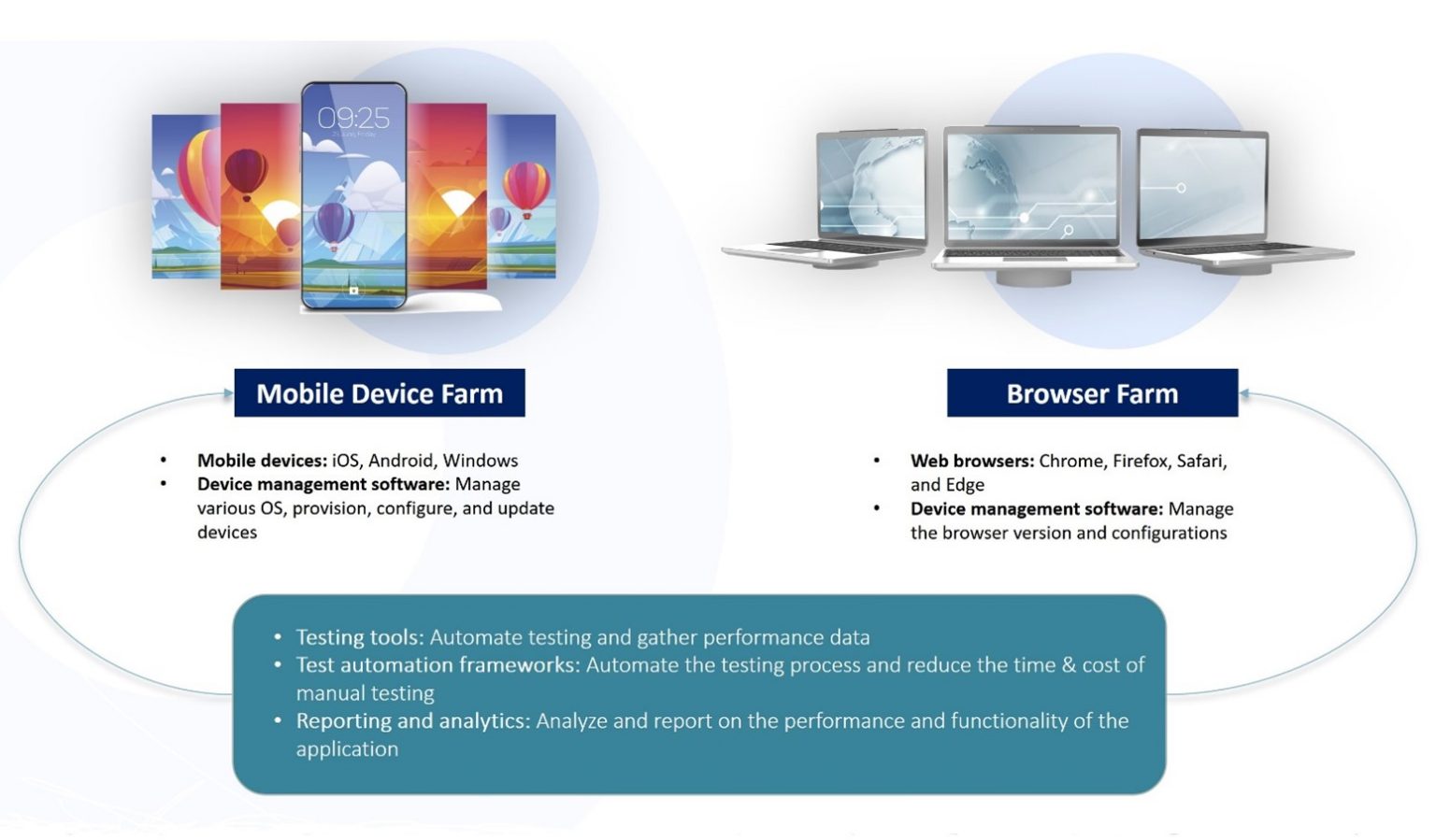
Device farms, aka device clouds, offer a fantastic way to ease app testing requirements. A case in point is the ready access to a live Android device farm for app functionality testing. Such a mobile device farm ensures that CX issues in a proactive manner.
The use of device farm testing for mobile and Web app testing is not a new concept. However, recent developments like AI’s inclusion in the device farm have been a game changer.
Transform CX with Device Farms Dedicated hosting setups like device farms offer substantial advantages – especially when compared to manual and automated testing on device infrastructure environments. It offers possibilities for developers and testers to explore every usage scenario using live devices.
For instance, an Android device farm is ideal to test software consistency across the highly fragmented Android OS. Legacy methods like manual testing are insufficient for testing mobile application functionality at such a scale.
The main challenges associated with manual and automated testing using self-owned device infrastructure are detailed in the following table.
Manual testing challenges in self-owned device infrastructure
Automated testing challenges in self-owned device infrastructure
Cost-heavy and time intensive
Flaky tests and complexity
Probability of human errors and inconsistency
Cost and maintenance issues
Lack of scalability and automation
Limited coverage and integration bottlenecks
Difficult to track, report, and reproduce defects
Test script creation and test data management
Challenges Associated with Manual and Outdated Automated Testing Processes
Device farm testing offers instant access to a wide range of real-world conditions, devices, OS versions, simulators, and emulators for testers. The on-demand nature of these services eliminates issues like maintenance and CAPEX associated with self-owned infrastructure. At the same time, these environments are optimized for highly scalable testing – at a global level. For instance, the option to have a mixed mobile device farm or a dedicated Android device farm that can scale on demand is a boon for software testers.
Many older device farm models suffer from scalability, cost, and reporting functionality constraints. The lack of a seamless user interface aggravates these issues. Insufficient comprehensive test coverage is another setback in legacy device farms. Such deficiencies manifest themselves during customer experience improvement necessities like functional or visual testing requirements.
The AI Advantage Next-generation device farms like Qyrus Device Infrastructure address the limitations of other approaches in an end-to-end manner. Our AI-powered device farm testing service uses a three-pillared design philosophy – those of power, performance, and privacy.
The cloud-based service from Qyrus features a full-fledged, highly secure device farm at the backend. Your QA team has 24×7 access to a wide range of smartphones, tablets, mobile devices, and more. An intuitive and feature-rich UI ensures seamless interaction with these live devices.
Qyrus Device Infrastructure service supports testing on legacy 2G and 3G networks to ensure holistic test coverage. This is backed by automated parallel testing features that scale up QA productivity levels. The service also enables your QA team in scenarios like in-depth testing of edge cases. Such use cases can benefit from Qyrus’ test bed features like the Android device farm.
The Figure – Qyrus Device Infrastructure: An Overview provides a quick behind-the-scenes perspective of our service.
Qyrus Device Infrastructure: An Overview End-to-end device management, test automation, access controls, advanced analytics tools, and reporting capabilities set Qyrus Device Infrastructure service apart from the competition. The salient features of Qyrus Device Infrastructure include:
AI-powered actionable insights for accurate troubleshooting
Rich visual and data-driven reporting
Unique interruption testing to account for real-world usage
Highly scalable and dedicated mobile device farm with granular test management
Intuitive system administration to accommodate every use case
SOC 2 and ISO 27000 compliant platform
Support for popular open-source frameworks
Enhance every micro-moment Selection of the right device farm testing service is a major step towards increased shift left capabilities. For example, integration of Qyrus Device Infrastructure with your development workflow is a fantastic way to accelerate end-to-end test automation.
The ready availability of comprehensive AI-powered insights for predictive action is another game changer. It enables the design of new tests based on the issues identified using a mobile device farm. This timely intervention mitigates issues that affect customer experience. Comprehensive test automation platforms like Qyrus provide a codeless interface that streamlines such exercises.
Drive the quest for an exceptional user experience in every interaction with Qyrus Device Infrastructure. Contact us today to learn how you can exponentially increase the coverage of digital experience tests with device farms.
In the dynamic arena of software testing, where teams strive for peak performance, Qyrus unveils a game-changing feature that brings the spirit of sportsmanship to the world of quality assurance. Imagine Qyrus as a formidable sports team, with each member assigned a specific role and purpose. Just as athletes specialize in their positions, Qyrus introduces User Roles, a lineup of players that excel in their respective domains. From the versatile Admin, who orchestrates the team’s strategy, to the agile Developer, who executes precise moves, and the System User, a powerhouse integrating cutting-edge tools, and the astute Viewer, the avid spectator observing the game unfold. Together, they form a cohesive unit, elevating the game of software testing to new heights. Join Steven Schultz and Suraj Patel as they step onto the virtual field, exploring the thrilling world of User Roles in Qyrus, where teamwork, efficiency, and victory are the ultimate goals. Welcome to this week’s Feature Friday, where we kick off the match, diving into the exhilarating dynamics of User Roles in Qyrus and their real-life parallels in the realm of sports.
Tell us more about User Roles offered by Qyrus and its use cases.
Steven: Qyrus has introduced an enhanced feature called User Roles, which offers greater flexibility and control over user access and permissions within the Qyrus app. This feature allows organizations to define four distinct user roles: Admin, Developer, System User, and Viewer, each with their own set of privileges and capabilities. These roles grant specific privileges and capabilities tailored to the unique responsibilities of each user. The Admin role represents the gatekeeper, wielding full control and authority over the Qyrus app. They possess the ability to create teams, manage environments, and orchestrate licenses. Developers assume the role of masters of their craft, equipped with the tools and permissions to build and execute Qyrus tests with precision. Suraj, do you want to speak more about System Users and Viewers on Qyrus?
Suraj: Absolutely! System Users, like skilled coaches, leverage integration tools such as CI/CD to optimize workflows and maximize efficiency. They possess specialized privileges that enable them to streamline processes and foster seamless collaboration. Lastly, Viewers are granted access to view tests and reports, allowing them to gain valuable insights without the need for a license. User Roles in Qyrus revolutionize user management, offering organizations a structured approach to access control, ensuring that individuals have the appropriate privileges to carry out their tasks effectively and securely.
What is the overall impact of User Roles on the testing process?
Steven: With User Roles, the testing process becomes more streamlined and efficient. The division of roles and permissions enables better collaboration, reduces the risk of unauthorized access, and enhances overall security.
Suraj: By assigning specific roles to different team members, organizations can ensure that testers, developers, and system users have the necessary access rights to perform their respective tasks, while viewers can access and review test results without requiring a license.
How might User Roles help testers, developers, and business technologists? What value can this feature bring?
Steven: User Roles cater to the unique needs of various stakeholders. Testers can focus on creating and executing tests, developers can build and maintain test suites, system users can leverage integration tools like CI/CD, and viewers can review test results without needing a license. This targeted approach ensures optimized productivity and supports effective collaboration among team members.
Suraj: User Roles bring value by providing a granular level of control over access and permissions, empowering organizations to enforce security protocols, meet compliance requirements, and effectively manage their testing operations.
Does the same or similar functionality exist without Qyrus, and how do competitors address similar problems?
Steven: While other testing platforms may offer user roles and permissions to some extent, Qyrus stands out with its comprehensive and flexible approach. The four distinct user roles in Qyrus cater to the specific needs of testers, developers, system users, and viewers, providing a fine-grained level of control that aligns with industry best practices.
Suraj: Qyrus’s user roles go beyond basic access management, offering a tailored solution that ensures efficient collaboration and enhances overall testing processes. Competitors may have similar functionality, but Qyrus’s comprehensive feature set and user-friendly interface set it apart in the market.
How do you see User Roles impacting day-to-day operations across organizations?
Steven: User Roles have the potential to transform day-to-day operations within organizations. By providing role-based access and permissions, organizations can establish a clear hierarchy, enhance team collaboration, and improve accountability. This streamlined approach to user management simplifies administrative tasks and ensures that individuals have the appropriate level of access to perform their responsibilities effectively.
Suraj: User Roles in Qyrus facilitate seamless coordination among testers, developers, system users, and viewers, leading to increased productivity and smoother workflows. The ability to assign roles and permissions based on user responsibilities optimizes resource allocation and fosters better teamwork, ultimately resulting in improved testing outcomes and business success.
User Roles in Qyrus bring a new level of flexibility and control to user management in the testing process. By assigning distinct roles with specific privileges, organizations can enhance collaboration, ensure security, and optimize productivity. The comprehensive feature set and tailored approach set Qyrus apart from competitors, offering a user-friendly solution that aligns with industry best practices. Embracing User Roles enables organizations to streamline their day-to-day operations, empower their teams, and drive better testing outcomes.
In the ever-changing realm of Salesforce testing, where waves of dynamic applications crash upon the shores, stability becomes the anchor that keeps us grounded. Picture the Salesforce Web Recorder as a sturdy ship, sailing through turbulent waters with confidence. The latest updates act as skillful navigators, steering us away from the treacherous currents of constantly changing IDs and locator values. Like a lighthouse guiding us through the storm, these updates stabilize the ship, ensuring smooth sailing as we navigate the intricate waves of web testing. Join us aboard this seafaring adventure as we explore the transformative updates that set Salesforce testing on a course for success. Welcome to this week’s Feature Friday, where we will explore the latest updates to Qyrus’s Salesforce Web Recorder in Web Testing. We have Adhi Pathak and Timothy Miller, who will dive into the enhanced features and use cases of this valuable tool.
Tell us more about the new Updates to Salesforce Web Recorder offered by Qyrus and its use cases.
Adhi: Qyrus’s Salesforce Web Recorder in Web Testing has received exciting updates that we’re thrilled to share with you. These enhancements allow users to efficiently record and automate test scenarios within the Salesforce platform with more ease. Recording test scenarios has become a breeze, eliminating the need for manual and error-prone processes. We’ll discuss how these updates benefit testers, developers, and organizations as a whole.
Tim: Indeed, the latest improvements to the Salesforce Web Recorder empower users to create robust and reliable test scripts with ease. The tool simplifies the testing process by automating repetitive tasks and providing a seamless testing experience within the Salesforce ecosystem.
What is the overall impact of the Updates to Salesforce Web Recorder in Web Testing on the testing process?
Adhi: The updates to the Salesforce Web Recorder have a significant impact on the testing process. Testers can now create complex test scenarios more efficiently, reducing the time and effort required for manual testing. This enhancement improves overall test coverage and accelerates the software development lifecycle.
Tim: I completely agree. The streamlined and intuitive interface of the updated Salesforce Web Recorder allows testers to navigate and record test scenarios effortlessly. This enhancement significantly improves productivity, enabling testers to focus on more critical aspects of testing and providing more accurate and reliable results.
How might Updates to the Salesforce Web Recorder help testers, developers, and business technologists? What value can this feature bring?
Adhi: The Updates to Salesforce Web Recorder bring immense value to testers, developers, and business technologists alike. Testers can increase test coverage, identify issues more effectively, and ensure the quality of Salesforce-based applications. Developers can leverage the recorded test scenarios for continuous integration and automated regression testing. Business technologists benefit from improved software reliability, faster time to market, and enhanced customer satisfaction. What makes it even better is you don’t need to invest time in finding or making a stable locator for these dynamic applications. Qyrus does that for you with a click of a button. We are thrilled to announce a groundbreaking addition to Qyrus’s Salesforce Web Recorder: the all-new “QPath” locator type. QPath, short for “Qyrus Path,” introduces an advanced level of automation and precision in locating elements within dynamic applications, specifically designed to enhance testing efficiency in Salesforce Lightning.
QPath takes test automation to new heights by automatically recommending the best locator value based on a comprehensive analysis of all available locators. Leveraging a confidence score mechanism, it intelligently determines the most reliable locator that maximizes the likelihood of test success in dynamic Salesforce environments.
Tim: Absolutely. Not only does QPath suggest the optimal locator value, but it also allows users to effortlessly incorporate their own custom-made locators directly within the Salesforce Web Recorder. This flexibility ensures that testers can adapt to unique scenarios and align with their specific requirements. This feature enables seamless collaboration between testers, developers, and business technologists. Testers can provide valuable insights on application behavior, developers can address issues proactively, and business technologists can make data-driven decisions based on reliable test results. It fosters efficient cross-functional teamwork and boosts the overall quality of Salesforce-powered solutions.
Does the same or similar functionality exist without Qyrus, and how do competitors address similar problems?
Adhi: When it comes to Salesforce testing solutions, it’s worth noting that while some competitors offer similar functionality, the Updates to Salesforce Web Recorder by Qyrus shine brightly in a league of their own. With a user-friendly interface, comprehensive capabilities, and seamless integration within the Salesforce platform, these updates set a new standard for efficient and reliable Salesforce web testing.
Tim: Qyrus’s Updates to Salesforce Web Recorder go above and beyond, providing a holistic solution perfectly tailored to meet the unique needs of Salesforce testing. With advanced features like QPath and robust integration options, Qyrus outpaces the competition. Their unwavering commitment to innovation and customer satisfaction truly sets them apart in the market.
How do you see the Updates to Salesforce Web Recorder in Web Testing impacting day-to-day operations across organizations?
Adhi: The Updates to Salesforce Web Recorder will revolutionize day-to-day testing operations across organizations. It will enhance the efficiency and accuracy of test execution, improve collaboration between teams, and accelerate the delivery of high-quality Salesforce applications. These updates will have a transformative impact on organizations’ ability to meet customer expectations and drive business success.
Tim: I envision the Updates to Salesforce Web Recorder becoming an integral part of organizations’ testing processes, driving significant improvements in productivity and outcomes. By providing a user-friendly interface and advanced capabilities, these updates will empower testers to work more efficiently, reducing the time and effort required for test creation and execution. The streamlined collaboration between testing teams and other stakeholders will foster better communication and alignment, resulting in faster feedback loops and quicker issue resolution. Ultimately, the impact will extend beyond the testing realm, as organizations can deliver high-quality Salesforce applications more rapidly, enhancing customer satisfaction and gaining a competitive edge in the market.
In conclusion, the updates to Salesforce Web Recorder mark a turning point in Salesforce web testing, ushering in a new era of efficiency, precision, and collaboration. With the power of QPath and other enhanced features, organizations can navigate the complexities of dynamic Salesforce applications with ease, ensuring reliable and resilient tests. As these updates become an integral part of day-to-day operations, organizations will witness a transformative impact on their ability to deliver top-notch Salesforce Testing solutions, meet customer demands, and achieve business success. Embrace these updates, harness their potential, and set sail toward a future of exceptional Salesforce testing.
Smartphone usage is on the rise globally, as are user expectations from mobile apps. Users want more from your app today, and the business wants it now. This is where reliance on custom test scripts proves expensive from a mobile testing productivity standpoint.
Next-gen mobile application automation testing solutions can seamlessly overcome all your process bottlenecks. For instance, AI-powered solutions like Qyrus’ codeless platform exponentially increase mobile testing productivity. Predictive form-led test step creation overcomes mobile testing challenges and reduces time to market. Enhance efficiency and save on man-hours with the Mobile Recorder feature.
Qyrus enables you to evaluate test coverage at a global level. Now cross-test milestones in half the time with our advanced mobile application automation testing features.
Watch this 1-minute video to learn about:
Low code/ no code capabilities that reduce mobile testing challenges
Increase in real-time mobile testing productivity using live devices
Faster test results with Qyrus’ Mobile Recorder Feature
Scalability with Mobile Application Automation Testing platforms
Effortlessly meet user expectations and business requirements with Qyrus’ end-to-end Mobile Testing solution. Contact us today for more on how your business can also improve Mobile Testing Productivity.
Kumar Vivek
Development
Duis aute irure dolor in reprehenderit in voluptate velit esse cillum dolore eu fugiat nulla pariatur. Excepteur sint occaecat cupidatat non proident, sunt in culpa qui officia deserunt mollit anim.