SAP transformation programs are only as fast as the testing behind them. When a Global Data & Analytics Leader found that its existing automation couldn’t keep up with complex SAP BRIM workflows spanning both classic and modern interfaces, it turned to Qyrus Assure. In a focused three-week proof of concept, QyrusAI delivered end-to-end SAP GUI and Fiori test automation on real revenue-critical scenarios. The result was faster execution, more stable scripts, and a project win.
At a Glance
Client
Global Data & Analytics Leader
Scope
SAP BRIM Revenue Accounting and Reporting (RAR): Periodic and Milestone contract scenarios
Qyrus capabilities
SAP GUI and Fiori automation, Test Orchestration, Qyrus SAP Scribe, dynamic synchronization, cross-environment and VM-based execution, centralized reporting
POC duration
Three weeks
Key result
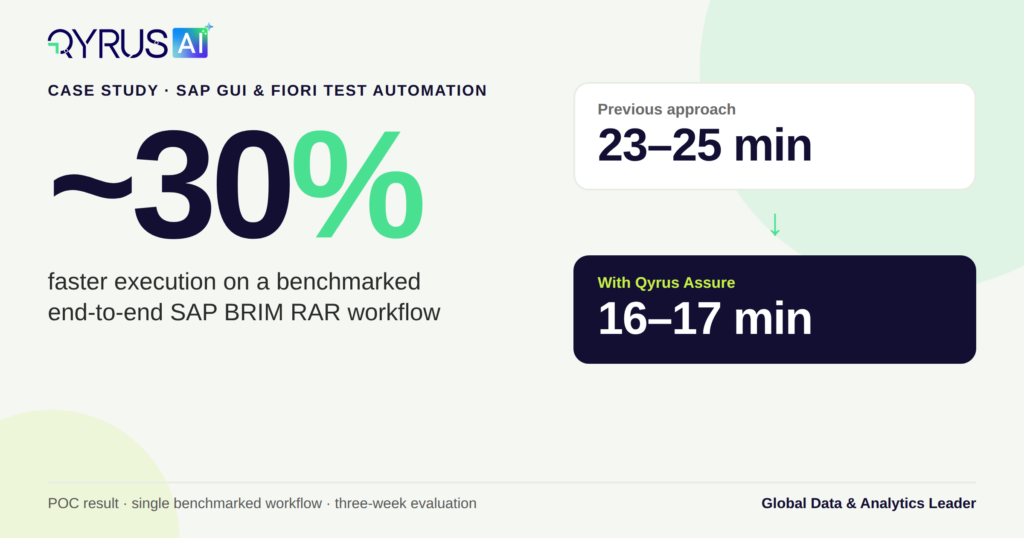
~30% faster execution on a benchmarked end-to-end workflow
Outcome
POC completed successfully; project awarded to QyrusAI
The Challenge: SAP Testing That Couldn’t Keep Pace With Transformation
A Global Data & Analytics Leader was running an ambitious SAP transformation program. Each new release and regression cycle expanded the testing workload. Their existing automation approach was supposed to absorb that growth, but it was producing fragile scripts and consuming more effort than it saved.
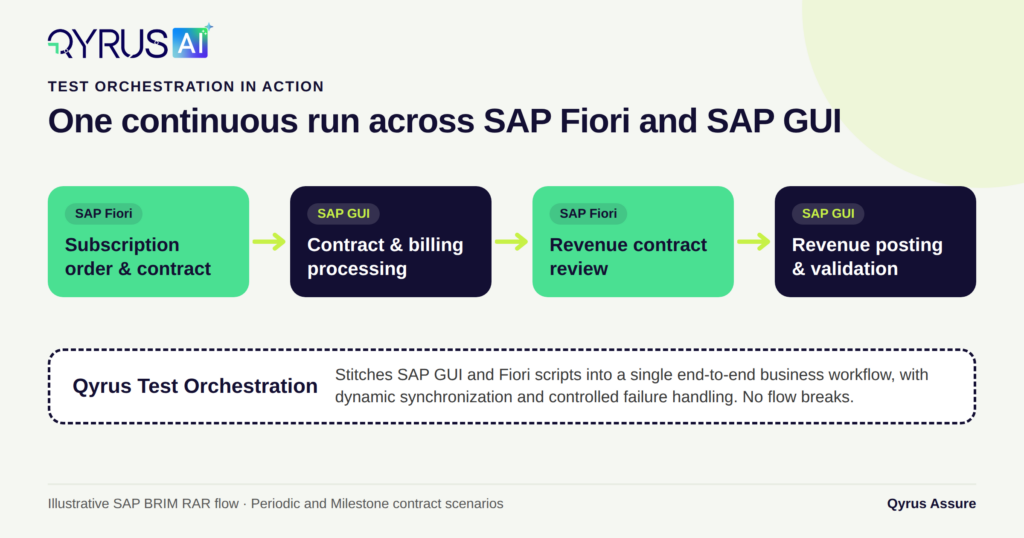
The problem was sharpest in SAP BRIM (Billing and Revenue Innovation Management). SAP RAR addresses revenue recognition in line with accounting standards such as ASC 606 and IFRS 15, so every contract scenario has to be correct from order through to revenue posting. These processes also don’t sit on one interface. A single subscription contract workflow can start in SAP Fiori and finish in SAP GUI, and most automation tools struggle to follow that path without breaking.
The team’s challenges fell into four areas.
Automation effort without matching value.
Building and maintaining automated tests took so much time that the productivity gains never arrived. Scripts, test cases, and datasets were hard to reuse across environments, so teams kept rebuilding work they had already done.
Hybrid processes that broke the flow.
End-to-end business processes spanning SAP GUI and Fiori could not be automated as one continuous flow. Existing tools also had limited support for complex, business-level scenarios.
Unstable, unreliable execution.
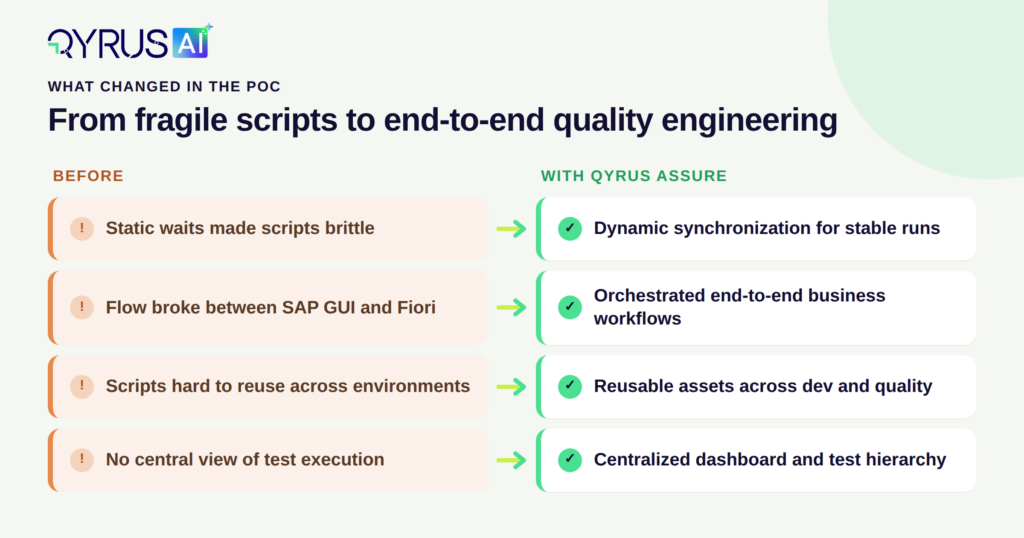
Scripts depended on static waits, which made them brittle and prone to false failures. When a critical step did fail, execution couldn’t reliably stop at the right point. Support for running tests across multiple environments and VM-based setups was limited.
Poor visibility and heavy manual overhead.
With no centralized dashboard or structured test hierarchy, managing and monitoring test runs was difficult. Process, training, and testing documentation all required significant manual effort. The organization also saw untapped potential in AI and in integrations with Jira and productivity tools.
The central question was this:
how could the organization scale SAP testing for transformation and regression programs while cutting automation effort, improving execution reliability, and giving the business clear visibility across complex SAP GUI and Fiori processes?
The Solution: An AI-Assisted, End-to-End Approach With Qyrus Assure
Qyrus proposed a focused proof of concept (POC). It would use the client’s real SAP testing scenarios and measurable success criteria, not a generic demo environment. The goal was to prove value on the processes that mattered most to the business.
The solution brought together several Qyrus Assure capabilities.
SAP GUI and Fiori automation.
QyrusAI automated both classic SAP GUI transactions and web-based Fiori apps, so business-critical steps were covered regardless of interface.
Test Orchestration.
Test Orchestration stitched individual SAP GUI and Fiori scripts into complete end-to-end business workflows. That removed the flow breaks that had previously stopped hybrid processes from being automated as a whole.
Qyrus SAP Scribe.
Qyrus SAP Scribe uses custom ERP-aware AI models fine-tuned to a customer’s SAP landscape. It supported AI-assisted test generation, analysis, and documentation, which reduced the manual effort behind process and testing documentation.
Dynamic synchronization.
Tests waited for actual application states instead of fixed timers. This replaced static waits and made scripts far more stable.
Cross-environment and VM-based execution.
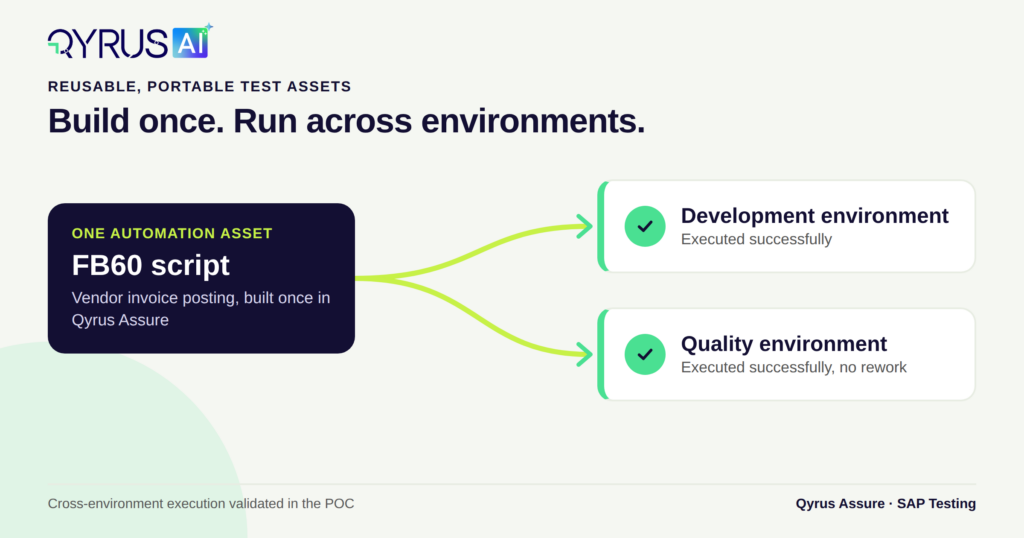
The same automation assets ran across the client’s development and quality environments without rework. VM-based execution let testers run suites in the background while they continued with other work.
Centralized reporting and structured test management.
A single dashboard and a clear test hierarchy gave stakeholders real-time visibility into execution status and results. Controlled failure handling stopped runs at the right point when a critical step failed.
Implementation: A Three-Week POC on Real Business Scenarios
The POC ran as a three-week evaluation cycle. It focused on complex SAP BRIM RAR scenarios involving subscription order and contract processes across SAP Fiori and SAP GUI.
The scope included 17 test cases and scripts covering SAP GUI and Web/Fiori automation, built around Periodic and Milestone contract scenarios. Test Orchestration linked these scripts into complete business workflows. The team also validated cross-environment execution by running the same FB60 automation (vendor invoice posting) in both the development and quality environments.
Business consultants from the client’s Order-to-Cash and Finance teams took part directly in the POC, supported by stakeholders from technical and project functions. Their involvement kept the evaluation grounded in real business logic, not just technical checks.
Results: Faster, More Stable, and Ready to Scale
The POC showed that QyrusAI could automate and orchestrate hybrid SAP GUI and Fiori business processes, run them across environments, and deliver stable, reusable test assets.
~30% Faster Execution
The clearest measurable gain was execution speed. In the POC, one benchmarked end-to-end workflow took about 23–25 minutes under the previous approach and 16–17 minutes with Qyrus. That is roughly a 30% reduction in execution time for that workflow.
What the POC Demonstrated
End-to-end BRIM RAR coverage. Periodic and Milestone workflows ran successfully as complete business processes.
Continuous hybrid orchestration. SAP GUI and Fiori scripts ran together with no flow breaks.
Portable, reusable automation. The same assets ran across development and quality environments without rework.
Greater script stability. Dynamic synchronization reduced the dependence on static waits that had made earlier scripts fragile.
Controlled execution. Failure handling and execution monitoring stopped runs at the right point when critical steps failed.
Centralized visibility. Structured test management and a single dashboard gave teams a clear view of execution status.
Tester productivity. VM-based execution let testers multitask instead of watching test runs.
AI-assisted quality engineering. Qyrus SAP Scribe supported test generation, analysis, and documentation.
Broader testing scope. Automation extended into RICEF objects and configuration and unit-testing scenarios.
After the POC was completed, the Global Data & Analytics Leader awarded the project to Qyrus.
Why This Matters for SAP-Driven Enterprises
This organization’s situation is increasingly common. SAP has announced that mainstream maintenance for SAP ECC 6.0 and SAP Business Suite 7 will end on 31 December 2027, and many enterprises are compressing large transformation programs into a narrow window. Figures reported by CIO, based on Gartner analysis, estimate around 35,000 SAP ECC customers worldwide, with approximately 39% migrated to SAP S/4HANA by the end of 2024. For the remaining organizations, regression testing capacity often limits how fast they can move.
Revenue-critical processes like BRIM and RAR raise the stakes further. These implementations involve revenue recognition models for subscription-based, milestone-based, and usage-based contracts, where an undetected defect can affect financial reporting as well as the user experience.
This case shows how SAP testing can move from script-heavy automation to intelligent, end-to-end quality engineering: AI-assisted test creation, hybrid SAP GUI and Fiori orchestration, and reusable assets that run in any environment. The result is faster cycles, more reliable runs, and business-level visibility across the processes that matter most.
See It on Your SAP Landscape
Is your SAP transformation outgrowing your testing approach? See how Qyrus Assure automates hybrid SAP GUI and Fiori workflows end to end, including complex BRIM scenarios.
One of North America’s leading Coca-Cola bottlers manages a massive logistics network, operating more than 10 state-of-the-art manufacturing plants and over 70 warehouses. Their complex business processes—spanning sales, distribution, finance, and warehouse management—rely on SAP S/4HANA as the central ERP, connected to over 30 satellite systems for functions like last-mile delivery.
Before partnering with Qyrus, the company’s quality assurance process was a fragmented and manual effort that struggled to keep pace. Testing across their SAP desktop, internal web portals, and mobile delivery apps was siloed, slow, and inconsistent.
Qyrus provided a single, unified platform to automate their business-critical workflows from end to end. The results were immediate and dramatic. The bottler successfully automated over 500 test scripts, covering more than 19,000 individual steps across 40+ applications. This strategic shift slashed overall test execution time from over 10,020 minutes down to just 1,186 minutes—an 88% reduction that turned their quality process into a strategic accelerator.
The High Cost of Disconnected Quality
Before implementing Qyrus, the bottler’s quality assurance environment faced significant operational challenges that created friction and risk. The core issue was a testing process that could not match the integrated nature of their business. This disconnect led to several critical pain points.
Fragmented and Slow Manual Testing: Functional testing was performed manually across SAP GUI, internal web portals, and mobile delivery applications. This approach resulted in slow regression cycles and inconsistent test coverage across platforms.
Lack of End-to-End Confidence: There was limited integration between the desktop SAP modules and the mobile Last Mile Delivery workflows. This gap prevented true end-to-end testing, reducing confidence that a complete business journey would work correctly in production.
Burdensome Evidence Collection: Gathering evidence for audits and defect analysis was a manual, time-consuming process. This practice significantly slowed down both compliance checks and the ability to triage and fix bugs quickly.
Operational Drain on Experts: Frequent change requests continuously increased the testing burden. As a result, critical subject matter experts (SMEs) were constantly pulled away from their primary operational duties to participate in tedious test cycles.
The client needed a single platform that could automate their real business journeys across SAP, web, and mobile while producing audit-ready evidence on demand.
Connecting the Dots: A Unified Automation Strategy
Qyrus replaced the client’s fragmented tools with a single, centralized platform designed to mirror their real-world business journeys. Instead of testing applications in isolation, the bottler could now execute complete, end-to-end workflows that spanned their entire technology ecosystem, including SAP, Greenmile, WinSmart, VendSmart, BY, and Osapiens LMD. This was made possible by leveraging several key features of the Qyrus platform.
Codeless SAP Automation: Using the Desktop Recorder for SAP, the team quickly captured and automated critical SAP GUI flows without writing any code. Processes like order creation, delivery planning, and route allocation were automated and then reused across multiple tests with parameterized data, saving countless hours of scripting and maintenance.
End-to-End Test Orchestration: Qyrus connected individual scripts across SAP, web, desktop, and mobile into a single, cohesive workflow. Built-in waits ensured that backend updates from one system, like a shipment creation in SAP, were correctly synchronized before the next step began in another system, such as a mobile delivery app.
Dynamic Data Handling: The automation scripts were built to be resilient. The platform captured critical data like shipment IDs, driver assignments, and warehouse keys at runtime. This approach eliminated brittle, hard-coded values and enabled robust, data-driven test runs.
One-Click Audit and Evidence Trails: Every test step was automatically documented with screenshots and compiled into detailed PDF reports. This feature was used extensively for faster defect analysis, end-user training, and providing auditors with clear, irrefutable evidence of system validation.
This unified approach finally gave the client a true, top-down view of their quality, allowing them to test the way their business actually operates.
Speed, Scale, and Unshakable Confidence
The implementation of Qyrus delivered immediate, measurable results that fundamentally transformed the bottler’s quality assurance process. The automation initiative achieved a scale and speed that was previously impossible with manual testing, leading to significant gains in efficiency, risk reduction, and operational governance.
The most significant outcome was a dramatic 88% reduction in test execution time. A full regression cycle that once took over 10,020 minutes (more than 166 hours) to complete manually now finishes in just 1,186 minutes (under 20 hours) with automation.
This newfound speed was applied across a massive scope:
The client successfully automated over 500 test scripts.
These scripts encompassed more than 19,000 individual steps.
The automation suite provided coverage for over 40 distinct SAP, mobile, and web applications, including critical systems for route optimization, delivery, and warehouse management.
Beyond speed, the centralized execution and one-click PDF reports provided full traceability for every process. This comprehensive evidence proved invaluable not only for audit preparedness but also for end-user training, ultimately reducing time, effort, and operational risk across all platforms.
Beyond Automation: A Future-Proof Quality Partnership
With the foundation of a highly successful automation suite now in place, the bottler is looking to the future. As of mid-2025, with over 500 test cases and 19,000 steps automated, the client’s immediate goal is to complete the remaining functional automation by December 2025 through a fixed-price engagement. The objective is to establish a steady-state model where a fully automated regression suite is maintained without new scripting costs, seamlessly integrating script maintenance, and the addition of new test cases under their existing managed services.
Building on that foundation, the long-term vision is to evolve the partnership by leveraging AI to increase testing speed and intelligence. The client envisions a future state that includes:
AI-Driven Test Selection: Using AI to automatically select the most relevant test cases to run based on specific code and configuration changes.
Intelligent Impact Analysis: Applying AI to analyze the potential impact of changes across SAP and other connected applications.
AI-Assisted Test Creation: Generating new test cases automatically from support tickets and business process documentation.
Autonomous Continuous Testing: Implementing AI for autonomous test healing and the automatic triage of flaky tests.
Smarter Regression Cycles: Receiving AI-powered recommendations on when to run a full regression versus more targeted, modular testing.
By embedding Qyrus deeply into their release cycles, the client aims to reduce risk, accelerate delivery, and strengthen quality governance across every product touchpoint. Ultimately, they see Qyrus not just as a testing tool, but as an end-to-end quality platform capable of supporting their enterprise agility for years to come.
Experience Your Own Transformation
The challenges of manual testing across SAP and modern applications are universal, but the solution is simple. Qyrus provided this client with the speed and end-to-end confidence needed to thrive.
This case study explores how a leading global beverage business, one of the largest players in the consumer-packaged goods (CPG) industry, revolutionized its testing processes by transitioning from entirely manual methods to an advanced, AI-powered automated testing approach with Qyrus.
Facing persistent challenges such as lengthy testing cycles, inconsistent quality, declining test coverage, and difficulties in reusing dynamic data, the company sought an innovative solution. This article will detail how the implementation of Qyrus led to a significant increase in test coverage, a substantial reduction in production bugs, and a remarkable enhancement in overall testing efficiency and quality within their operations.
About the Client
This consumer-packaged goods company is a leading global beverage business, formed through the merger of several bottling companies and distribution companies. It operates in multiple markets across the globe. The company is known for marketing, producing, and distributing a wide range of beverages, including energy drinks, still and sparkling waters, juices, sports drinks, and ready-to-drink teas. It is recognized as the world’s largest independent bottler for a major beverage brand, boasting significant annual revenues and a large consumer base. The company focuses on sustainable growth, innovation, and meeting the specific needs of local markets while leveraging its scale and capabilities to drive growth.
The Challenge
When starting with Qyrus, the client was only performing manual testing. This was an issue since it was taking a large amount of time to complete the testing process and as a result quality was suffering overall. Taking too much time manually testing various processes and features on their app had caused test coverage to slip, as well, introducing virtual cracks to the foundation of their software.
The client had difficulty with automating their testing using traditional or conventional automation methods. Some of the testers were more experienced than others, and this was causing a gap in the quality of the manual tests being done. They also wanted to make sure that they were making use of reusing dynamic data throughout the test scripts.
Life with Qyrus
The client working in consumer-packaged goods is making use of multiple services on the Qyrus platform. Currently, Web Testing and Mobile Testing services are being used to build out web and mobile test scripts. Then, the client is able to perform end-to-end business process testing, chaining the web and mobile test scripts together and enabling test data to be transferred downstream between the individual web and mobile components.
Overall, the client feels that Qyrus is pretty easy to use and grasp. Implementing Qyrus’ testing strategy is not difficult at all and getting set up is as easy as recording your test or asking our AI to help you with test generation. A mixture of both technical and non-technical end users for the client are building and executing test scripts on Qyrus.
Key Features Used
Global Variables: The client was able to make use of global variables to help with reusing data across their various web and mobile projects. This aided in their quest to reuse dynamic data across their scripts.
End-to-End Business Process Testing: The client stitched together the web and mobile scripts into comprehensive business process tests that executed end-to-end flows for a complete picture into the behavior and performance of your various processes across your applications.
Parameterization: The client was able to parameterize specific test steps in their scripts to aid with reusing data and executing different scenarios on a single test script. They were able to execute both happy and unhappy path test scenarios using this method.
Script Tagging: By tagging their scripts, the client was able to better organize their test repository and scripts. This allowed for faster navigation around the app and quicker building of end-to-end flows.
TestRail Integration: The client integrated Qyrus with their TestRail environment for the tracking of various test data and information.
Future Dreams
The client envisions a future where their automated testing processes continue to evolve and improve. They plan to explore advanced AI-driven testing techniques to further enhance the accuracy and efficiency of their test scripts. By integrating machine learning algorithms, they aim to predict potential issues before they arise, thus ensuring even higher quality and reliability in their applications.
In addition, the client is committed to expanding their use of Qyrus across all their global operations. They intend to leverage the platform’s capabilities to support continuous integration and continuous delivery (CI/CD) pipelines, enabling faster and more frequent releases of new features and updates. This will not only reduce time-to-market but also ensure that their products consistently meet the highest standards of quality.
Results & Outcomes
A PoC was originally done in August of 2024 where the client took Qyrus on a test drive for 6 weeks total. In the end, the client was able to achieve a significant increase in test coverage when implementing Qyrus’ automated test scripts when compared to their manual testing being performed. Data around how long it took team members to perform manual tests varies due to a differing level of knowledge and expertise on their team. And for the same reason the comfort level on Qyrus differed.
However, after a little more than 1 month, users reported being very comfortable with the platform. In total, it took the team 45 minutes to build a complex test of over 40+ steps.
The client had acquired 4 web licenses and 5 mobile licenses to spread across their team. As a result of using Qyrus, there has been a noticeable reduction in bugs spread into production by the client team.
Conclusion
Through the adoption of automated testing with Qyrus, the client working in consumer-packaged goods was able to significantly enhance their testing efficiency and quality. The ease of use and the comprehensive features of the Qyrus platform enabled both technical and non-technical team members to build and execute complex test scripts effectively. As a result, the client saw a marked increase in test coverage and a substantial reduction in production bugs. The successful implementation of Qyrus not only streamlined their testing processes but also allowed them to focus on delivering high-quality products to their consumers in the consumer-packaged goods industry. This transformation underscores the importance of embracing innovative solutions to overcome traditional testing challenges and drive sustainable growth.
A top bank in the United Kingdom, committed to delivering secure and seamless digital banking experiences, faced a critical challenge to its growth. As its digital banking applications grew more complex, the institution faced significant testing challenges that slowed innovation and increased operational costs.
The existing infrastructure suffered from limited device and browser coverage, while time-consuming manual testing processes delayed release cycles. Legacy methods were inefficient, failing to adequately cover critical use cases.
To overcome these hurdles and enhance its digital customer experience, the bank partnered with Qyrus, implementing a modern device farm automated testing strategy to transform its quality assurance process.
Demonstrating immense scalability and adoption, the bank built and ran over 300,000 tests, logging more than 26,000 hours of execution time.
About the Client
The client, a top bank in the United Kingdom, provides safe and easy digital banking experiences. As the financial sector changes, the client has focused on innovation. This helps meet the rising expectations of its customers.
The organization focuses on improving the digital customer experience. It has invested in updating its infrastructure. This is especially true for software development and quality assurance.
To support its digital transformation, the client has adopted new technologies. These technologies make its mobile and web platforms reliable, secure, and easy to use.
As digital banking applications became more complex, the need for a better testing solution grew. This made the client look into better mobile software testing tools. They decided to implement a strong device farm automated testing strategy to ensure quality and speed at scale.
Why Legacy Testing Failed to Deliver a Premier Digital Customer Experience
Before partnering with Qyrus, the bank’s ability to deliver a flawless digital customer experience was compromised by several significant roadblocks. The existing testing methods were ill-equipped for the demands of modern digital banking, leading to inefficiencies that impacted everything from release speed to operational costs. The core challenges included:
Inadequate Device and Browser Coverage: The testing environment was restricted to a limited number of devices and browsers. This posed a significant risk to the digital customer experience, as bugs and performance issues on the wide variety of platforms used by customers could easily go undetected.
Time-Consuming Manual Processes: Labor-intensive manual testing was slow, prone to human error, and significantly delayed product release cycles. These inefficient processes not only slowed down innovation but also contributed to rising operational costs and resource constraints.
Inefficient Legacy Systems: The bank’s previous testing method, CITS, was inefficient and slow. This outdated approach was unable to keep up with the demands of complex banking applications, leaving critical use cases untested.
Lack of Actionable Insights: Reporting capabilities were basic and lacked the necessary tools for deep analysis, such as comprehensive screenshots, video playback, and analytics dashboards. This made it difficult for teams to diagnose and resolve issues quickly.
Difficulty Scaling On-Demand: The client struggled to scale testing efforts to align with the rapid pace of digital product development. It became clear that without adopting superior mobile software testing tools and a robust strategy for device farm automated testing, the organization could not efficiently ensure quality at scale.
Life with Qyrus: Scalable, Reliable, and Automated Testing
The choice to use Qyrus’ device farm for automated testing changed the client’s digital strategy. What started as a small trial quickly grew into a large deployment. It involved 44 devices and 75 to 85 active users.
This expansion allowed the client to test its apps on Android and iOS devices. They also were able to test with major browsers like Chrome, Firefox, Safari, and Edge on Windows, Mac, and Linux.
The Qyrus platform provided the client with powerful reporting and analytics tools that significantly improved visibility into test performance. Detailed reports, complete with screenshots, video logs, and advanced dashboards, allowed teams to quickly diagnose and resolve issues. This led to a substantial reduction in production bugs and a more stable, reliable digital platform.
Automation became a core component of the client’s testing strategy. With Qyrus, the client doubled their automated test cases.
They also reached over 90% test coverage on web and mobile platforms. Testers executed more than 308,000 tests, logging over 26,000 hours of test execution time. These results highlight the scalability and efficiency of the device farm automated testing approach.
Non-technical users can contribute to test creation and execution because of the simplicity of Qyrus. This method of testing helped bridge the gap between business and technical teams. This further helped to foster a more collaborative and agile development environment.
The client also benefited from the ability to simulate real-world scenarios across different devices and browsers. This comprehensive testing approach ensured that the digital products were robust and user-friendly. This would be regardless of the platform used by the customers.
Security and Compliance
In the financial services industry, security and compliance are paramount. The client required a testing solution that could meet stringent regulatory standards while supporting its need for scalability. Qyrus delivered on both fronts. The secure infrastructure protected sensitive financial data, while the flexible architecture allowed the client to expand its testing capabilities without compromising compliance.
The client decided to deepen its partnership with Qyrus because it can keep high security standards while growing operations. The platform’s enterprise-grade security certifications provided the assurance needed to innovate confidently in a highly regulated environment.
Moreover, Qyrus’ stringent security compliance gave the peace of mind that the client needed. Qyrus ensured a seamless and secure testing environment. This integration further strengthened the client’s ability to protect data and maintain regulatory compliance.
Results So Far
The results of implementing device farm automated testing have been impactful for the client. The organization reported a 150% increase in testing efficiency, enabling faster release cycles and significantly reducing the number of bugs in production. This improvement has directly affected the digital customer experience. Users now enjoy more reliable and responsive digital services.
Workflows have become automated, teams have become more agile, and collaboration between them is on a rise. Teams are now able to respond more quickly to changing requirements and deliver high-quality software at scale. The move to automation has led to significant cost savings. It has greatly reduced manual testing work and person-days.
The client has also seen improvements in team morale and productivity. With fewer repetitive tasks and clearer insights into testing outcomes, teams can focus more on innovation and continuous improvement.
Additionally, the client has been able to leverage the detailed analytics provided by Qyrus to make data-driven decisions. These insights have helped the client optimize its testing processes and identify areas for further improvement.
What’s Next for the Client
The client plans to build on its success. They will add AI-powered testing tools to their current system. These tools will allow for smarter automation, better analytics, and real-time issue detection. This will improve the efficiency of its device farm testing strategy.
The organization also aims to expand the involvement of non-technical teams in the testing process. Thanks to Qyrus’ easy low-code and no-code features, business users can help with test design and execution. This creates a more collaborative and inclusive way to ensure quality.
Compliance testing will remain a top priority. As rules change, the client promises to stay ahead by using Qyrus’ advanced security features. The organization will keep working to lower costs and increase test coverage.
The client is also exploring the use of machine learning algorithms to predict potential issues before they occur. This proactive approach to testing will further enhance the reliability and performance of their digital products.
Furthermore, the client is considering expanding its device farm to include more devices and browsers. This is to ensure even greater coverage and more comprehensive testing. This expansion will help the client stay ahead of the curve.
Why Qyrus?
The client selected Qyrus after a comprehensive evaluation of available solutions. Qyrus’ real device cloud impressed the organization. It offered the flexibility needed to test on many platforms.
The platform has an easy-to-use interface. Its low-code and no-code features make it accessible for everyone. It also integrates well with current workflows, ensuring a smooth transition.
Qyrus provided strong security and reporting features. These were important for the client to stay compliant and protect customer data. This combination of scalability, usability, and security made Qyrus the ideal partner for the client’s digital transformation journey.
By using device farm automated testing and advanced mobile software testing tools, the client has improved its operations. This change has also enhanced the digital customer experience. The organization is now better equipped to innovate, adapt, and lead in the competitive world of digital banking.
The client also values Qyrus’ commitment to continuous improvement and customer support. The Qyrus team has been responsive and proactive in addressing any issues and providing guidance on best practices. This strong partnership has been instrumental in the client’s success and will continue to drive future innovations.
Ever feel like you’re stuck in testing traffic? That’s where a major US auto manufacturer was—$30B+ in revenue, but their IT testing was a mess! Think late-stage defects, costly disruptions, and way too much manual testing. Their complex systems (SAP, vendor portals, you name it) and “test everything” approach were a roadblock to efficiency.
Enter Qyrus! This unified testing platform was like a green light to move their testing into hyperspeed! The automaker reimagined SAP testing with Qyrus‘ Agentic Testing capabilities.
The result? Less risk, faster releases, and a well-oiled testing machine. Qyrus didn’t just tweak their testing; it transformed it! Let’s dive deeper.
Company Background: The Client
The client is a prominent United States-based automobile manufacturer, demonstrating a substantial scale of operations with annual revenues exceeding $30 billion. As a major entity in the automotive industry, the client’s operations encompass a range of intricate processes, including design, manufacturing, supply chain management, sales, and after-sales service, contributing to the complexity of their technological environment.
The need for a robust testing solution was driven by frequent system upgrades, a high volume of ongoing projects, and complex business processes. The confluence of frequent upgrades and multiple parallel projects amplifies the complexity of the IT environment, demanding rigorous testing to ensure seamless integration and functionality.
Moreover, the client’s business processes are characterized by complexity, often spanning multiple systems and devices, including SAP, vendor portals, and handheld devices. This multi-system environment introduces additional layers of intricacy to their operations, requiring sophisticated testing strategies and tools to ensure consistent data flow and functional integrity across heterogeneous systems.
Within this operational framework, certain business processes are particularly critical. A key example is the Capital Goods Purchase process, a strategically important process involving an annual investment exceeding $150 million. This process involves multiple departments and a complex, 15-level approval workflow, with each approval requiring distinct user credentials based on the purchase order department and amount. The execution of this process necessitates numerous validations across SAP S/4HANA and Ariba.
Roadblocks to Efficient and Effective Testing
The client faced significant challenges in its SAP testing processes. These challenges hindered efficient change implementation, system stability, and impacted operational costs and project timelines. Key roadblocks included:
Frequent Upgrades & Releases: Continuous system upgrades and new feature deployments created a substantial testing burden and the risk of production defects.
Production Defects & Costly Fixes: Defects frequently surfaced in the production environment, causing disruptions and costly resolutions.
Late Business Team Involvement: Business teams were involved late in the testing lifecycle, potentially leading to rework and project delays.
Excessive Testing Effort: Testing activities consumed significant effort due to:
Negligible test automation.
A “test everything” approach.
Time-consuming test data setup.
Lack of a standardized testing methodology.
Complex business processes spanning multiple systems (e.g., Capital Goods Purchase).
These challenges collectively hindered the client’s ability to maintain system quality and deliver changes efficiently.
The Solution: A Unified Testing Platform
To effectively address the identified testing challenges, the client strategically implemented Qyrus as a unified testing platform across their software development lifecycle. Following a successful Pilot that demonstrated Qyrus’ capabilities, the platform was deployed to provide comprehensive Web, Mobile, SAP, and API testing services.
Extensive Training & Change Management: Recognizing the need for effective adoption, an extensive training and change management program was institutionalized for client teams, tailored to specific roles within the organization. This program was crucial for ensuring that both business and IT teams could effectively leverage Qyrus’ capabilities, facilitating a smooth transition and fostering a culture of proactive testing.
Platform-Guided & Standardized Processes: Qyrus facilitated the implementation of platform-guided testing processes, bringing much-needed structure and consistency to the client’s testing efforts. By providing a structured environment and predefined workflows, Qyrus helped to establish standardized testing methodologies, addressing the previous lack of a system-driven approach and improving overall efficiency.
AI-Driven Identification: To move away from an inefficient “test everything” approach, Qyrus’ AI capabilities were leveraged to identify critical and complex business processes. This AI-driven analysis of the client’s SAP landscape enabled a more focused and prioritized approach to testing, allowing resources to be directed towards areas where failures would have the most significant impact.
Automation Candidate Determination: Building on the identification of critical and complex processes, Qyrus AI further assisted in determining optimal candidates for test automation. By analyzing factors such as testing frequency and process stability, this intelligent selection of automation candidates ensured that automation efforts were focused on areas that would yield the greatest benefits, addressing the challenge of negligible test automation.
“Shift Left” Approach: A key strategic shift enabled by Qyrus was the adoption of a “shift left” testing approach, leveraging Qyrus AI to move testing activities earlier in the software development lifecycle. This proactive approach allowed the client to identify and address potential issues much earlier in the process, reducing the cost and effort associated with fixing defects found later in the lifecycle, particularly in production.
Qyrus SAP Scribe AI Model Tuning: To enhance the effectiveness of automated testing, the Qyrus SAP Scribe AI model was fine-tuned with client-specific process information, enabling the automated generation of tests. This customization significantly reduced the manual effort involved in test case design and creation, accelerating the test automation process and ensuring that generated tests aligned closely with the client’s SAP environment and business needs.
Qyrus Test Data Management: Addressing the challenge of time-consuming test data setup, the Qyrus Test Data Management solution was implemented to streamline the process. This solution facilitated faster access to appropriate test data, reducing delays in the testing cycle and improving the quality and coverage of tests by enabling testing with more realistic scenarios.
Qyrus Component Module: To tackle the complexity of business processes spanning multiple systems, the Qyrus Component module was deployed for cross-system testing. This capability enabled the definition and execution of test scenarios across disparate systems, validating the integrity of data and process flow across the entire business process and ensuring that changes in one system did not negatively impact others.
This comprehensive implementation of Qyrus aimed to streamline testing operations, improve efficiency, and ultimately enhance software quality across the client organization.
Implementation and Adoption
The successful implementation and adoption of Qyrus involved several key factors:
Successful Pilot: A Pilot evaluation demonstrated Qyrus’ value in addressing the client’s testing challenges, building confidence and securing buy-in for broader adoption.
Extensive Training and Change Management: A role-based training program and structured change management were crucial for ensuring widespread user adoption of the Qyrus platform and its methodologies. This equipped users with the necessary skills and promoted a culture of proactive and automated testing.
Platform-Guided Processes: Qyrus facilitated standardized testing across the organization by providing a structured environment with predefined workflows and best practices. This streamlined the testing lifecycle, ensured consistency, and improved collaboration.
This approach focused on demonstrating value, enabling users, and standardizing processes to ensure effective Qyrus adoption and implementation.
The Qyrus Effect: A Transformation in Outcomes
VI. Benefits
The deployment of Qyrus yielded significant benefits for the automobile manufacturer:
Foundation for Mature Testing: Qyrus facilitated a mature testing approach encompassing:
Technology: Codeless test automation and reusable test assets.
People: Role-based training and enhanced collaboration.
Adoption of Testing Best Practices: Qyrus enabled a shift from a “test everything” approach to a more strategic methodology focused on critical and impacted areas.
Access to Scalable Test Infrastructure: Qyrus provided an on-demand, scalable test infrastructure, offering flexibility and adaptability.
Reduction in Production Disruptions & Faster Release Cycles: Qyrus facilitated more comprehensive testing, leading to fewer production disruptions and accelerated software release cycles.
Significant Savings in Time and Effort: Qyrus delivered substantial time and effort savings for IT and business teams.
Business teams reported an 85% reduction in testing efforts.
The Capital PO Scenario demonstrated an 88% effort saving.
Details of Capital Purchase Order Process Transformation
Complexity: The Capital PO (Purchase Order) process was inherently complex. It involved a large number of users (12), a high volume of steps (19), and numerous screens (80).
Efficiency Gains: The comparison between manual testing and testing with Qyrus demonstrated a dramatic reduction in the time and effort required. Manual testing of this process took 34 minutes, while Qyrus completed the same testing in just 4 minutes.
Impact: This translates to an 88% reduction in effort.
Improved Knowledge Management: Qyrus served as a central repository for processes and test cases, enhancing knowledge management and reusability.
Single Platform for All Testing Needs: Qyrus provided a unified platform for web, mobile, API, and SAP testing, streamlining processes and improving collaboration.
These benefits demonstrate Qyrus’ impact on enhancing testing efficiency, reducing disruptions, and improving overall software quality.
Conclusion: Driving Strategic Value Through Testing Transformation
The implementation of Qyrus delivered a transformative impact on the automobile manufacturer’s testing capabilities. This transition involved a shift from a potentially reactive and inefficient testing model to a proactive, automated, and standardized approach.
Qyrus’ Agentic AI-powered automation and comprehensive testing modules enabled the client to overcome the complexities of their SAP environment and achieve strategic advantages, including:
Reduced Risk: Proactive defect identification and resolution minimized production disruptions.
Improved Efficiency: Reusable automation and intelligent test orchestration led to significant time savings (e.g., 40% reduction in testing time).
Better Resource Utilization: Empowering non-technical teams and automating routine tasks optimized resource allocation.
This transformation, driven by Qyrus, established a more robust and reliable technology foundation, better positioning the automobile manufacturer for continued growth and innovation.
Facing challenges with SAP testing, production disruptions, or slow-release cycles? This leading automobile manufacturer overcame these hurdles with Qyrus. See how our unified, AI-powered platform can provide the solution you need. Get a free trial today or book a demo with us.
In today’s fast-paced market, the food and beverage industry demands rapid and reliable application deployment. A global leader in food and beverage production and distribution faced the challenge of modernizing its testing processes to meet these demands. Qyrus’ codeless testing platform for web and native mobile apps provided the perfect solution, enabling the company to overcome outdated manual testing and achieve remarkable enhancements in application quality, speed to market, and consumer satisfaction.
Legacy Testing Limits Growth: The Need for Transformation
In the dynamic food and beverage industry, agility and speed are paramount. This global leader, a prominent American foodservice wholesaler, distributor, and bottler, and one of the 10 largest privately held companies in the United States with annual sales exceeding $40 billion USD, recognized the critical need for rapid and high-quality application deployment and monitoring. However, their existing testing processes were hindering their ability to keep pace with the demands of the market.
Problem Statement:
Lack of automation and inadequate test infrastructure: The company’s reliance on outdated manual testing methods resulted in slow release cycles and increased the risk of errors. The absence of a scalable test infrastructure made it difficult to handle the growing volume and complexity of testing required for their web and mobile applications. This bottleneck slowed down development and delayed releases.
Resource constraints: The increasing testing requirements for web and mobile applications strained the company’s QA resources. The need for more testers and the time-consuming nature of manual testing created a significant resource burden.
Isolated QA processes and fragile corporate memory: Siloed testing efforts and a lack of centralized documentation led to inconsistencies in testing and a risk of knowledge loss. Critical testing knowledge resided with individual testers, making the process vulnerable to personnel changes and hindering collaboration.
Qyrus: Modernizing Testing for Speed and Quality
Qyrus provided a comprehensive and transformative solution that addressed the F&B leader’s critical testing challenges. By implementing Qyrus’s codeless test automation platform, the company was able to modernize its testing processes, achieving significant improvements in efficiency, coverage, and overall application quality.
Solution Details:
Expanded Infrastructure and Coverage: Qyrus’s extensive browser farm and device farm enabled the company to expand its testing coverage across a wider range of browsers and devices, ensuring compatibility and a consistent user experience across different platforms.
Improved Testing and QA Lifecycle: Qyrus’s automation and regression testing capabilities streamlined the testing lifecycle, reducing test execution time and improving the efficiency of QA processes. The codeless approach simplified test creation, allowing testers to develop and execute tests faster, accelerating release cycles.
Empowering the QA Team: Qyrus empowered manual testers by providing them with the tools to create reusable, automated test scripts, increasing their productivity and reducing reliance on specialized automation engineers. The platform’s parameterization capabilities enabled testers to reuse scripts for data-driven testing, further enhancing efficiency.
End-to-End Business Process Testing: Qyrus facilitated end-to-end business process testing across web and mobile applications, ensuring seamless functionality and data flow across different systems. The solution was successfully implemented to test critical applications, including Salesforce (Web and Mobile), SAP, and Android mobile apps.
Centralized Platform: Qyrus’s single, centralized platform provided a unified solution for testing, reporting, and infrastructure management. This centralized approach improved collaboration, streamlined workflows, and provided comprehensive visibility into the testing process.
Audits and Reporting: Detailed reporting with step-by-step screenshots and video recordings provided clear insights into test execution. Reports are easily shared via email or through a downloadable PDF.
Tangible Results: Significant Improvements Across the Board
By partnering with Qyrus, the global food and beverage leader achieved significant, measurable improvements in their testing processes and application quality. These results demonstrate the transformative impact of Qyrus’s codeless test automation platform.
Business Benefits
Faster Release Cycles (Time to Market): The significant reduction in test execution time and build time enabled the company to accelerate its release cycles, delivering new applications and features to market more quickly.
Improved Application Quality (Fewer Defects, Better User Experience): Increased test coverage and automation led to the identification and resolution of more defects early in the development lifecycle, resulting in higher-quality applications and an improved user experience.
Increased Efficiency and Reduced Costs: Automation reduced the need for manual testing, freeing up QA resources and lowering testing costs. The platform’s efficiency also optimized resource utilization.
Enhanced Scalability: Qyrus’s scalable platform allowed the company to handle increasing testing demands without compromising speed or quality.
Client Testimonial
“Qyrus has been a game-changer for our testing processes. As a large organization, we struggled with the limitations of manual testing, which slowed down our releases and increased the risk of defects. Qyrus’ codeless automation platform has enabled us to significantly improve our test coverage, reduce execution time, and ultimately deliver higher-quality applications to our customers much faster. The platform’s ease of use and scalability have been invaluable, and we’ve seen a tremendous return on our investment.”
Qyrus: The AI-Powered Codeless Test Automation Platform
Qyrus is a comprehensive and intelligent test automation platform that empowers organizations to achieve faster, more efficient, and higher-quality software testing. Designed with users in mind and enhanced with AI, Qyrus simplifies testing across web, mobile, and APIs.
Platform Highlights:
Codeless, AI-Driven Platform: Qyrus’s codeless interface enables users to create and execute tests without requiring extensive coding knowledge, making test automation accessible to a wider range of team members. The platform leverages AI to enhance test creation, execution, and analysis.
Unified Testing for Web, Mobile, and APIs: Qyrus provides a single platform for testing web, mobile, and API applications, streamlining the testing process and eliminating the need for multiple tools.
Early Bug Detection: Qyrus helps detect and eliminate bugs early in the software development lifecycle, reducing the cost and effort associated with fixing defects later in the process.
All-in-One Device Farm Infrastructure: Qyrus’s cloud-based device farm infrastructure is Next-Gen, ISO 27001 & SOC2 Type 2 compliant, and requires zero setup time and maintenance, providing access to a wide range of devices and browsers.
Taxonomy-Driven Interface: The platform’s taxonomy-driven interface helps increase test coverage and improves test organization and maintainability.
Eliminates Custom Frameworks and Infrastructure: Qyrus eliminates the need for time-consuming custom frameworks and expensive test infrastructure, reducing costs and complexity.
Empowers Teams: Qyrus empowers testers, developers, and business teams to collaborate effectively and produce higher-quality products.
Maximizes Efficiency: Qyrus maximizes human ingenuity, minimizes unnecessary dependencies across the testing lifecycle, reduces human errors, and decreases operating and testing costs.
Transform Your Testing with Qyrus
Ready to experience the benefits of Qyrus for yourself? Take the next step towards modernizing your testing processes and achieving significant improvements in application quality, speed, and efficiency.
Try it For Free: Start your free trial today and experience the power of codeless test automation firsthand.
Request a Demo: Schedule a personalized demo to see Qyrus in action and get answers to your questions.
Know More: Read additional case studies and customer testimonials to see how other organizations are achieving success with Qyrus.
Behavioral Health Team
Behavioral Health, a digital initiative by the insurance group, stands out as a vital player in supporting employee mental health. Its rich digital platform offers employers essential tools to aid employee well-being, such as personalized resources, clinical treatments, and tailored educational programs. In their mission to enhance employee engagement and destigmatize mental health issues, the Behavioral Health team adopted Qyrus as an automation tool for web and mobile application testing, facilitating a seamless transition from their previous systems.
About/Overview
The importance of the organization’s Behavioral Health cannot be overstated—it is central to nurturing employee welfare through its all-encompassing digital platform. As they embarked on re-platforming their systems to enhance user experience, they recognized the need for a reliable testing solution that guarantees the high quality of their web and mobile applications. By shifting from Selenium to Qyrus, they managed to simplify the complexities associated with script creation, thus enabling faster and more efficient testing.
Challenge
Before embracing Qyrus, the company faced several challenges in their testing processes:
Complexity with Selenium: Crafting and maintaining scripts using Selenium demanded substantial coding expertise, particularly in C#, making it a time-intensive endeavor.
Lack of Mobile Automation: The inability of Selenium to offer comprehensive mobile application testing contributed to significant test coverage gaps.
Efficiency Concerns: Conducting smoke tests was both time-consuming and resource-heavy, causing delays in upholding application quality.
Life with Qyrus
Features & Values
The adoption of Qyrus addressed these challenges, revolutionizing the organization’s approach to testing.
Key Features Utilized:
Ease of Use: As a Selenium alternative, Qyrus supplanted Selenium by offering a user-friendly interface with low-code testing features, which diminished reliance on extensive technical knowledge.
Web and Mobile Testing: Thanks to its comprehensive support for both platforms, Qyrus allowed the company to execute tests smoothly across various devices.
Manual Step Creation: The ability to manually craft and execute test scripts streamlined the process, rendering testing more accessible and efficient.
Support and Training: Qyrus’ dedicated support team enabled swift adoption and sustained success in testing processes.
Results
The organization experienced notable improvements after integrating Qyrus:
Time Savings: Rewriting smoke tests with Qyrus took merely 1.5 hours, a stark contrast to the entire week required with Selenium.
Ease of Adoption: As a Selenium alternative, the transition to Qyrus was smooth, alleviating stress and frustration while facilitating training for additional QA members.
Eliminated Selenium Overheads: By eliminating the dependency on Selenium QA automation engineers with the adoption of Qyrus as a Selenium alternative, the team cut costs associated with hiring specialized expertise.
Enhanced Collaboration: Demonstrating Qyrus to other QA teams at the company sparked widespread interest and engagement, democratizing testing processes across teams.
Future Dreams
Results + Outcome
The successful integration of Qyrus in Behavioral Health’s workflow has notably simplified their test automation of mobile apps and web applications. The platform’s low-code capabilities, coupled with its efficiency and ease of use, have positioned the organization’s Behavioral Health application to scale their testing operations, further supporting their digital transformation objectives.
Aspirations
Looking ahead, the business plans to broaden their use of Qyrus across a more extensive test suite, particularly as they continue to replatform their applications. By persistently exploring Qyrus’ features, the team aspires to further refine their testing processes, improve application quality, and sustain their leadership in mental health support.
By continually advancing their testing processes with Qyrus, the organization aims to uphold its dedication to mental health support and digital innovation.
This company stands as one of the largest bottling manufacturers in the United States. They have a strong reputation for making and delivering drinks to millions of customers nationwide, ensuring that refreshing products reach consumers quickly and reliably.
About/Overview
The organization identified a critical need to enhance their testing processes in manufacturing software and mobile application development. A large bottle manufacturer needed a way to automate testing for web, mobile, and desktop components. This testing had to work in different environments. Their primary goal was to improve testing efficiency and reduce the time and resources consumed by manual testing efforts.
To address these needs, the company partnered with Qyrus as their automation solution provider. Qyrus stepped in to help streamline testing across the manufacturing company’s digital infrastructure, promising to transform their testing processes and boost overall efficiency.
Challenge
The business faced significant hurdles with their manual testing process. The effort required for testing was substantial, with teams spending up to 10 hours per day on testing activities. This extensive time investment significantly slowed down the release of updates for their internal mobile app, which is crucial for tracking bottling processes.
The key challenges the company encountered included:
Reducing the time spent on executing repetitive manual tests
Improving the accuracy of tests in a complex manufacturing setup
These challenges highlighted the need for a more efficient, accurate, and scalable testing solution that could keep pace with the organization’s production demands and quality standards.
Life with Qyrus
The adoption of Qyrus brought about a significant transformation in the company’s testing processes. By automating their web, mobile, and component tests, the organization experienced a substantial reduction in the effort and time required to execute tests.
Key features of Qyrus that this bottling manufacturing business utilized include:
Global Environments & CI/CD Integration: This feature helped the company run tests in different environments. It automated test execution using CI pipelines and provided detailed reports. This integration improved the efficiency of their testing process and provided better visibility into test results.
Enhanced Collaboration: Qyrus facilitated better communication among team members by providing a centralized platform for test management. This allowed developers, testers, and project managers to collaborate seamlessly, share insights, and address issues in real-time. The result was a more cohesive team effort, leading to faster problem resolution and improved overall productivity.
User-Friendly Interface: One of the best features of Qyrus is its easy-to-use interface. It helps team members of all skill levels navigate the platform easily. This user-friendly design made it easier for the staff to learn the new system. They could quickly adapt and focus on delivering high-quality products without struggling with complicated tools.
Comprehensive Reporting: Qyrus provided step-by-step screenshots, full execution videos, and sharable reports. This detailed documentation allowed non-technical team members to participate in test evaluation, improving collaboration across departments and enabling faster decision-making.
Scalability: As the business continued to grow, the scalability of Qyrus became a crucial advantage. The platform could easily accommodate an increasing number of tests and users without compromising performance. This flexibility ensured that the company could maintain its testing standards even as production demands evolved.
Continuous Improvement: With Qyrus, the organization embraced a culture of continuous improvement. The platform’s feedback mechanisms allowed the team to gather insights from each testing cycle, leading to iterative enhancements in their processes. This commitment to refining their approach ensured that the company remained competitive in a rapidly changing market.
Parallel Execution & Scheduling: Qyrus helped streamline the scheduling and parallel execution of tests. This capability ensured that multiple test cases could run concurrently, significantly reducing the manual burden on the testing team and accelerating the overall testing process.
Results
The implementation of Qyrus led to remarkable improvements in the company’s testing processes:
The company experienced an 80% reduction in manual testing efforts per day. This translated to a decrease from 10 hours of manual testing to just 2 hours, freeing up valuable time for other critical tasks.
Qyrus’ automation capabilities allowed the organization to catch bugs and defects early on in Salesforce and MG QA environments, improving the overall quality of their software and applications.
The company was able to expand its test coverage and monitor applications more effectively using automation, ensuring a higher standard of quality across their digital infrastructure.
Collaboration across teams improved significantly with shared test results and reports, fostering better communication and faster problem-solving.
Future Dreams
The implementation of Qyrus not only optimized testing for the company but also provided significant cost savings. With a smaller testing team and automated processes, they could focus on enhancing productivity and releasing products faster. This efficiency gain has positioned them to better meet market demands and maintain its competitive edge in the bottling industry.
Aspirations
Looking ahead, the organization has ambitious plans to further leverage Qyrus in their operations:
The company aims to expand Qyrus’ usage across all application types, including web, mobile, API, and desktop components. This comprehensive approach will ensure a uniform testing standard across their entire digital ecosystem.
The business’s goal is to fully automate pre-release requirements, ensuring every application runs smoothly with minimal manual intervention. This automation will further reduce the risk of human error and accelerate the release cycle.
As the organization continues to grow, Qyrus will remain an essential partner in their automation journey. The ongoing collaboration promises to deliver faster and more accurate testing results, supporting their commitment to quality and efficiency in their bottling operations.
“Qyrus has transformed our testing processes, allowing us to focus on what we do best – producing and distributing high-quality bottling products. The efficiency gains and quality improvements we’ve seen are just the beginning of our automation journey.” – Bottle Manufacturing Testing Team Lead
Enterprise Data Engineering Team
A distinguished provider of disability, life, and supplemental insurance places immense reliance on its Enterprise Data Engineering Team. The Digital Transformation Organization (DTO) dedicates itself to developing scalable and efficient data systems and pipelines. These efforts cater to data analytics and visualization requirements, playing a pivotal role in empowering data-driven decision-making across the organization.
The company’s data-driven strategy necessitated refining their testing processes to bolster data analytics and visualization initiatives. The Enterprise Data Engineering Team faced challenges with data integrity, system integration, and validating large operations.
They saw a strong need for optimization. By using Qyrus’ advanced API testing platform, the team automated validations and made regression testing easier. This led to faster development cycles and better data accuracy.
Challenge
The team encountered several hurdles in their API testing journey:
Manual Validation Limitations: Traditional data validation methods proved labor-intensive and error-prone, missing the efficiency needed in modern data operations.
Performance and Scalability: Ensuring that data pipelines could effectively manage large-scale processes was a continuous challenge.
Integration Complexity: Seamlessly integrating data systems with enterprise applications demanded robust automation tools, which were lacking.
Compliance Needs: The necessity to adhere to stringent security protocols and regulatory standards called for precise and consistent testing.
Life with Qyrus
Qyrus provided the company’s data team with the necessary tools to tackle these challenges using advanced API testing features.
Regression Suite Setup: Simplified regression test processes, minimizing execution efforts and boosting productivity.
Low-Code/No-Code Accessibility: Qyrus’s built-in body and JSON path assertions allowed even non-technical team members to contribute meaningfully to API testing. With scalability and low-code/no-code capabilities, Qyrus minimizes ongoing training and onboarding costs for new team members. This allows the company to expand its testing efforts without proportional increases in costs.
CI/CD Integration: Efficient CI/CD capabilities with Azure DevOps ensured streamlined workflows and database configurations, which facilitated easy API and fast API deployments.
Future Dreams
Results + Outcome
Implementing Qyrus led to significant enhancements:
Improved Test Coverage: Broader testing scope resulted in increased pipeline reliability.
Efficiency Gains: Automated regression testing has greatly reduced execution efforts, thereby enhancing the validation process. The faster creation of test scripts (ranging from 5 to 30 minutes depending on complexity) compared to manual processes saves hours per test cycle. The organization has increased reliability and accuracy, enabling easy and fast API validation cycles while reducing the costs associated with post-production bug fixes.
Enhanced Collaboration: Parameterization and shared tests fostered better teamwork, allowing technical and non-technical members to collaborate effectively.
The successful implementation of Qyrus has enabled the Data Engineering Team to achieve fast API testing cycles, superior accuracy, and flawless system integration. These improvements match the team’s goal of enhancing data analytics and visualization skills for the organization.
Aspirations
The organization plans to keep working with Qyrus. They want to improve testing skills, increase automation, and stay a leader in the insurance industry. By using new solutions, the team is ready to lead in data analytics and visualization. This will help the organization stay agile, efficient, and forward-thinking.
As the company navigates the digital transformation landscape, the integration of robust testing platforms like Qyrus highlights a commitment to both innovation and operational excellence.
About the Client
PatelCo Credit Union is a member-owned, not-for-profit credit union. It has over $9 billion in assets and 450,000 members across the country. It is one of the oldest and largest credit unions in the United States.
The client’s mission is to improve their members’ financial lives. They aim to guide them toward financial responsibility. They believe that supporting everyday needs help people manage their day-to-day financial lives more comfortably. Their goal is to be the preeminent credit union that builds your financial wellbeing.
The Challenge
With more users relying on native mobile apps for daily tasks, PatelCo Credit Union had to start the digital shift. This created a sense of urgency for them to address critical challenges to improve their speed to market. To get this right, PatelCo Credit Union needed to begin native mobile testing.
They realized their existing tools lacked the required capability. And started exploring other mobile automation solutions. Qyrus not only proved to be a perfect fit but also offered real device testing—a key factor in their decision. In this case study, you will learn how and why PatelCo Credit Union chose Qyrus. And how they leveraged Qyrus to accelerate their automation journey.
Life with Qyrus
PatelCo Credit Union started their journey with Qyrus in January of 2024. They started using Web testing, expanding over to Mobile testing over time. Overall, they have licenses spread across our Web and Mobile testing services.
At the start, as with anything new, especially a software testing automation tool, there was a learning curve. Thankfully, with the guidance of the Qyrus team and a bit of practice, they quickly became comfortable with the platform overall.
Today, PatelCo Credit Union finds themselves taking around 1 day to build out test scripts. Due to this, there was an increase in test coverage. This was not just due to their expansion into native mobile testing, but also in their web testing as well.
Key Features Used
Recorders: Qyrus’ recorders for both web and mobile testing helped to streamline and simplify test building for PatelCo. Making script building more accessible to less technical members and to manual tester is a key way to speed up the testing process.
Inspect Mode: For Mobile test building, testers can make use of this mode to better inspect element details and attributes, getting element info at the click of a button.
Future Dreams
In the future, PatelCo Credit Union hopes to start performing end-to-end testing. They have plans to start expanding into Qyrus’ Component testing service, which would help them to achieve this goal and ensure a flawless user experience across PatelCo Credit Union online banking.
This would allow for the seamless testing of end-to-end business processes across web and mobile applications, perform and make assertions on API calls, and even test processes requiring desktop applications, all in one execution. Furthermore, the client hopes to introduce more native mobile testing as well as API testing and data testing automation. Lastly, they want to integrate this entire process into their CI/CD pipeline.
Results & Outcomes
As a result, PatelCo Credit Union was able to finally able to start expansion into native mobile application testing. They had considered this a great accomplishment, as this was a large hole in their software testing process from before. Just Now, with the introduction of Qyrus, they can push further to more API testing as well as end-to-end business process testing using Component testing.
Conclusion
In conclusion, PatelCo Credit Union’s transition to Qyrus for native mobile test automation has been a significant milestone in their digital transformation journey. By adopting Qyrus, PatelCo has not only filled a critical gap in their testing capabilities but also enhanced their overall test coverage and efficiency.
The successful integration of Qyrus has empowered PatelCo to better serve their members by ensuring a seamless and reliable user experience across both web and mobile platforms. Looking ahead, PatelCo is well positioned to continue expanding their testing capabilities with plans to incorporate end-to-end and API testing, and further integrations into their CI/CD pipeline. This strategic move underscores PatelCo’s commitment to innovation and excellence in financial services, paving the way for a more robust and future-ready digital infrastructure.