A top bank in the United Kingdom, committed to delivering secure and seamless digital banking experiences, faced a critical challenge to its growth. As its digital banking applications grew more complex, the institution faced significant testing challenges that slowed innovation and increased operational costs.
The existing infrastructure suffered from limited device and browser coverage, while time-consuming manual testing processes delayed release cycles. Legacy methods were inefficient, failing to adequately cover critical use cases.
To overcome these hurdles and enhance its digital customer experience, the bank partnered with Qyrus, implementing a modern device farm automated testing strategy to transform its quality assurance process.
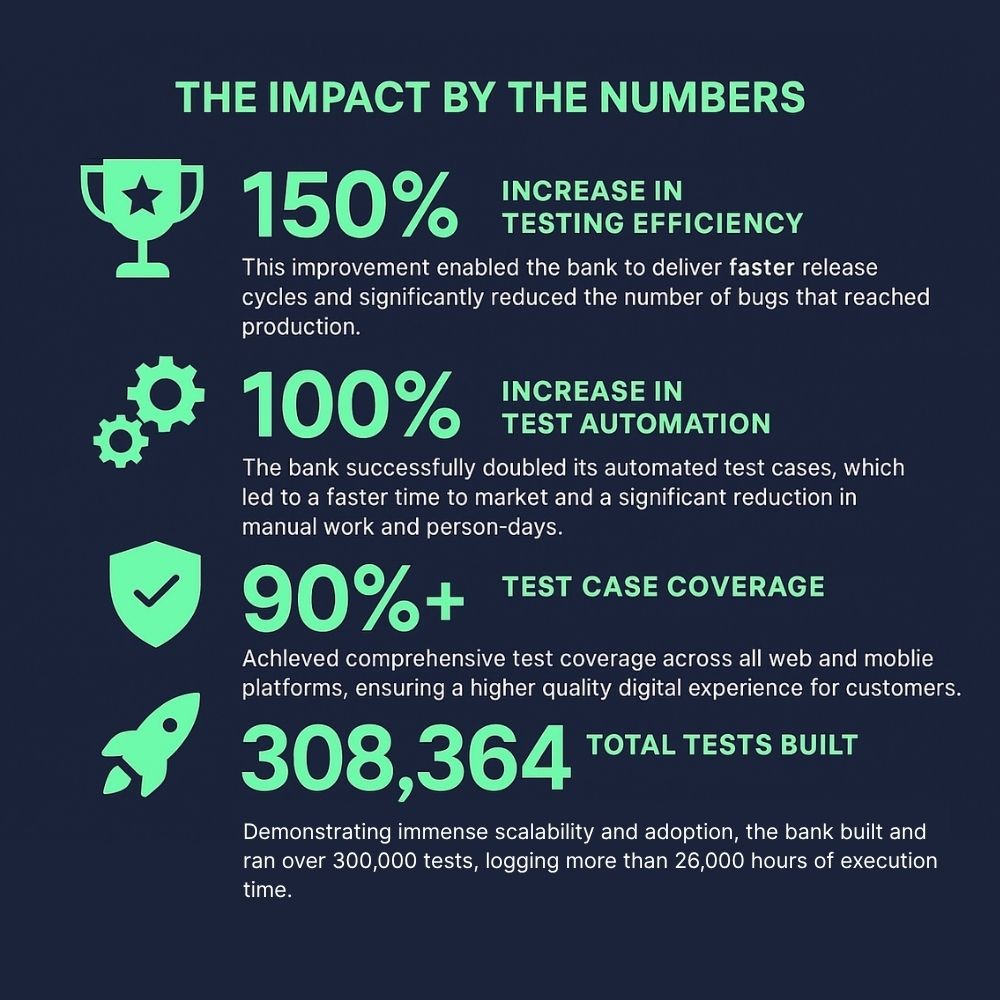
Demonstrating immense scalability and adoption, the bank built and ran over 300,000 tests, logging more than 26,000 hours of execution time.
About the Client
The client, a top bank in the United Kingdom, provides safe and easy digital banking experiences. As the financial sector changes, the client has focused on innovation. This helps meet the rising expectations of its customers.
The organization focuses on improving the digital customer experience. It has invested in updating its infrastructure. This is especially true for software development and quality assurance.
To support its digital transformation, the client has adopted new technologies. These technologies make its mobile and web platforms reliable, secure, and easy to use.
As digital banking applications became more complex, the need for a better testing solution grew. This made the client look into better mobile software testing tools. They decided to implement a strong device farm automated testing strategy to ensure quality and speed at scale.
Why Legacy Testing Failed to Deliver a Premier Digital Customer Experience
Before partnering with Qyrus, the bank’s ability to deliver a flawless digital customer experience was compromised by several significant roadblocks. The existing testing methods were ill-equipped for the demands of modern digital banking, leading to inefficiencies that impacted everything from release speed to operational costs. The core challenges included:
Inadequate Device and Browser Coverage: The testing environment was restricted to a limited number of devices and browsers. This posed a significant risk to the digital customer experience, as bugs and performance issues on the wide variety of platforms used by customers could easily go undetected.
Time-Consuming Manual Processes: Labor-intensive manual testing was slow, prone to human error, and significantly delayed product release cycles. These inefficient processes not only slowed down innovation but also contributed to rising operational costs and resource constraints.
Inefficient Legacy Systems: The bank’s previous testing method, CITS, was inefficient and slow. This outdated approach was unable to keep up with the demands of complex banking applications, leaving critical use cases untested.
Lack of Actionable Insights: Reporting capabilities were basic and lacked the necessary tools for deep analysis, such as comprehensive screenshots, video playback, and analytics dashboards. This made it difficult for teams to diagnose and resolve issues quickly.
Difficulty Scaling On-Demand: The client struggled to scale testing efforts to align with the rapid pace of digital product development. It became clear that without adopting superior mobile software testing tools and a robust strategy for device farm automated testing, the organization could not efficiently ensure quality at scale.
Life with Qyrus: Scalable, Reliable, and Automated Testing
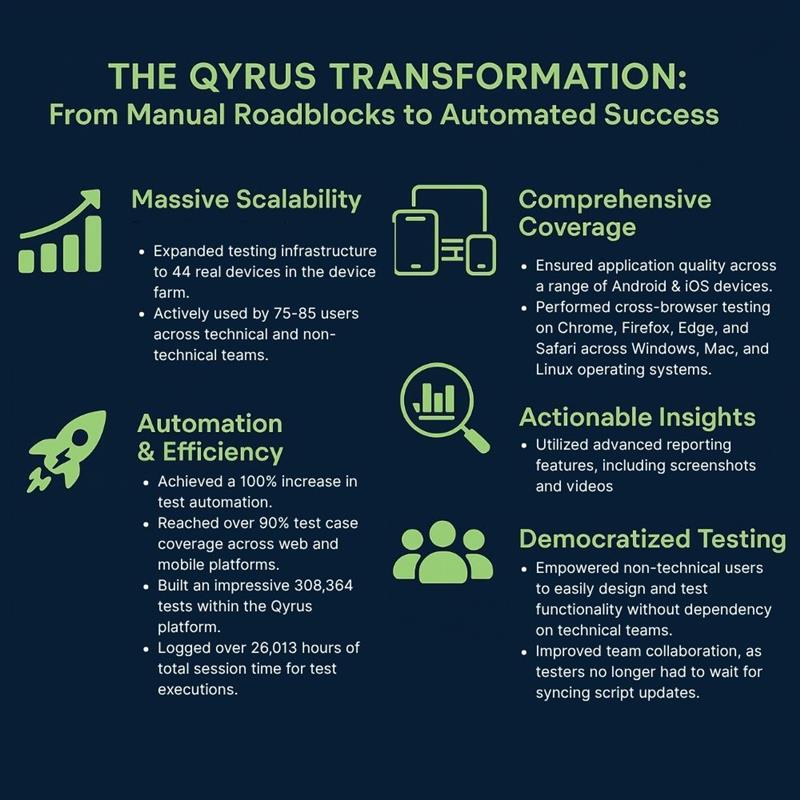
The choice to use Qyrus’ device farm for automated testing changed the client’s digital strategy. What started as a small trial quickly grew into a large deployment. It involved 44 devices and 75 to 85 active users.
This expansion allowed the client to test its apps on Android and iOS devices. They also were able to test with major browsers like Chrome, Firefox, Safari, and Edge on Windows, Mac, and Linux.
The Qyrus platform provided the client with powerful reporting and analytics tools that significantly improved visibility into test performance. Detailed reports, complete with screenshots, video logs, and advanced dashboards, allowed teams to quickly diagnose and resolve issues. This led to a substantial reduction in production bugs and a more stable, reliable digital platform.
Automation became a core component of the client’s testing strategy. With Qyrus, the client doubled their automated test cases.
They also reached over 90% test coverage on web and mobile platforms. Testers executed more than 308,000 tests, logging over 26,000 hours of test execution time. These results highlight the scalability and efficiency of the device farm automated testing approach.
Non-technical users can contribute to test creation and execution because of the simplicity of Qyrus. This method of testing helped bridge the gap between business and technical teams. This further helped to foster a more collaborative and agile development environment.
The client also benefited from the ability to simulate real-world scenarios across different devices and browsers. This comprehensive testing approach ensured that the digital products were robust and user-friendly. This would be regardless of the platform used by the customers.
Security and Compliance
In the financial services industry, security and compliance are paramount. The client required a testing solution that could meet stringent regulatory standards while supporting its need for scalability. Qyrus delivered on both fronts. The secure infrastructure protected sensitive financial data, while the flexible architecture allowed the client to expand its testing capabilities without compromising compliance.
The client decided to deepen its partnership with Qyrus because it can keep high security standards while growing operations. The platform’s enterprise-grade security certifications provided the assurance needed to innovate confidently in a highly regulated environment.
Moreover, Qyrus’ stringent security compliance gave the peace of mind that the client needed. Qyrus ensured a seamless and secure testing environment. This integration further strengthened the client’s ability to protect data and maintain regulatory compliance.
Results So Far
The results of implementing device farm automated testing have been impactful for the client. The organization reported a 150% increase in testing efficiency, enabling faster release cycles and significantly reducing the number of bugs in production. This improvement has directly affected the digital customer experience. Users now enjoy more reliable and responsive digital services.
Workflows have become automated, teams have become more agile, and collaboration between them is on a rise. Teams are now able to respond more quickly to changing requirements and deliver high-quality software at scale. The move to automation has led to significant cost savings. It has greatly reduced manual testing work and person-days.
The client has also seen improvements in team morale and productivity. With fewer repetitive tasks and clearer insights into testing outcomes, teams can focus more on innovation and continuous improvement.
Additionally, the client has been able to leverage the detailed analytics provided by Qyrus to make data-driven decisions. These insights have helped the client optimize its testing processes and identify areas for further improvement.
What’s Next for the Client
The client plans to build on its success. They will add AI-powered testing tools to their current system. These tools will allow for smarter automation, better analytics, and real-time issue detection. This will improve the efficiency of its device farm testing strategy.
The organization also aims to expand the involvement of non-technical teams in the testing process. Thanks to Qyrus’ easy low-code and no-code features, business users can help with test design and execution. This creates a more collaborative and inclusive way to ensure quality.
Compliance testing will remain a top priority. As rules change, the client promises to stay ahead by using Qyrus’ advanced security features. The organization will keep working to lower costs and increase test coverage.
The client is also exploring the use of machine learning algorithms to predict potential issues before they occur. This proactive approach to testing will further enhance the reliability and performance of their digital products.
Furthermore, the client is considering expanding its device farm to include more devices and browsers. This is to ensure even greater coverage and more comprehensive testing. This expansion will help the client stay ahead of the curve.
Why Qyrus?
The client selected Qyrus after a comprehensive evaluation of available solutions. Qyrus’ real device cloud impressed the organization. It offered the flexibility needed to test on many platforms.
The platform has an easy-to-use interface. Its low-code and no-code features make it accessible for everyone. It also integrates well with current workflows, ensuring a smooth transition.
Qyrus provided strong security and reporting features. These were important for the client to stay compliant and protect customer data. This combination of scalability, usability, and security made Qyrus the ideal partner for the client’s digital transformation journey.
By using device farm automated testing and advanced mobile software testing tools, the client has improved its operations. This change has also enhanced the digital customer experience. The organization is now better equipped to innovate, adapt, and lead in the competitive world of digital banking.
The client also values Qyrus’ commitment to continuous improvement and customer support. The Qyrus team has been responsive and proactive in addressing any issues and providing guidance on best practices. This strong partnership has been instrumental in the client’s success and will continue to drive future innovations.
Enterprise Data Engineering Team
A distinguished provider of disability, life, and supplemental insurance places immense reliance on its Enterprise Data Engineering Team. The Digital Transformation Organization (DTO) dedicates itself to developing scalable and efficient data systems and pipelines. These efforts cater to data analytics and visualization requirements, playing a pivotal role in empowering data-driven decision-making across the organization.
The company’s data-driven strategy necessitated refining their testing processes to bolster data analytics and visualization initiatives. The Enterprise Data Engineering Team faced challenges with data integrity, system integration, and validating large operations.
They saw a strong need for optimization. By using Qyrus’ advanced API testing platform, the team automated validations and made regression testing easier. This led to faster development cycles and better data accuracy.
Challenge
The team encountered several hurdles in their API testing journey:
Manual Validation Limitations: Traditional data validation methods proved labor-intensive and error-prone, missing the efficiency needed in modern data operations.
Performance and Scalability: Ensuring that data pipelines could effectively manage large-scale processes was a continuous challenge.
Integration Complexity: Seamlessly integrating data systems with enterprise applications demanded robust automation tools, which were lacking.
Compliance Needs: The necessity to adhere to stringent security protocols and regulatory standards called for precise and consistent testing.
Life with Qyrus
Qyrus provided the company’s data team with the necessary tools to tackle these challenges using advanced API testing features.
Regression Suite Setup: Simplified regression test processes, minimizing execution efforts and boosting productivity.
Low-Code/No-Code Accessibility: Qyrus’s built-in body and JSON path assertions allowed even non-technical team members to contribute meaningfully to API testing. With scalability and low-code/no-code capabilities, Qyrus minimizes ongoing training and onboarding costs for new team members. This allows the company to expand its testing efforts without proportional increases in costs.
CI/CD Integration: Efficient CI/CD capabilities with Azure DevOps ensured streamlined workflows and database configurations, which facilitated easy API and fast API deployments.
Future Dreams
Results + Outcome
Implementing Qyrus led to significant enhancements:
Improved Test Coverage: Broader testing scope resulted in increased pipeline reliability.
Efficiency Gains: Automated regression testing has greatly reduced execution efforts, thereby enhancing the validation process. The faster creation of test scripts (ranging from 5 to 30 minutes depending on complexity) compared to manual processes saves hours per test cycle. The organization has increased reliability and accuracy, enabling easy and fast API validation cycles while reducing the costs associated with post-production bug fixes.
Enhanced Collaboration: Parameterization and shared tests fostered better teamwork, allowing technical and non-technical members to collaborate effectively.
The successful implementation of Qyrus has enabled the Data Engineering Team to achieve fast API testing cycles, superior accuracy, and flawless system integration. These improvements match the team’s goal of enhancing data analytics and visualization skills for the organization.
Aspirations
The organization plans to keep working with Qyrus. They want to improve testing skills, increase automation, and stay a leader in the insurance industry. By using new solutions, the team is ready to lead in data analytics and visualization. This will help the organization stay agile, efficient, and forward-thinking.
As the company navigates the digital transformation landscape, the integration of robust testing platforms like Qyrus highlights a commitment to both innovation and operational excellence.
About the Client
PatelCo Credit Union is a member-owned, not-for-profit credit union. It has over $9 billion in assets and 450,000 members across the country. It is one of the oldest and largest credit unions in the United States.
The client’s mission is to improve their members’ financial lives. They aim to guide them toward financial responsibility. They believe that supporting everyday needs help people manage their day-to-day financial lives more comfortably. Their goal is to be the preeminent credit union that builds your financial wellbeing.
The Challenge
With more users relying on native mobile apps for daily tasks, PatelCo Credit Union had to start the digital shift. This created a sense of urgency for them to address critical challenges to improve their speed to market. To get this right, PatelCo Credit Union needed to begin native mobile testing.
They realized their existing tools lacked the required capability. And started exploring other mobile automation solutions. Qyrus not only proved to be a perfect fit but also offered real device testing—a key factor in their decision. In this case study, you will learn how and why PatelCo Credit Union chose Qyrus. And how they leveraged Qyrus to accelerate their automation journey.
Life with Qyrus
PatelCo Credit Union started their journey with Qyrus in January of 2024. They started using Web testing, expanding over to Mobile testing over time. Overall, they have licenses spread across our Web and Mobile testing services.
At the start, as with anything new, especially a software testing automation tool, there was a learning curve. Thankfully, with the guidance of the Qyrus team and a bit of practice, they quickly became comfortable with the platform overall.
Today, PatelCo Credit Union finds themselves taking around 1 day to build out test scripts. Due to this, there was an increase in test coverage. This was not just due to their expansion into native mobile testing, but also in their web testing as well.
Key Features Used
Recorders: Qyrus’ recorders for both web and mobile testing helped to streamline and simplify test building for PatelCo. Making script building more accessible to less technical members and to manual tester is a key way to speed up the testing process.
Inspect Mode: For Mobile test building, testers can make use of this mode to better inspect element details and attributes, getting element info at the click of a button.
Future Dreams
In the future, PatelCo Credit Union hopes to start performing end-to-end testing. They have plans to start expanding into Qyrus’ Component testing service, which would help them to achieve this goal and ensure a flawless user experience across PatelCo Credit Union online banking.
This would allow for the seamless testing of end-to-end business processes across web and mobile applications, perform and make assertions on API calls, and even test processes requiring desktop applications, all in one execution. Furthermore, the client hopes to introduce more native mobile testing as well as API testing and data testing automation. Lastly, they want to integrate this entire process into their CI/CD pipeline.
Results & Outcomes
As a result, PatelCo Credit Union was able to finally able to start expansion into native mobile application testing. They had considered this a great accomplishment, as this was a large hole in their software testing process from before. Just Now, with the introduction of Qyrus, they can push further to more API testing as well as end-to-end business process testing using Component testing.
Conclusion
In conclusion, PatelCo Credit Union’s transition to Qyrus for native mobile test automation has been a significant milestone in their digital transformation journey. By adopting Qyrus, PatelCo has not only filled a critical gap in their testing capabilities but also enhanced their overall test coverage and efficiency.
The successful integration of Qyrus has empowered PatelCo to better serve their members by ensuring a seamless and reliable user experience across both web and mobile platforms. Looking ahead, PatelCo is well positioned to continue expanding their testing capabilities with plans to incorporate end-to-end and API testing, and further integrations into their CI/CD pipeline. This strategic move underscores PatelCo’s commitment to innovation and excellence in financial services, paving the way for a more robust and future-ready digital infrastructure.
About/Overview The following is a case study about a regulated, leading UK bank and its partnership with Qyrus. A leader in innovative financial solutions, this bank serves an affluent community and offers multiple competitive savings accounts and lifestyle services.
Qyrus, on the other hand, is a scalable, one-stop-shop SaaS testing platform for all digital applications with innovative AI solutions. Its capabilities help enhance testing operations and overall quality.
The bank’s stellar services, along with what Qyrus offers, allow for a successful strategic partnership. This case study explores the partnership between the two. The challenges, the successes, the awards, and the quest for betterment. Another section has highlighted the use of AI in banking applications.
Challenges in the Banking Sector: Like every industry, the banking sector too has challenges. These challenges significantly affect bank agility and growth. Some of these are highlighted below, followed by a section that explores how Qyrus has helped the bank navigate these issues.
Traditional methods, such as Selenium Java for web testing and XCode for mobile testing, are known to pose significant challenges. These challenges have led to longer scripting and debugging periods.
Traditional methods, which banks usually use and generally require much manual effort, lack comprehensive test coverage. This limitation prevents the bank from maintaining consistent quality assurance across platforms.
In order to help the bank with these problems, Qyrus’ capabilities seemed an excellent addition.
Life with Qyrus The following section highlights the bank’s collaboration with Qyrus and how it helped the institution achieve greater efficiency overall.
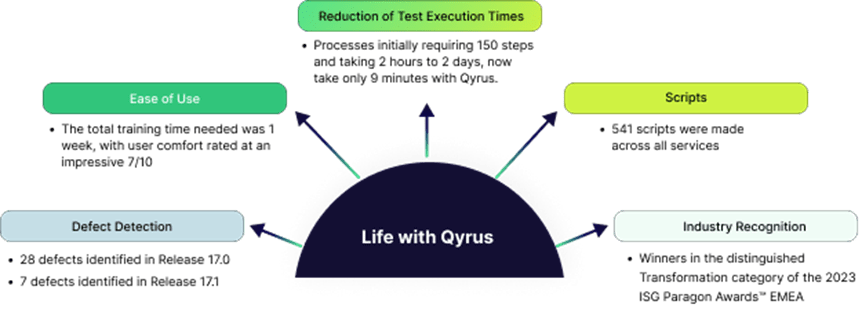
Reduction of Test execution times: Qyrus allows test execution at lightning speed. This was evidenced by the fact that using the service (Qyrus) significantly reduced test execution times for the bank. Processes that initially required 150 steps needed to take 2 hours and sometimes 2 days, now needed 9 minutes to execute.
Qyrus’ low code/no code approach simplified script creation and execution. The total training time needed was just a week, signifying ease of use. Qyrus’ clients gave the service glowing reviews, with comfort rated at an impressive 7/10. This further allowed broader coverage across banking applications, increasing defect detection and improving application quality.
Automated test scripts were executed for different areas, such as:
Mobility (iOS + Android OS: 88 scripts),
Components (iOS + Android OS: 160 scripts),
Web-Workflow Permissions (85 scripts),
Web – Lending/CS Ops (84 scripts),
Component – Lending (88 scripts)
BTL + Doc Upload (36 scripts).
3. Qyrus (linked with Slack to notify execution results) identified 28 defects in Release 17.0 and 7 defects in Release 17.1. The bank used Qyrus’ advanced reporting capabilities to help detect errors in the executions.
Achievements Through the Partnership: The progress with Qyrus has not gone unrewarded. The partnership has received recognition in the distinguished Transformation category of the 2023 ISG Paragon Awards™ EMEA. This award celebrated Quinnox’s innovative capabilities in driving the bank’s digital-first goals. The bank and Qyrus were also finalists in the ‘Functional Category’ in the ‘Best Test Automation Project. They were also recognized in the ‘Best Cultural Transformation’ category at the 2023 Digital Transformation Awards.
Future Aspirations Even after the success of the partnership, Qyrus and the bank are not complacent. Together, they’re striving to achieve even greater things. Some of these are listed below:
Together, the bank and Qyrus are working towards creating reusable functionsin the Component service. This will allow for mirroring Web service capabilities, enhancing the user experience.
New features for visual testing in Mobility and Component services are also being worked on to improve quality assurance.
A Slack Notification timer feature is being introduced across projects to improve team communication.
Overall Results and Outcomes As mentioned above, the bank has achieved significant reductions in testing time and increased test case throughput. This has allowed for operational efficiencies and cost savings. This in turn has led to better financial planning and resource allocations, allowing for the better provision of financial services.
Given the AI wave, this study is incomplete without an analysis of Artificial Intelligence in Banking.
AI use via Qyrus’ testing solutions has improved the bank’s approach to quality assurance. These tools have enhanced the detection of defects and improved testing processes, allowing greater accuracy and efficiency.
AI-driven insights into the bank’s operations have allowed strategic decision-making and improved overall service delivery.
Conclusion Innovative testing solutions help achieve a bank success story, and Qyrus’ success story is indeed a testament to that fact. It is simple to use, scalable to one’s testing needs, and implements smart features to help augment the testing process. It’s also entirely secure. A senior official from the bank praised the Quinnox team and Qyrus for being a ‘great addition’ to their original delivery features. He emphasized that within a few months, with the help of Qyrus, the bank was able to create an impressive test suite that consisted of complex scenarios across multiple platforms and channels. The fact that the partnership between the bank and Qyrus has been successful is evident from the numerous industry awards they have received. Together, they will continue redefining product experience benchmarks, a collaboration set to improve time-to-market features and the banking experience for customers. This is bound to help create the path for a wonderful feature in finance.
Fintech trends are at the forefront of innovation. As digital evolution reshapes financial services, mobile applications’ role in facilitating financial transactions has become necessary.
As challenging as 2023 was, it ushered in a reality check for fintechs, bringing some much-needed rationalization to the sector. Not all players could adapt to the new market conditions. Those that did now appear more focused, disciplined, and deliberate in terms of where and how they allocate resources.
The Fintech industry has seen some growth in broader venture funding. But as per CB Insights’s report on the State of Fintech Q1’24, “fintech funding continued to slide in Q1’24, declining 16% quarter-over-quarter (QoQ%) to $7.3B. Fintech deal volume, on the other hand, increased for the first time since Q1’23.“
In this blog, we start with what fintech applications are and how the best fintech companies use mobile testing automation to build a fintech app. We will also cover mobile testing automation’s significance and trends to look out for!
So, what are Fintech applications? Simply put, it’s a digital platform that leverages cutting-edge technology to provide financial services efficiently and conveniently. From banking and payments to investing and insurance, Fintech apps cater to a wide array of financial needs. As the demand for seamless user experiences surges, developers are constantly challenged to create robust applications that ensure security, reliability, and performance.
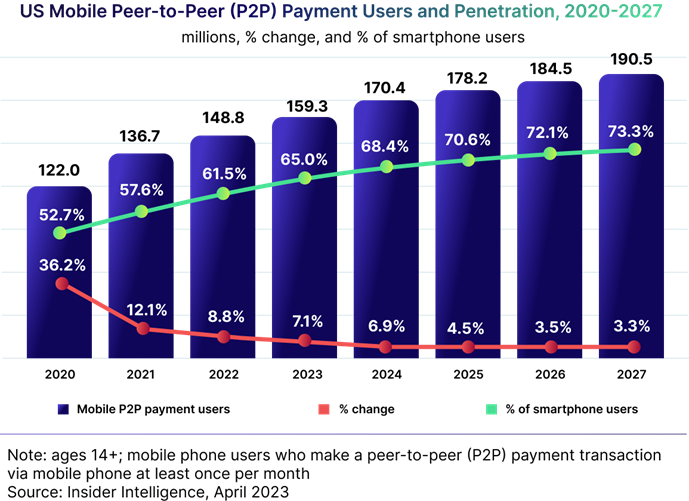
Amidst all the fintech trends that everybody is raving about, one aspect stands tall – the increasing reliance on mobile devices for financial transactions. As per eMarketer, 80.4% of new users adopting mobile P2P transfers between 2023 and 2027 are expected to be from Generation Z (the more tech-savvy generation).
This shift towards mobile-centric solutions has propelled the need for effective Mobile Testing Automation.
To ensure the Fintech companies meet the demands of today’s tech-savvy users, they must build an app that best suits them.
It all starts with understanding the nuances of Fintech Trends and incorporating them into the development process. Whether it’s seamless integration with third-party services, real-time analytics, or AI-powered chatbots, staying abreast of emerging trends is key to building a successful Fintech app.
However, building a Fintech app is just the beginning. Ensuring its performance across various devices and platforms is equally crucial. This is where Mobile Testing Automation comes into play. Companies like Qyrus automate the testing process and help developers identify and fix issues faster, accelerating time-to-market and enhancing overall quality.
Let’s look at some of the top Mobile Testing Trends that are here to stay (FOR SURE)!
Test Automation Test automation continues to be a cornerstone in mobile testing, ensuring efficiency, accuracy, and rapid deployment in the landscape of mobile applications. While in the Fintech Trends, this may not be number one, ‘Test Automation’ tops the list in the mobile testing trends in a big way.
Why? It empowers fintech companies to conduct repetitive tests swiftly, freeing up valuable human resources for more complex tasks. By harnessing automation frameworks like Appium or Espresso, testers can execute tests across various devices and platforms, ensuring comprehensive coverage in fintech solutions. Moreover, automation integrates seamlessly into Continuous Integration/Continuous Deployment (CI/CD) pipelines, facilitating faster time-to-market for Fintech innovations.
Its scalability enables thorough regression testing, which is crucial for maintaining the integrity of financial applications amidst frequent updates and iterations. As the demand for agility and quality heightens in Fintech Trends, the significance of test automation only amplifies, establishing it as a non-negotiable aspect of mobile testing frameworks.
Cloud-based Testing A game changer we need to talk about more often. It offers unparalleled flexibility, scalability, and cost-effectiveness. Fintech applications demand agility and accessibility, making cloud-based solutions indispensable for companies. Leveraging cloud infrastructure, testers can execute tests across many real devices and simulated environments, ensuring comprehensive coverage.
This approach obviates the need for costly hardware investments and facilitates on-demand scalability, making it ideal for handling peak loads during product launches or promotional events.
Furthermore, cloud-based testing fosters collaboration among geographically dispersed teams, streamlining the testing process and accelerating time-to-market for innovations. Security remains a paramount concern in the Fintech landscape, and cloud providers adhere to stringent compliance standards, ensuring data integrity and confidentiality.
As Fintech Trends continue to evolve, the agility and efficiency offered by cloud-based testing solidify its position as an indispensable component of mobile testing strategies.
Application of Generative AI Generative AI revolutionizes mobile testing by leveraging machine learning algorithms to generate test cases, data, and scenarios autonomously. With the complexity and diversity of applications on the rise in Fintech apps, generative AI offers unprecedented efficiency and accuracy to fintech companies.
By analyzing patterns and anomalies in application behavior, AI-powered tools can dynamically create test cases tailored to specific user scenarios, ensuring comprehensive coverage and detecting edge cases that might elude manual testing.
Moreover, generative AI adapts to evolving Fintech Trends by continuously learning from real-world interactions, enhancing the robustness of test suites over time. Its ability to simulate user behavior at scale enables fintech companies to validate the performance and reliability of their applications. Even under diverse conditions, it mitigates the risk of potential failures in production.
As Fintech Trends drive innovation and complexity in mobile applications, the application of generative AI emerges as a transformative force, redefining the landscape of mobile testing methodologies.
Codeless Testing Codeless testing democratizes mobile testing by enabling non-technical stakeholders to create and execute test cases intuitively, without writing a single line of code. It also enhances test coverage by providing access to testing tools and enabling a wider range of team members to participate in the quality assurance process.
Furthermore, where collaboration and rapid iteration are paramount for success, codeless testing empowers domain experts and business analysts to contribute directly to the testing process. Its low barrier to entry fosters cross-functional collaboration and ensures that testing aligns closely with business objectives and user expectations.
As the demand for agility and collaboration intensifies, the accessibility and efficiency offered by codeless testing make it a cornerstone of modern mobile testing strategies.
Here is a quick snippet of what Russ Thornton, CTO, Shawbrook Bank said about Qyrus, “Quinnox is a key partner of ours, not only supporting our technology delivery teams but also with tools like Qyrus. Test automation is a critical capability for any engineering team, and Qyrus supports the testing of our web, API, and mobile components as a part of our CI/CD processes, and also in ongoing regression testing across our partner ecosystem. The real power of Qyrus is that we have this extremely broad testing capability in one tool, run in the Cloud, and reusable across all our development teams.”
Low Code Testing: The Superhero All Fintech Companies Should Have! Fintech companies are always looking for new ways to make their software better and faster. One such method they’re using is low code testing. This means instead of writing every single line of code by hand to test their programs, they use tools that help them do it quicker and easier.
Imagine you’re building a Lego tower. Instead of putting each brick in place one by one, low code testing is like having a special machine that helps you stack the bricks much faster. In Fintech, these tools/platforms are like magic machines that help testers and developers test their software without spending too much time doing it manually.
Fintech companies love these low-code testing platforms because they help them make sure their software works well and doesn’t have any problems. It’s like having a superhero sidekick that helps you catch any mistakes before they become big problems.
So, who’s this superhero the testing industry is raving about? The global market for low-code platforms is likely to reach USD 65 billion by the year 2027.
As explained earlier, low code testing is a modern approach to testing applications that minimizes the need for writing code. It utilizes low-code test automation tools to streamline and expedite the testing process while maintaining accuracy and reliability. In essence, it empowers testers to create robust test cases with minimal coding effort, enabling faster and more efficient testing cycles.
While some coding might be involved, low code test automation tools significantly reduce the need to learn different frameworks and programming languages. This effectively eliminates the barrier for non-technical testers, enabling them to engage in testing activities with ease.
Here are some characteristics that make this feature a superhero material:
Visual interface: Low code testing platforms typically provide visual interfaces that allow users to create test cases and automation workflows by dragging and dropping predefined components, such as test steps, assertions, and data sources.
Simplified and Rapid Test Case Creation: Low-code testing tools provide intuitive interfaces that allow testers to create test cases effortlessly. The elimination of extensive programming knowledge requirements also enables the rapid creation of test cases, reducing the time and effort required to develop comprehensive test suites.
Reusability: Test components and scripts can be reused across different test scenarios, saving time and effort in test creation and maintenance.
Rapid Feedback Loops: With automated test execution, low-code testing facilitates quick feedback on software quality, allowing for prompt identification and resolution of issues.
Minimal coding: While some level of scripting or coding may still be required in certain cases, low code testing minimizes the need for extensive programming knowledge. Users can often achieve complex testing scenarios without writing code from scratch.
Companies like Qyrus have mastered the low code game. They are a proven and trusted partner for several global Fintech enterprises looking to achieve their objectives.
Here is a 1-minute video to give a glimpse of what a low code automation platform can do.
How does low-code testing differ from traditional testing methodologies? Low code testing differs significantly from traditional testing methodologies. In traditional methods, testing often involves writing extensive lines of code for test scripts, setting up testing environments, and manually executing tests. Low-code testing, as mentioned earlier, simplifies this process by providing visual interfaces, drag-and-drop functionalities, and pre-built components to create and execute tests with minimal manual coding.
Accessibility and Ease of Use: Low code testing, particularly when employed alongside low code test automation tools, offers a significant advantage in accessibility and ease of use, especially for Fintech companies. Unlike traditional testing methods that often demand specialized technical skills, such as coding or scripting expertise, low code testing platforms are purposefully designed to be user-friendly and accessible to a broader range of users, including business analysts and domain experts involved in Fintech software development.
Rapid Development and Deployment: As per an article by Medium, cloud-based low-code solutions allow banks to deploy applications instantly in the cloud. How? With the visual interfaces and drag-and-drop functionalities offered by low code testing platforms, Fintech teams can swiftly build and modify test automation scenarios without the need for extensive coding, facilitating rapid iterations and updates.
Flexibility and Customization: Adaptability is paramount to any industry. Fintech companies can easily tailor test automation workflows to meet specific testing requirements and adapt them as needed, without being constrained by rigid scripting languages or frameworks.
Reduced Maintenance Overhead: Fintech companies often operate under tight deadlines and stringent regulatory environments. Low code testing helps alleviate the maintenance overhead associated with traditional testing methods, allowing Fintech teams to focus more on innovation and compliance. With low code testing platforms, tests are easier to maintain and update over time, ensuring that Fintech software remains robust and compliant with regulatory standards.
Enhanced Collaboration and Visibility: Collaboration and transparency are fundamental for success in Fintech. Low code testing promotes enhanced collaboration and visibility across teams involved in Fintech software development. The visual nature of low code testing platforms facilitates better communication between business stakeholders, testers, and developers within Fintech companies, fostering a shared understanding of testing objectives and outcomes. Additionally, built-in reporting and analytics capabilities in low code testing platforms enable Fintech stakeholders to track testing progress and performance effectively, ensuring alignment with business goals and regulatory requirements.
Overall, the use of low-code testing platforms like Qyrus can have a significant business impact.
Here is an interesting case study about a Retail Bank with 4500 employees and more than 5 million customers. This is how they drove their test coverage to 90% with Qyrus.
The Problem?
Insufficient manual testing led to insufficient testing, and complex bug detection and impeded the creation of the CI/CD platform.
Insufficient testing also led to the loss of customers due to inferior apps.
The Retail Bank chose Qyrus to transition their fully manual testing method to a low code automation testing approach.
The Outcome? Astonishing!
Automated test scripts and cloud-hosted reports resulted in 2500 automated test executions per week.
Repurposing and reusing test scripts improved test coverage by 90%.
Leveraging Qyrus’ device farm, the bank scaled testing from 30 devices to 50 devices.
In today’s digital age, the Financial Technology (Fintech) industry has evolved how we handle financial transactions, offering convenience, efficiency, and accessibility. Experts estimate the Global Fintech Market size to be USD 312.92 billion in 2024 and project it to reach USD 608.35 billion by 2029.
However, with the rise of Financial Technology comes the pressing need for robust security measures and stringent regulatory compliance. This is to safeguard sensitive financial data and maintain trust among users. In this blog, we will explore how test automation helps ensure security and compliance in the Fintech industry.
Introduction Financial Technology, or Fintech, encompasses a wide range of technological innovations aimed at enhancing financial services. Financial technology solutions have disrupted traditional banking and financial sectors, offering seamless experiences to consumers and businesses alike. However, with these advancements come inherent security risks and regulatory challenges that must be addressed to uphold the integrity of the financial ecosystem.
Importance of Security and Compliance in Fintech Fintech, encompassing a wide array of financial services delivered through technology, relies heavily on trust. Users entrust their sensitive financial information to Fintech apps and software, expecting robust security measures to safeguard their data. Ensuring security and compliance is not just a regulatory requirement but a fundamental necessity for the credibility and sustainability of any Fintech venture.
Did you know that the average Spending per employee in the cybersecurity market is projected to reach US$52.21 this year? Security breaches in Fintech can have severe repercussions, damaging the company’s reputation and the users’ trust.
Hence, incorporating stringent security measures is imperative. From encryption protocols to secure authentication methods, every aspect of Fintech software must be fortified against potential threats.
Moreover, with the increasing prevalence of cyberattacks targeting the financial sector, staying ahead of the curve is essential. Regular security audits and proactive measures are necessary to safeguard against evolving threats.
Similarly, compliance with regulatory standards is non-negotiable in the realm of Fintech. The financial industry is heavily regulated, with stringent requirements imposed to protect consumers and maintain the financial system’s integrity. Failing to adhere to these regulations can lead to severe penalties and legal consequences. Therefore, Fintech companies must not only stay abreast of the latest regulatory developments but also ensure full compliance in their operations.
Security Threats: Fintech apps and software are vulnerable to various cyber threats, such as phishing attacks, malware, ransomware, and data breaches. These threats can result in financial losses, reputational damage, and legal consequences for Fintech companies.
Data Protection Regulations: Compliance with data protection regulations such as GDPR and CCPA presents a significant challenge for fintech companies. Ensuring that customer data is collected, processed, and stored securely while adhering to regulatory requirements demands robust data governance practices and often necessitates substantial investments in compliance measures.
Risk of Financial Fraud: Fintech apps and software are prime targets for financial fraud due to the large volume of transactions and the interconnected nature of digital financial systems. Fraudulent activities such as identity theft, account takeover, and payment fraud pose a considerable threat to both consumers and financial institutions, requiring advanced fraud detection and prevention mechanisms.
Complex Regulatory Landscape: The fintech industry operates within a complex regulatory landscape characterized by varying regulations across different jurisdictions. Compliance with securities regulations in banking, anti-money laundering (AML) laws, and know-your-customer (KYC) requirements presents a formidable challenge for fintech companies seeking to expand their operations globally.
Third-party Risks: Fintech companies often rely on third-party service providers for various functions, including cloud hosting, payment processing, and customer support. However, outsourcing certain aspects of operations introduces additional security and compliance risks.
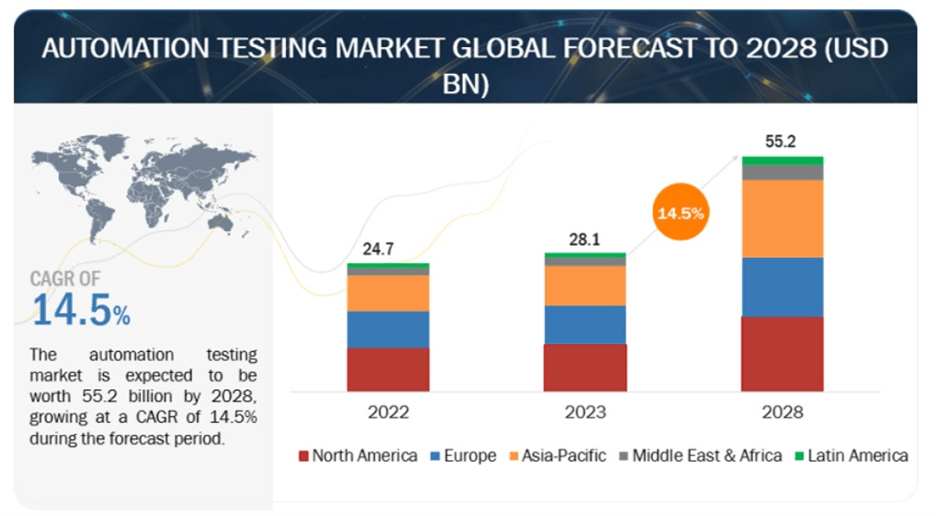
The Need of the Hour: Test Automation The automation testing market is projected to be USD 55.2 billion by 2028. Selecting the right automation strategy is key to being effective and efficient in being compliant with security regulations in the Fintech world
Test automation involves using software tools to execute pre-scripted tests on Fintech applications and software. By automating the testing process, Fintech companies can efficiently identify vulnerabilities and ensure that their fintech software meets regulatory requirements.
Test automation plays a crucial role in addressing security concerns and compliance requirements in the Fintech industry:
Regression Testing: Test automation streamlines regression testing, allowing Fintech companies to verify that software updates and changes do not introduce new security vulnerabilities or compliance issues.
Risk Mitigation: By leveraging test automation, Fintech companies can proactively mitigate risks associated with security breaches and non-compliance. Regular automated tests help identify and rectify vulnerabilities before they can be exploited by malicious actors, thereby safeguarding the integrity and reputation of Fintech firms. Quick Read: How CIOs can improve Speed, Security and Quality in Testing?
Competitive Advantage: Fintech firms that prioritize test automation gain a competitive advantage by demonstrating a commitment to security and compliance. This fosters trust among customers and partners, leading to an increase in the adoption of Fintech software.
Cost-Efficiency: Although initial implementation may require investment, test automation ultimately proves cost-efficient by reducing the likelihood of security breaches and non-compliance incidents. By preemptively addressing security concerns through automation, Fintech companies can avoid costly repercussions associated with data breaches, regulatory fines, and reputational damage. The average savings for organizations that use security AI and automation extensively is USD 1.76 million compared to organizations that don’t. Quick Read: Cut Costs with AI & Machine Learning in Software Testing
Scalability and Flexibility: Test automation offers scalability and flexibility, allowing Fintech companies to adapt to evolving security threats and regulatory requirements. Automated tests can be easily scaled up or modified to accommodate changes in the Fintech landscape. This ensures the security measures and compliance protocols are robust and up-to-date. Some Great Practices Fintech Companies Should Adhere To! To maximize the benefits of test automation in the Fintech industry, Fintech companies should adhere to the following best practices:
Establishing a Comprehensive Test Automation Strategy: Fintech companies should develop a comprehensive test automation strategy that aligns with their business objectives, security requirements, and compliance goals. The strategy should encompass test planning, tool selection, test case design, and execution.
Integration with DevOps Practices: Test automation should be integrated into the DevOps pipeline to enable continuous testing and delivery of Fintech applications and software. By automating testing within the CI/CD workflow, Fintech companies can detect and address security vulnerabilities and compliance issues early in the development lifecycle.
Leveraging AI/ML for Advanced Testing: Fintech companies can leverage AI/ML platforms like Qyrus to enhance test automation capabilities, such as predictive analytics, anomaly detection, and intelligent test generation. These advanced testing techniques enable Fintech companies to identify emerging security threats and compliance risks proactively.
Conclusion Given the sensitive nature of financial data and transactions, security and compliance are paramount in the Fintech industry. As per IBM’s Cost of a Data Breach Report 2023, the global average cost of a data breach in 2023 was USD 4.45 million, a 15% increase over 3 years.
Test automation plays a critical role in addressing security concerns and compliance requirements. It provides comprehensive test coverage, ensuring thorough examination of all aspects of the Fintech application. Moreover, automation enables faster testing cycles, facilitating the rapid detection and resolution of issues. This agility is crucial in the fast-paced world of Fintech, where timely updates and releases are essential to staying competitive.
Global Banks are at risk of losing one in five (20%) of their customers due to poor customer experience, according to 10X banking. This is particularly relevant for mega retail banks, which can’t afford to jeopardize their customer base due to lackluster web and mobile app interactions.
With over 4,500 employees, our client is a retail bank with over 290 branches and a trusted customer brand that offers full-service banking to more than five million customers. They operate on a modern banking platform and serve customers through digital channels, native IOS and Android applications, and in branches across the UK offering personal and business banking options with 1.33 billion in revenue.
That said, they recognized the pitfalls of manual testing—resulting in strained resources, sluggish release cycles, underwhelming web and mobile app performance, and subsequent revenue loss—one retail bank embarked on a mission to overhaul its full-service banking through digital banking testing infrastructure. Their goal? Delivering unmatched user experiences.
The Problems In the context of this banking case study example, the bank sought to establish a dedicated process aimed at improving customer experience across their web and mobile applications. In the process, they encountered obstacles such as:
Inefficient manual testing The manual testing infrastructure led to redundancies in testing, with testers having to re-write test scripts, choking their bandwidth and as a result bottlenecks in product release cycles. The outcome? Inefficient testing, complex bug detection, and resolution.
Additionally, the manual approach impeded the creation of automated CI/CD pipelines, given its inherent requirement for manual intervention.
Direct loss of customers due to inferior apps With inefficient testing came substandard applications, resulting in a less-than-optimal user experience. This directly impacted the bank’s business with a noticeable loss of customers and revenue.
In an effort to put an end to losing customers to competition, the retail bank turned to Qyrus to completely automate its testing framework. The next section of this banking case study example highlights how Qyrus helped achieve this and the magnitude of the transformation.
The Solutions The bank was able to ramp up speed to market by automation resulting in the expansion of test coverage using Qyrus’ testing solutions. End result was a consistent customer experience across its full-service banking infrastructure. Here’s how:
The transition from full manual to automated testing Qyrus prioritized application testing, starting with automated test scripts for mobile and web. Employing cloud-hosted reports featuring step-by-step screenshots and videos of test executions, a foundation for robust, data-driven reporting was established.
The endeavor resulted in a substantial increase in the scale of testing with the bank achieving more than 2,500 automated test executions each week, coupled with over 10,000 manual and object spy sessions per week.
Comprehensive test coverage With Qyrus’ automation came expanded test coverage – from web and mobile to API and end-to-end customer journey test cases. As a consequence, testers could repurpose test scripts, eliminating the need to create scripts anew for scenarios ranging from logging in to verifying balances and other transactions. For perspective, the bank accomplished a test coverage rating of 90%, wherein 100% of the tests generated were automated and reusable.
Leveraging Qyrus’ diverse device farm, the retail bank scaled testing from 30 to over 50 real devices, spanning Android and Apple tablets and mobiles, as well as various browsers (Chrome, FF, Edge, Safari, etc.) and operating systems (Windows, Linux, Mac).
Improved testing and QA through collaboration Qyrus’ testing solution made test sharing among cross-functional teams a breeze with as many as 50 testers, developers, and analysts building automated tests. Furthermore, test de-bugging was simplified owing to live test executions on the web and mobile.
Qyrus’ solution also enabled direct issue logging in Jira,profiling performance metrics for gauging system responsiveness, and visual regression for preventing unintended visual discrepancies across different software builds. All this meant efficient testing, fewer release delays, and faster bug-free releases.
The Impact The retail bank’s success story in this banking case study example exemplifies how testing automation can translate to an unparalleled customer experience, the outcome translated to:
2,500+ automated executions per week
10,000+ manual and object spy sessions per week
90% test case coverage (Web and Mobile)
Expanded usage from 30 to more than 50 devices
Conclusion The banking sector is recognized for its customer-centric approach, and this principle applies equally to digital banking. Battling with the challenges in manual testing and subpar user experiences, the bank benefited from Qyrus’ scalable and secure testing automation solution. The outcome? A remarkable 90% test coverage streamlined operations across web and mobile platforms, and ultimately elevated customer experience to a class of its own.
Developing new banking products quickly while offering best-in-class service is difficult for most banks in the UK, given there’s no dearth of competitors and there’s a surge in demanding customers. Needless to say, banks have to struggle harder to retain their customer base in the UK.
One Yobota survey revealed that 77% of UK banks and financial services firms surveyed began to engage with new customer segments in recent years. Moreover, 80% of them were regularly seeking feedback from customers, and 71% were already implementing them by introducing new products. While many others are focused on modernizing their digital channels since over 50% of the UK population is expected to use mobile phone banking services by 2026.
Improving the customer experience significantly while introducing new products is even harder for specialist banks with lower budgets, given the higher web application development and testing costs. This case report highlights how Shawbrook Bank, despite lower budgets and higher development and technological costs, managed to improve the customer experience significantly. Let’s get right into it.
The Challenge Every bank’s success story for digitization begins with a challenge, usually web application development. But for this bank, it was testing.
When this UK bank began developing new digital banking features to woo its existing customers, they were faced with the following challenges:
Inefficient testing They had a hard time validating the customer experience across various browsers. Since the bank did not have parallel testing measures in place post-web application development, they were wasting over 2500+ person days and significant funds to simply validate changes and test their product.
High tester turnover The tester turnover was unbearably high, presumably due to redundant and inefficient testing processes, leading to poor maintenance of the testing ecosystem. At one point, the bank was spending over $400,000 solely on testing.
Poor customer experience Given the inefficient testing practices and high tester turnover, validation efforts were delayed. So, the bank had to release the software to production prematurely. This, in turn, meant that customers were at the receiving end of a buggy software experience.
To put an end to all these problems, the bank decided to automate testing and accelerate the software development and feedback times. And for that, they turned to Quinnox for help. In the next section of this case report, we go over how the UK bank solved its software testing problems with Qyrus.
The Solution Quinnox used Qyrus, its proprietary AI-powered automation platform, to implement a shift-left quality strategy, through which the specialist bank was able to release software updates quickly without compromising the stability of business processes. Here’s how.
Automated tests The Qyrus team successfully automated a range of tests for the bank’s software through CI/CD pipeline integrations and Qyrus-native plugins and streamlined crucial processes like savings account activities, customer due diligence, and customer onboarding in its savings applications, lending applications, and customer apps.
Through Qyrus CI/CD automation, tests were executed immediately after the build, increasing testing efficiency. X-ray was used for test management and reporting was simplified as well, given reports got added directly to the pipeline.
Such automation lowered the number of hours spent by the UK bank’s testing team and reduced the number of manual errors dramatically. For perspective, such automation prevented the release of over 2500+ bugs into production.
Repurposed functional tests for performance testing To reduce the testing time, the bank repurposed functional tests for performance testing with Qyrus. They executed tests for over 1000+ users simultaneously, increasing test reusability and improving testing efficiency. Furthermore, thanks to repurposing tests, they were able to ensure greater consistency and run reliable tests, given there was no scope for introducing errors manually.
This meant that their savings applications, lending applications, and customer-facing applications were bug-free.
Scalable infrastructure and coverage With Qyrus’ help, the bank was also able to expand its test coverage across multiple platforms, browsers, devices, and operating systems, quickly. This ensured the bank’s customers had a consistent user experience across platforms, no matter which platform they used, savings applications, lending applications, or others.
The Impact The Shawbrook Bank success story is an excellent example of how companies can follow through with their promise of providing its customers the best experience possible, with better testing.
After all, with Qyrus’ AI-based testing automation platform, the UK bank was able to streamline testing considerably.
For the purpose of this case report, it translated to:
60% reduction in manual efforts with Qyrus automation
85% effort reduction across testing and QA lifecycle
200% ROI within first 12 months
“Quinnox is a key partner of ours, not only supporting our technology delivery teams but also with tools like Qyrus. Test automation is a critical capability for any engineering team, and Qyrus supports the testing of our web, API, and mobile components as a part of our CI/CD processes, and also in ongoing regression testing across our partner ecosystem. The real power of Qyrus is that we have this extremely broad testing capability in one tool, run in the Cloud, and reusable across all our development teams.” – Russ Thornton, CTO, Shawbrook Bank
The client is a London-based, consumer-facing fintech company founded in 2016, providing its customers with free digital-only accounts for personal finances.
The neobank startup set out with the goal to revolutionize social banking and make it as frictionless as possible through innovative products and enjoyable customer experiences. This is a case study of how the said challenger Neobank achieved this feat, more so on a tight budget.
The problem The hero of this case study, the challenger bank, was keen on automating their mobile testing for Payments, Split Transactions, Settlements, User onboarding, and User experience with a small testing budget. That meant the bank was burdened with several testing problems, including:
1. Insufficient QA testers The neobank had 4 manual testers for testing payments, and other software modules, given their low revenue and budget constraints. This meant that their software testing efforts took additional time and effort, wasting both time and resources.
2. Inefficient QA testing In addition to having a small number of testers, the bank was carrying out all its software testing efforts manually. This meant that the testing was prone to errors and cost several more employee hours.
3. High testing costs Perhaps most significantly, the bank wanted to test multiple client-facing applications across web, mobile, and business processes but did not have the budget to cover the costs. Had they not scaled up their testing rapidly, they would have faced multiple dissatisfied customers. This is precisely why they turned to Qyrus for help.
The solution After thoroughly screening multiple automation platforms on various critical parameters, the company selected Qyrus, the intelligent,codeless automation platform for Mobile and API licenses as well as devices on the Device Farm for both Android and iOS.
The challenger bank transformed its software testing for payments and other modules by training its QA testers to operate the Qyrus test automation platform for 3 weeks. With testers proficient with the platform and having a 9.5/10 comfort level using the tool, the bank moved on to improve its testing processes. Here’s how Qyrus helped with it.
1. Expanded test coverage Qyrus expanded the bank’s testing process and started off with 100+ Android and 200+ iOS tests built within the first few months, with an average test build time of 10 minutes. Besides that, Qyrus also scaled mobile and business process testing to increase instances, browsers, and devices, including 5 end-to-end business process tests. This made for a comprehensive testing system. In fact, the Neobank further expanded coverage by creating over 706+ Android tests and 716+ iOS tests with an average execution time of 5 minutes.
2. Fast tracked testing Through its AI-enabled plugin, Qyrus helped the bank startup deploy automated tests right after development, reducing the time spent on manually building and deploying tests. For perspective, the bank observed a 50% decrease in test build time through cloning (8 minutes per script) and close to a 5-minute execution time.
Furthermore, given the reports were uploaded directly onto the pipeline, Qyrus simplified reporting as well. Thanks to this, the challenger bank could validate end-to-end functionality in less than 2 hours post-release, allowing for quicker error resolution.
3. Improved testing practices With Qyrus, the challenger bank enabled data-driven testing through parameterization for the first time. They not only optimized organization and maintenance through Qyrus action types but also helped testers automate tests effortlessly. For instance, the bank’s testers developed 8 automated tests that would get triggered and executed immediately after the build.
The Impact This case study is a timely example of how neobanks can successfully validate the functionality of its software applications with Qyrus, no matter their budget constraints. For the social banking startup, in this case study, the subscription with Qyrus translated to:
~50% decrease in test build time through cloning
1500 total executions
Zero bugs leaked into QA & production
In 10 weeks of subscribing to Qyrus, the Neobank startup, achieved 90% test coverage across mobile, APIs, and end-to-end scenarios using two resources. Besides that, the bank successfully managed to scale its testing efforts across various platforms, despite its budget, and offer its customers a high-quality social banking experience.
Kumar Vivek
Development
Duis aute irure dolor in reprehenderit in voluptate velit esse cillum dolore eu fugiat nulla pariatur. Excepteur sint occaecat cupidatat non proident, sunt in culpa qui officia deserunt mollit anim.