It’s about 200,000 years ago. A group of Neanderthals are sitting around a fire in what is now central Italy.And they do something outrageously clever.- They invent the world’s first glue.*
It’s easy to dismiss glue as inconsequential, especially when juxtaposed against mankind’s other great inventions such as the wheel. But the ability to combine the two things is considered so critical that scholars regard the invention of glue as a significant sign of cognitive advancement. Here’s another way to explain the importance of glue: It came even before clothing (about 170,000 years ago), and just after the estimated origin of language (about 350,000 years ago).**
In the modern age, the importance of APIs—the digital equivalent of glue—is also just as high. How high? One Akamai study notes that API calls represent over 80 percent of all internet traffic.
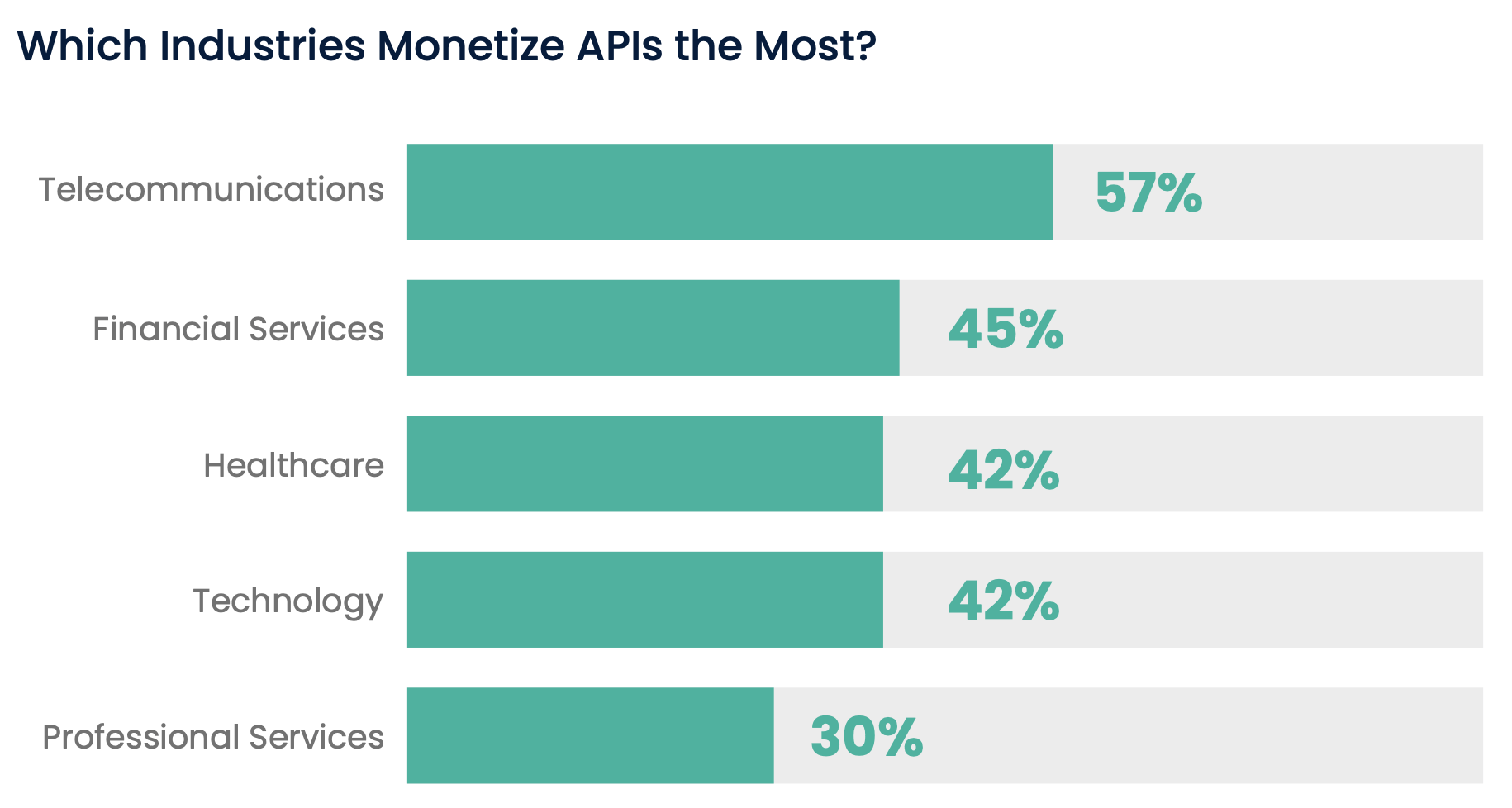
It’s hard to argue over the importance of APIs, given how they’re the connective tissue that holds together so much of our digital environment—from applications architected with the smallest microservices to the most expansive Open ecosystems, such as Open Banking. Today, a significant majority of developers use APIs, and 40% of businesses monetize APIs, according to the State of APIs survey.
But there are a few hurdles impeding companies from fully realizing the benefits of APIs, and a lot of them have to do with testers.
Testers Grapple with APIs
For organizations to make the most of the benefits of APIs, their testers need to achieve a greater level of comfort with API testing and automation. Right now—primarily because of the current set of solutions available to them—many testers shy away from API testing. Their complaints fall, largely, into four categories:
Collaboration is Difficult
Most API testing platforms make it hard for testers to collaborate. Even though it’s become increasingly critical for testers to work in tandem with developers and other testers as organizations adopt shift-left strategies. This requires that QA engineers have common workspaces with developers, enabling both teams to engage and collaborate without unnecessary friction.
API Testing is Complex and Technically Demanding
Many testers start out with UI testing and are therefore accustomed to working with GUIs. As they try to adopt API testing, they are confronted with tools that only support command-line interfaces (CLI), require technical savvy to set up testing environments, and need a knowledge of JavaScript or other programming languages. These hurdles discourage testers from adopting API testing, even though it can be significantly more efficient that UI testing.
Management is a Burden
Traditional API testing tools are not easy to set up, manage, or monitor. This is exactly the opposite of what testers require as speed and efficiency become more important. API testers need features that facilitate everyday operations, enabling them to focus on increasing test coverage. For example, testers would benefit greatly if they could schedule tests without tiresome third-party integrations. Or if they could create a library of API tests that could be re-used or be imported from other platforms.
Scaling is Hard
If API testers could run multiple tests simultaneously, they would be able to boost their output significantly. However, many API testing tools are hosted on desktops which limits the ability of testers to parallel process and scale tests. Platforms which serve API testing solutions from the cloud are a solution.
How to Select the Right API Testing Platform
These challenges can be addressed with the right API testing automation platform—with ‘right’ being the operative word. The fact is that not all API testing automation platforms are built the same—which means you need to be extra diligent before you invest.
What would an ideal API testing platform look like? What criteria should it meet? Here’s a handy checklist.
Is it Easy to Deploy?
There’s little point in an API testing automation solution that takes months of effort to deploy. Here are two reasons why: It hurts speed-to-value and return on investment calculations; and it’s likely to be so complex that it becomes a victim of change management.
Qyrus’ cloud-based API testing solution ensures that getting started is both fast and easy. Testing teams can go from zero to executing their first API test with assertions in under just 10 minutes.
Does it Offer No-Code Assertions?
Assertions—such as those that validate status codes or response headers, for example—are a critical part of API testing. But, often creating assertions calls for complex scripting, which can bog down testing teams. This is where no-code assertions can help.
Qyrus is the only testing service provider that offers codeless API testing. Its graphical, point-and-click interface, combined with drop-down menus requires no scripting. This minimizes API testing automation complexity, thereby lowering dependence on time-intensive UI testing. Testing with Qyrus is 40% more efficient than existing code-based API systems.
How Simple is it to Use and Manage?
It goes without saying that the more user-friendly an API Testing Solution is, the greater the probability it will be used extensively, increasing both speed of delivery and coverage. Qyrus’ platform is built ground up to simplify testing. It goes further than other testing solutions to ease the jobs of testers with native plugins for the most popular CI pipelines such as Jenkins, Azure DevOps, TeamCity, Circle CI, BitRise, and more.
Additionally, it provides scheduling features without the hassle of third-party integrations and enables testing teams to import existing collections from other platforms such as Postman or Swagger.
To boost the efficiency and output of testers, Qyrus also offers parameterized, data-driven tests, which allow testers to upload Excel sheets and minimize the drudgery of manually testing against multiple parameters. Plus, all tests on Qyrus can be re-used and shared.
Is API Service Virtualization Part of the Solution?
As organizations adopt Agile methodologies to improve their ability to deliver new products or features more quickly, it can get easy for scrum teams to be at different stages of completion. This makes end-to-end testing difficult. API service virtualization fixes that by allowing testing teams to simulate APIs and execute tests.
With Qyrus’ API Service Virtualization, testers can create mock services quickly and easily, enabling them to reduce dependencies on work-in-progress or unavailable APIs. This capability enables quality teams to mitigate delays, shift left, and test earlier, shrink time-to-market, and lower costs. With Qyrus service virtualization services, testers can build APIs without any code to suit their test ideas.
How Collaborative is the Platform?
Cross-functional Agile teams, DevOps practices, and shift-left strategies have all increased the dependencies between software development engineers and quality assurance teams. But this relationship can sometimes be adversarial, resulting in poor collaboration, which can significantly impact the speed and cost of delivering high-quality software.
Qyrus understands the need for API testers to collaborate extensively with developers, business users, and process owners. It facilitates teamwork with cloud-based, shared workspaces that enable effortless collaboration; easy-to-read-and-share reports; and native integration with Jira to raise and track tickets effortlessly.
Is the Solution Integrated and Scalable?
The aim of every business that operates in a digital environment should be to increase its software development and testing ACCESS (Agility. Coverage. Cost-Efficiency. Error-Free-Delivery. Speed. Security.)
Frequently, however, the platforms and tools that are supposed to support developers and testers impede them from achieving these goals. They offer siloed solutions, which often operate off local machines or desktops, which impinge heavily on an organization’s ability to scale and run tests, holistically, across multiple platforms.
Qyrus is different. It is powered by a cloud-based platform that’s designed to scale up and down seamlessly. Additionally, with Qyrus, quality teams can more efficiently test Web, Mobile and APIs with a single AI-powered platform that eliminates the need for time-consuming custom frameworks and test infrastructure. With Qyrus’ integrated SaaS platform, organizations can launch API tests quickly, easily onboard new users, reduce delays and overheads associated with hardware purchases and maintenance, and increase the availability and resilience of testing environments.
Many of the world’s largest organizations and most agile start-ups depend on Qyrus’ API Testing Platform. You should, too. Try it now!
Is that a chill in the air? We think it’s finally here, the end of summer. For some, it’s a time to lament. The farewell of long shiny days and warm summer afternoons traded for dull cool days and long dreary nights. Others relish the “sweater weather” to come. Whatever side you’re on, we hope your summer has been fun! Qyrus is here to either extend your summer fun or kick off your autumn celebrations with another Feature Friday. Today we’re joined by Raoul and Jorell to discuss more about our brand new visual testing capabilities!
Tell us more about visual testing offered by Qyrus and its use cases.
Raoul: From a high level, our offering allows the user to add visual testing to their functional web tests. It’s super simple to enable and is done before the test execution itself. Choose previous tests to compare against and let the test run. By visual testing we mean that Qyrus will compare screenshots of older executions with most recent executions and highlight any changes in the application also known as visual regression.
Jorell: Additionally, Qyrus visual testing includes validating against the Web Content Accessibility Guidelines 2.1 (WCAG 2.1), essentially this is known as accessibility testing. Currently Qyrus supports overlap testing, contrast testing, and dark mode contrast testing, with many more solutions to come shortly.
Interesting feature… it seems like it takes the functional testing and enables visual testing to happen in the background. Reusability has always been an important point in Qyrus’ testing.
What is this feature’s overall impact on the testing process?
Jorell: The largest impact comes in the form of test reporting. A simple checkbox provides so much more visual analysis and can empower testers. In a way, it also impacts test building. It’s super simple to enable this visual testing, as I mentioned.
Raoul: And really it helps increase test coverage in that manner, as well. We have seen testers struggle when it comes to visual regression testing, and most of it ends up being a manual process. This empowers a shift left approach.
Qyrus’ visual testing can obviously impact your testing strategies. However, let’s get more insight into how specific users might utilize this feature.
How might visual testing help testers, developers, and business technologists? What value can this feature bring?
Jorell: Well, testers can check a box when executing Qyrus web tests to expand coverage from just functional testing to include visual regression and accessibility testing. The importance of accessibility testing is tantamount. They would be the primary users of this functionality.
Raoul: Developers can now receive quicker feedback from testers on what changed across releases and if any accessibility rules has been violated. They can do this themselves and easily, as well. Simply navigate through your different web pages and receive feedback. And lastly, business technologists are able to equip their teams with Qyrus web testing – a tool that allows them to do their traditional functional testing but will automatically does visual testing – expanding testing coverage into non-functional aspects such as visual regression and accessibility testing.
Does the same or similar functionality exist without Qyrus, and how do competitors address similar problems?
Raoul: Many of our competitors offer these as individual features but we integrate this within our functional web testing service, which by the way is a SaaS testing and quality platform.
Jorell: For visual regression, the tester would have to manually compare the different versions side-by-side or use an unrelated tool to achieve the same results. And for accessibility testing, the tester will have to validate each page against accessibility standards using yet another tool.
So, like with many other features on Qyrus, it’s not something “brand new” to the testing scene. However, it’s another capability that is offered in our “one-stop-shop.”
How do you see visual testing impacting day-to-day operations across organizations?
Raoul: Well, Qyrus’ visual testing makes testing easier by expanding coverage from just functional web testing to include visual testing. This also ensures that your application is accessible and inclusive to anyone. This would make day-to-day operations smoother.
Jorell: And testing processes would be made faster because Qyrus’ visual testing combines multiple tools into one – functional web testing, visual testing, and accessibility testing. It allows you to reuse and repurpose your previously built and run tests.
Is there anything else you guys would like to add before we close?
Jorell: Yea, actually… one thing we wanted to mention is that we are utilizing AI/ML to achieve these visual tests and visual regression tests. It’s a feature that some might not realize utilizes AI/ML.
Raoul: Also, look for future improvements in our visual testing system! We are adding more and more functionality every sprint. Ultimately, we hope to cover all points of the WCAG 2.1 checklist.
That will wrap it up for this week’s Feature Friday! Visual testing is another empowering tool that Qyrus can offer its users to help enable a shift left in their testing strategies. If it’s something that interests you, don’t hesitate to give Qyrus a try with a Free Trial for 14 days. We hope you’ve enjoyed this installment, now hurry up and crack out your sweaters before it gets too chilly and too late! Have a good weekend!
Summer is gearing up this season and with record-breaking heat waves making their way across the nation, we invite you to stop by the Qyrus Oasis for a refresher. There’s nothing better than making your testing easier, faster, and smarter and taking a load off of your testing plate. This week we are joined by Anush and Vishal, two Qyrus team members from India who will be providing us with more insight into one of our capabilities. Comparing reports of any kind can be a tedious and sometimes daunting task. Qyrus has built-in features that help make the comparison of reports an easier process, and that’s what we are talking about here today.
Tell us more about comparing API reports on Qyrus and its use cases.
Vishal: Users can select 2 reports and can compare parameters like response time, response header, response body, request body, and prerequisite API responses. Along with comparing, users can download compared reports as well.
Anush: This feature acts as a 2nd level of assertions, comparing results with the previous base version. This can also be used to compare results from 2 different endpoints. So, think of comparing results for the API fired on WSo2 vs Mulesoft, if they are giving the same outputs.
That makes sense. To start, this feature seems super simplistic, but it’s also a super important part of any testing process. Comparing reports on any level is what analysts and testers do all the time. So, let’s hear more about the general and overall impact this feature can make.
What is this feature’s overall impact on the testing process?
Anush: Overall, we see that this feature lends the biggest helping hand in terms of effort reduction. No longer are reports manually assessed, having to go from looking at one report to the other in order to analyze the differences.
Vishal: And Qyrus has a major focus on report capabilities. Our idea of reporting is that it should be sharable and easily digestible, allowing for more collaboration on the testing level and between other developmental tasks.
Collaboration between team members – and also between teams themselves – is a priority concern in our minds here at Qyrus. We seek to encourage collaboration at every step of the testing process – whether it be during test building itself, execution, or the reporting at the end.
How might comparing API reports help testers, developers, and business technologists? What value can this feature bring?
Anush: Well, for testers, this feature obviously helps empower them in terms of analysis. As previously mentioned, they would have to make those comparisons manually. This can be time consuming, based on the number of reports being looked at.
Vishal: And, this feature is also on a similar level with developers, as well. They can utilize this to verify whether or not integrations were successful. They can test multiple instances of the same API. Business analysts can also utilize the tool to check consistency across multiple versions or iterations of an API.
This sounds great! But, obviously this isn’t some major feature that Qyrus has compared to its competitors. Other tools definitely encourage collaboration, but it’s not as prioritized in their minds. Reporting often gets left in the back of people’s minds.
Does the same or similar functionality exist without Qyrus, and how do competitors address similar problems?
Anush: Although there certainly are other platforms that have comparison tools for their reporting, it’s much more scarce than others might think. Most of the time, these comparisons are done on some Notepad or other text editor software and it was a manual process. We at Qyrus saw that there was room for improvement.
Vishal: Before Qyrus, the tester had to copy the response and other parameters and compare manually or they had to open any third-party JSON comparison tool. That process was very time-consuming and tedious.
How do you see this feature impacting day-to-day operations across organizations?
Vishal: Well, firstly, utilizing this feature can help make your testing faster for the reasons we just mentioned. Taking a previously manual process and adding this tool to help make it quick and seamless would help tremendously in a day-to-day operation.
Anush: And that’s the main idea behind his feature, is making things quicker. Testing is sometimes a long, time-consuming process. Adding tools like this, albeit simple, help tremendously. Adding a sprinkle more of simple features like this one, and you have the right ingredients to spice up your testing.
That about wraps it up for this week’s iteration of Feature Friday! We hope that you found it to be informative and that it helped expand your knowledge on Qyrus’ systems. We encourage you to stop by the Qyrus Oasis next week for another installment of Feature Friday. If it’s hot where you’re at, stay cool and make sure to have some fun in the sun! The weekend is afoot – let’s not wait around any longer!
Everyone loves a bundle deal. As a user or consumer, getting more for your value is always on the forefront of thought when making a purchase. From Home health and Auto insurance, too half off peanut butter and Jelly at the supermarket, getting multiple related items for a discount is a quality marketing approach which also provides great consumer offerings. In the realm of testing there are two offerings that are often required for optimal QA. As functional testing monitors user interface and experience, performance testing monitors the application’s integrity and accessibility, in action, with varying constraints. Both of which complement each other for comprehensive testing. Today’s feature Friday is brought to you by Linto and Milton who will discuss performance profiling for Web, and how this feature accompanies functional testing to provide a powerful bundle enhancing test building efficiency and overall test case coverage.
Tell us more performance profiling for Web offered by Qyrus, its use cases, and impact on testing and QA processes?
Milton: Performance profiling allows users to observe all performance-based metrics within the reports of executed functional tests. WebPerformance information is vital for client web applications and provides network speeds, page load time, and other accessibility and performance related metrics while toggling stress and traffic. Performance profiling is also essential as it defines how smoothly an application runs which directly determines user experience.
Linto: To be a little more specific, a user has a test suite with many test scripts. After execution, the user looks at the performance tab and can see which tests failed and passed. User can then go view and failed test and go back to fix them. User also can see how their website reacts to the test’s inputs. User can also stress test their website to check how the website handles traffic across a range of unique scenarios.
Does the same or similar functionality exist without Qyrus, and how do competitors address similar problems?
Linto: That’s a great question, and though there are multiple solutions for performance testing and profiling in the market, users would have to download, deploy, and maintain multiple software’s or solutions to run web performance tests. This would require a functional testing and performance testing solution.
Milton: Exactly, if end-to-end testing was required there would be a multiple solution approach, that requires a testing infrastructure rather than a single solution answer. Qyrus differentiates itself by placing both performance and functional testing into a single integrated solution placing all testing requirements in arms reach.
What is the overall impact of performance profiling on the testing process?
Milton: Web performance testing allows for insight on application functionality across a range of different levels of usage. The ability to monitor the number of users accessing a webpage then analyze application performance in relation gives insights on application functionality and accessibility while simulating live settings.
Linto: And this data is then formulated into graphs and visual reports that can be downloaded and shared across teams for collaborative purposes. The ability to reuse functional tests for performance also gives you all of these testing advantages with little overhead or resource consumption.
How might performance profiling for Web help testers, developers, and business technologists? What value can this feature bring?
Linto: Testers often use the full length of the features capabilities in converting a range of their functional tests into performance tests as well. In doing so they can test webpage ability across scenarios and traffic analyzing the metrics and graphical reporting provided by Qyrus.
Milton: The developer is able to, alongside testing functionality, check the load times against users simulating high and low intensity scenarios allowing them to optimize their web applications run times and loading speeds. Furthermore, testing responsivity of the web application at the page level.
Linto: With graphical and visual reporting business analysts are able to build and execute functional and UI tests with performance metrics as well. In turn, analyzing exactly which pages and locations within the application are slow. Furthermore, accompanying this data with user analytics and general traffic metrics business analysts can further assist in the testing and QA process enabling high quality application development.
How do you see performance profiling for web impacting day-to-day operations across organization?
Milton: Day-to-day operations is actually where we see the most impact with this feature. As test suites are built and new tests constantly created, the daily overhead of not having to build and maintain performance tests next to your functional tests becomes substantial. As one of Qyrus’ fundamentals is reusability, functional tests are now converted for performance analytics minimizing that overhead across all required test cases.
Linto: Not to mention, performance testing itself is vital in the Quality Assurance process. As load and traffic increase web applications can begin to slow down, and any lag or timeout errors experienced by the users could lead to less user retention. But being able to test traffic patterns and simulate these flows while doing functional testing increases coverage and testing efficiency.
Bundling is no lost concept and getting multiple solutions or services for your money is always a better option. In the realm of testing both functional and performance testing are required to have the best test coverage and promote quality application development. Qyrus’ Performance Profiling for web, allows for performance testing in line with functional. No need to recreate steps, spin up instances or environments, reuse functional tests for performance testing purposes. Coupled with visual and graphical reporting, this essential feature is further enhanced to provide optimal testing experience. That’s all for this week’s Feature Friday, join us next week as we explore every corner of the Qyrus testing platform.
Think about when your car is being serviced, the dreaded moment, but in turn you receive a rental vehicle which stands as a usable alternative until your desired vehicle is available. This is similar to service virtualization with regards to API testing. In this case instead of a car users have the ability to mock API’s. Customizing returns and responses, these act as placeholders to mitigate bottlenecks and developmental halts. But this week’s Feature Friday is not about just service virtualization but the unique ability to dynamically generate API responses simplifying and streamlining API testing and service virtualization capabilities, we interviewed Tim and Dan to learn more.
Tell us more about manual and dynamic service virtualization offered by Qyrus and its use cases.
Tim: Well, we’ve talked about service virtualization before, but that was purely manual. As a brief recap, service virtualization allows users to mock 3rd party APIs or APIs that are still in development. This helps them continue the testing process without delay. And, manual service virtualization specifically targets testers who need to mock APIs with specific request and response pairs.
Dan: For example, let’s say I want this specific response and a status code 200 when I provide these path or query parameters. But, if they’re just looking to get some data back from an API for testing purposes, then they can dynamically generate these API responses using our dynamic service virtualization.
Tim: You can generate the data of an API response and use this data in testing and for testing purposes. You can even go as far as to modify the schema of the data that’s being generated in the API response. That’s the added benefit of using the dynamic service virtualization.
What is this feature’s overall impact on the testing process?
Tim: This feature predominantly impacts test building and execution. Overall, since we have improved and updated service virtualization as a whole, it’s become more versatile. Things have become easier because we no longer have to manually input long API body responses. Things can be generated now.
Dan: Overall, it can help to improve test coverage and testing speed. And because of the added effort reduction we can see an overall cost benefit, as well. Processes become more streamlined.
The various ways that this tool can be used can enable faster, more efficient test automation. The great thing about Qyrus is that it is codeless and easy to use for testers of various degrees of knowledge and experience.
How might this feature help testers, developers, and business technologists? What value can this feature bring?
Dan: Testers might utilize more of the manual service virtualization as they might be looking for specific request and response pairs. This is to allow them to test happy/sad paths in their test processes. However, they might enjoy the added functionality that the dynamic service virtualized APIs can bring.
Tim: For developers, it can be addressed in multiple ways. Front-end developers would no longer have to wait for APIs to be finished with development in order to continue with certain front-end tasks, they can just mock them. When it comes to developing the back-end, developers would not have to rely on 3rd party APIs for testing and instead can just mockup and dynamically generate all of the data they are looking for.
Dan: And lastly, a business technologist might utilize the dynamic service visualization feature, but probably not the manual. Overall, these features are more tester and developer focused.
Does the same or similar functionality exist without Qyrus, and how do competitors address similar problems?
Tim: Some competitors have service virtualization capabilities, but don’t have the ability to dynamically generate these API responses and requests like we have been discussing here. It’s a unique feature to Qyrus.
Dan: Prior to using Qyrus whatsoever, testers would have to build their own mock server in order to achieve the same functionality. It’s not the hardest thing to do, but getting all of the data is where things become tricky. Returning the variety of data that we do and coding that can be much more time consuming. Otherwise, testers would have to pay extra to utilize 3rd party APIs for testing, as most of the time you have a set limit of calls per month.
The improvement made on Service Virtualization brings testing on Qyrus forward by leaps and bounds. Now, more comprehensive testing can take place without any requirements for setup or manually inputting data.
How do you see this feature impacting day-to-day operations across organizations?
Tim: Well, overall, it frees the testing and dev teams up from dependencies on 3rd party APIs for doing testing. And additionally, it frees testers up from dependencies on the dev team, such as finishing development of APIs just so testing can occur. Sometimes, things get backed up, we’ve all been there.
Dan: On top of that, this feature can help take some load off of testers since it promotes reusability. These virtualized APIs can be reused across multiple API tests, including Component tests.
While it is impossible to replace the required API for any given application service virtualization, and specifically dynamic service virtualization offer the ability to continue development and testing while resources, or in this case API’s, are unavailable. This not only allows for steadfast development but also streamlines the testing process. Join us again next week for Feature Friday where we further delve into the corners and cusps of Qyrus’ and how they revolutionize testing.
As the days become that much longer and the sun shines that much brighter, working can become that much more difficult. Efficiency can slowly fade into simplicity and we find ourselves more lost in the beauty of Chicago than immersed in the weekly workflow. But as we all know, efficiency is important, especially within the QA and development lifecycle. This week’s Feature Friday covers reusability, a common trope throughout the Qyrus platform. This week’s Feature Friday is brought to you by Anush and Adhi who will be discussing the simplicity and efficiency behind Qyrus’ ability to reuse functional API tests for performance testing.
Tell us more about the reusability of functional API tests for performance testing offered by Qyrus, and its use cases.
Anush: Qyrus provides the ability to reuse the same test scripts without the need to change any attributes, data, or values. This helps the customer understand how their application performs when there is a high load number of customers using the application.
Adhi: Exactly, save time and increase efficiency as this feature helps you to use the same test script from functional testing and use it to conduct performance testing. Use cases are comprehensive including anytime a customer wants to check if their application can respond and recover from a large load. Within minutes, take all functional tests, import them into performance testing, and see how well your APIs perform as you increase the number of concurrent users.
Small features are developed every day to simplify the testing lifecycle, but it is always important to cover the highest level of testing. The question at hand is, does this feature stand to impact the testing process?
What is the overall impact this feature has on the testing process?
Anush: Well, you get to do both functional and performance on the same script without having to set up infrastructure, write code or analyze the pattern. This saves both time and resources making a direct and positive impact on the testing process.
Adhi: Instead of having to rebuild the same script multiple times, you can simply import and execute using already established tests within the same service. As an overall impact the feature is both simple to use and integral to the testing and QA lifecycle.
Less work is always important, but what is even more important is understanding who this feature is for and how this technology can make an impact on the day-to-day work for those using it. There are plenty of personas across QA teams, how exactly will this feature impact each individual niche and what is the value of that impact?
How might this reusability feature help testers, developers, and business technologists? What value can this feature bring?
Anush: As a tester, you are the primary one building these scripts. This feature is aimed to help testers save time and energy, while providing valuable data on API performance. Testers can generate a huge load and check response and execution times accordingly. Quick and simple access to this data enables testers to be more effective and efficient. This, in turn, makes their lives easier.
Adhi: Developers use the tool in a similar fashion to understand the performance and establish the functionality of their overall application. Furthermore, as a developer would be able to already utilize previously created API tests, there is minimal additional effort required to setup. The feature provides detailed reports on the API performance including both response time and status codes for each thread accessing the resource.
Anush: And as these visual reports are built into viewable graphs and charts, business analysts can get back to their expertise and analyze functionality without the required knowledge of functional API testing, performance analysis, and charting. Simply run the execution and view already populated visual reports for swift and simple testing.
Does the same or similar functionality exist without Qyrus, and how do competitors address similar problems?
Adhi: Before test reusability, the answer was simple. If you wanted to run a performance test you would have to build out the test. But as requirements grow, performance testing can become an overwhelming and often overlooked task leaving releases and applications vulnerable. Qyrus addresses this issue by placing performance testing one click away from functional. With quick imports and all located within one SaaS service.
Anush: Though other competitors do offer performance testing, the purely codeless, import ready, functional to performance testing feature is an offering unique to Qyrus. This enables users to test more and be better prepared, whilst also simplifying and streamlining the testing and QA process.
How do you see this feature impacting day-to-day operations across organizations?
Anush: The reusability aspect of this feature alongside the simplicity of importing and speed to results make it an outlier in terms of impact. An impact that isn’t as grandiose as other features, this feature’s impact is seen on the day-to-day level.
Adhi: Exactly, placing performance testing a click or two away allows for comprehensive testing. Furthermore, placing it simply one button away allows for more consistent performance testing.
As we welcome picnics, the beachfront, and the warm summer breeze, it’s always important to both consider and also simplify our daily requirements. This feature is built to do exactly that by combining performance testing and functional testing, ultimately enabling a more efficient and robust testing process. That’s all for this week’s Feature Friday! As quickly as summer has started, it’ll end before we know it; go out and enjoy it while you can! Happy Friday!
Leaving the clothes in the washer all night, forgetting to turn the hose off, leaving the kitchen light on, forgetting to take the garbage out, mistakes happen all the time and as work and life blends to create busy schedules with overlaying tasks, expecting perfection can be naïve. The same can be said about testing and specifically the test building process. As tests continue to grow in requirements developing them flawlessly is almost impossible. If only it were possible to pause the washer in stride and make sure the clothes are still fresh, or for the case of this week’s Feature Friday, create versions of your test scripts during development that can be returned in case of script break or failure for any reason. Brought to you by Joyal and Suraj, this week’s feature Friday discusses Versioning and restore points a Qyrus test building feature.
Tell us more about versioning and restore points offered by Qyrus, their use cases, and impact on testing and QA processes?
Joyal: Versioning and restore points though simple to understand is a critical feature in the test building process. The feature allows you to save versions of a given script during the test building process. Throughout the script building process if at any point the script goes awry, the user has the ability to restore the script to the previously saved version.
Suraj: The use cases for this feature are actually very expansive as it is a general test building feature. At any point across any given web test, during development versions of scripts can be saved. The restore points are then automatically generated and can be restored at any point throughout the process. Automated tests can get long and expansive, and this Qyrus feature targets and enhances the test building process.
Does the same or similar functionality exist without Qyrus, and how do competitors address similar problems?
Suraj: Not that we are aware of. Obviously there is the option to save a copy of a given test script throughout development, but as applications develop, and features increase we often see these saved files become libraries which add to the list of required maintenance and overhead.
Joyal: The differentiating factor really comes within the script. These versions are all saved to the desired script requiring no other maintenance or overhead. Once a version is saved the restore point is created and can be accessed at all times.
What is the overall impact of versioning and creating restore points on the testing process?
Joyal: Versioning and restore points simplify the test building process. Test building is a complex process and as tests become larger, building them out correctly using best practices becomes essential. Creating versions throughout test building acts as checkpoints within the process, that can be returned at any point in time to reference a functional portion of the test script and continue rebuilding. Furthermore, as the versions sit right within the same script, there is no maintenance or management required, simply save a version and continue.
Suraj: Exactly, there is no need to rebuild test scripts and the troubleshooting process becomes much simpler. Just jump back to a previously functional version of the test script and continue test building. This feature truly makes the overall testing process faster, and provides a range of checkpoints for complex test case assistance mitigating costly rebuilding saving both resources and time.
How might versioning and restore points help testers, developers, and business technologists? What value can this feature bring?
Suraj: Tester would use this feature exactly for what it is. When developing scripts that range from tens to hundreds of steps, we see testers creating incremental restore points as they continue to develop and test their use cases. Because there is minimal maintenance required building out these restore points would be a few clicks within the test building process but an extra layer of security in case of test break.
Joyal: Developers would also use this feature significantly. As different versions of applications are released the versions of the scripts also develop accordingly. Therefore, if a single feature is broken the script for that given feature has its previous three release versions and can be restored and tested accordingly. The ability to execute base level versions of tests and toggle back to execute fully developed versions gives developers true coverage across an application and its previous versions.
Suraj: Business analysts can also assist developers and testers in the test building process. We often see teams now working on test building where restore points will be created before a team member starts to work on further developing a complex case so previously functional work is not destroyed. And with all of these processes behind a low code no code testing solution, business analysts can impact the quality assurance and testing process.
How do you see versioning and creating restore points impacting day-to-day operations across an organization?
Suraj: Versioning and restore points are built into day-to-day operations. Whether its handing off the test building process across team members and increasing the collaborative nature of testing, or acting as a checking system to maintain working test flows as they grow and develop, this is a daily use feature that directly decreases test building time, and maintenance efforts while simplifying troubleshooting and complex test case creation.
Joyal: Exactly, consider it a “control/command + Z” function for comprehensive tests. With no limit to the amount of restore points available, and the easy ability to delete them as they are no longer required the feature truly is comprehensive in nature.
Being able to coordinate versions and create accessible restore points allows for testers to build with ease and promotes an exploratory testing environment. One that fosters complex test cases and makes test building safe and steadfast. Using the feature in a collaborative sense or a functional sense the feature can be found throughout day to day testing activities compiling a major impact across the testing and Quality assurance lifecycle. Join us next week as we continue to discuss how Qyrus’ automated testing solution has a range of features and functionalities to streamline QA and testing.
What is it that’s so appealing about a Friday night? Is it because it’s the start of the weekend? Is it the smell of pizza and popcorn while watching a movie on the sofa, or is it the time that we get to spend with our families? However one might choose to spend it, we wait all week long just for the sweet release of the weekend. We here at Qyrus choose to kick it off with you all by sharing a bit more about our platform! Feature Friday wouldn’t be complete without a feature to present. So, without further ado, we’re going to pass it over to Adhiraj and Seema from our Qyrus team to share some info on our Qyrus PDF-generated reports for testing.
Tell us more about generating PDF reports on Qyrus and its use cases.
Adhiraj: Reporting in Qyrus is of great importance. Often times, we’ve found that although some clients may not have issues with automation itself, they often do have issues when it comes to the reporting. One specific feature request that came up often was the ability to make these reports into PDFs that can then be downloaded and shared with others.
Seema: Looking at these reports, we see a detailed step-by-step view of the test with pass/fail indicators as well as screenshots embedded into the report. It gives a great summarization of the health of your test. The PDF also allows people who might be on mobile devices to view the report in an easy-to-read manner. It also allows you to share results with those who don’t have access to Qyrus.
A simple feature, one that helps improve the reporting of test executions. But don’t let its small stature fool you, it’s definitely a heavy hitter! However, small features collated together prove for a robust platform that can handle just about any use case or scenario.
What is the overall impact on the testing process, and are there any potential improvements we can expect coming to this feature?
Seema: I mean, overall, it just has an impact on the reporting aspect of testing. However, collaboration goes a long way, and colleagues who are on the same page about a topic work much more efficiently and effectively. One of the major driving points of Qyrus is to promote collaboration among colleagues.
Adhiraj: Currently we are looking at a few improvements to PDF reporting, but nothing too major. Specifically, it only exists for the Web testing services. One future improvement would be to expand it to our other services like mobility, API, and component testing.
How might this feature help testers, developers, and business technologists? What value can this feature bring?
Seema: Well, for testers and developers, it allows them to be much more collaborative with each other. If there is a bug detected by the tester, they can download a PDF version of the report and send it to the developer. Again, these reports are very in-depth, giving step-by-step analysis.
Adhiraj: And with regards to business technologists, they have a much easier way to view the health of the application. The report provides screenshots for every step. We’ve seen some clients take advantage of these when it comes to auditing their testing. Additionally, this makes testing consumable to anyone in an organization – even a CFO, COO, or CEO.
As simple as this feature is, it brings a lot of value to the organization overall. It can significantly improve the collaboration between different departments ranging from the testing team to the development team and the management in between.
Does the same or similar functionality exist without Qyrus, and how do competitors address similar problems?
Adhiraj: Well, firstly, prior to Qyrus, a considerable knowledge of some programming language would be required to set up reporting similar to this. But if we are speaking on the platform, before we had PDF reporting we allowed users to download an HTML version of the report. You still can download the HTML version, but not as robust in details or as easily readable.
Seema: In terms of our competitors, some do have the ability to download PDF reports but most others provide the report just on the application itself. But not many have built the PDFs to be clickable making navigation of large reports easy!
How do you see this feature impacting day-to-day operations across organizations?
Adhiraj: Well, the collaborative effect this has will make an impact on the day-to-day. Making the test report understandable for multiple parties and sharable with multiple parties makes day-to-day interactions easier. There is less confusion overall and people are on the same page.
Seema: And, it’s really fast, too. The PDF report only takes a few minutes to generate depending on the length and complexity of the test report. However, we have found it to be fast and efficient.
The benefit that these PDF reports can provide is clear. If we haven’t said it enough, we’ll say it again, collaboration and simplicity. Now, I swear there’s that smell of pizza and popcorn again! It must be the weekend by now, so we won’t keep you any longer. Enjoy the weekend and I’m on a diet, so enjoy an extra slice of pizza for me! Happy Friday!
What’s similar between mobile edge computing (MEC)—that’s almost achieved celebrity status in the technology world—and API testing?
By 2026, both markets will be valued at about $2 billion.
Surprised? You are not alone. MEC is part of the larger edge computing market, which enables use cases that rely on machine learning, the Internet of Things, and 5G—all buzzword technologies. This explains why it receives heaps of press coverage.
API testing does not get as much air time. But the fact that both markets are almost the same size indicates just how critical API testing has become as economies and businesses accelerate their digital transformation agendas.
But beyond high‑level digital transformation, what’s driving interest, and the growth, of automated API testing? Is it because API testing underpins the ability of enterprises to deliver defect‑free software on time and on budget? Or does it have more to do with the growth of the API economy?
The answer is: It’s a bit of both, and more.
Uncover the multiple driving factors advancing API testing and automation and count how many of the reasons you already knew.
APIs Drive Revenue
One of the most straightforward reasons that API testing and automation are on the rise is because the APIs themselves are in great demand.
As more processes become digital, the APIs that facilitate access have become a stable source of revenue for businesses. This is most evident among fintech payment firms, such as Razorpay, BillDesk, or Paytm, for example, which charge for utilizing their payment gateways. But it’s also widely prevalent in other industries including telecommunications and healthcare.
According to the State of APIs survey, 40% of businesses monetized APIs in 2021, which represents a 15% increase over the previous year.
For companies monetizing APIs, it is imperative that they build APIs quickly. But over 33% of organizations say it takes one week to one month to conceive, implement, test, and deliver an API to a production environment. Only about 1/3 of developers’ time is spent actually coding and programming APIs, the rest is consumed on other activities with over 15% of developer time used on debugging and manually testing APIs, says the State of the API Report.
These companies also have to ensure that their APIs are available, secure, and high performing. Ensuring this at scale, and with efficiency, requires automating API testing processes.
For companies monetizing APIs, it is imperative that they build APIs quickly. But over 33% of organizations say it takes one week to one month to conceive, implement, test, and deliver an API to a production environment. Only about 1/3 of developers’ time is spent actually coding and programming APIs, the rest is consumed on other activities with over15% of developer time used on debugging and manually testing APIs, says the State of the API Report.
These companies also have to ensure that their APIs are available, secure, and high performing. Ensuring this at scale, and with efficiency, requires automating API testing processes.
The Growth of the API Economy
The idea of APIs as revenue generators falls within the larger umbrella of the API economy. For organizations, the API economy offers a broader set of opportunities including the creation of new products, services, and business models; and improving workforce throughput.
It can also be a lever that transforms businesses into platforms.
“The API economy is an enabler for turning a business or organization into a platform,” says Kristin R. Moyer, VP and Distinguished Analyst, Gartner. “Platforms multiply value creation because they enable business ecosystems inside and outside of the enterprise to consummate matches among users and facilitate the creation and/or exchange of goods, services and social currency so that all participants are able to capture value.”
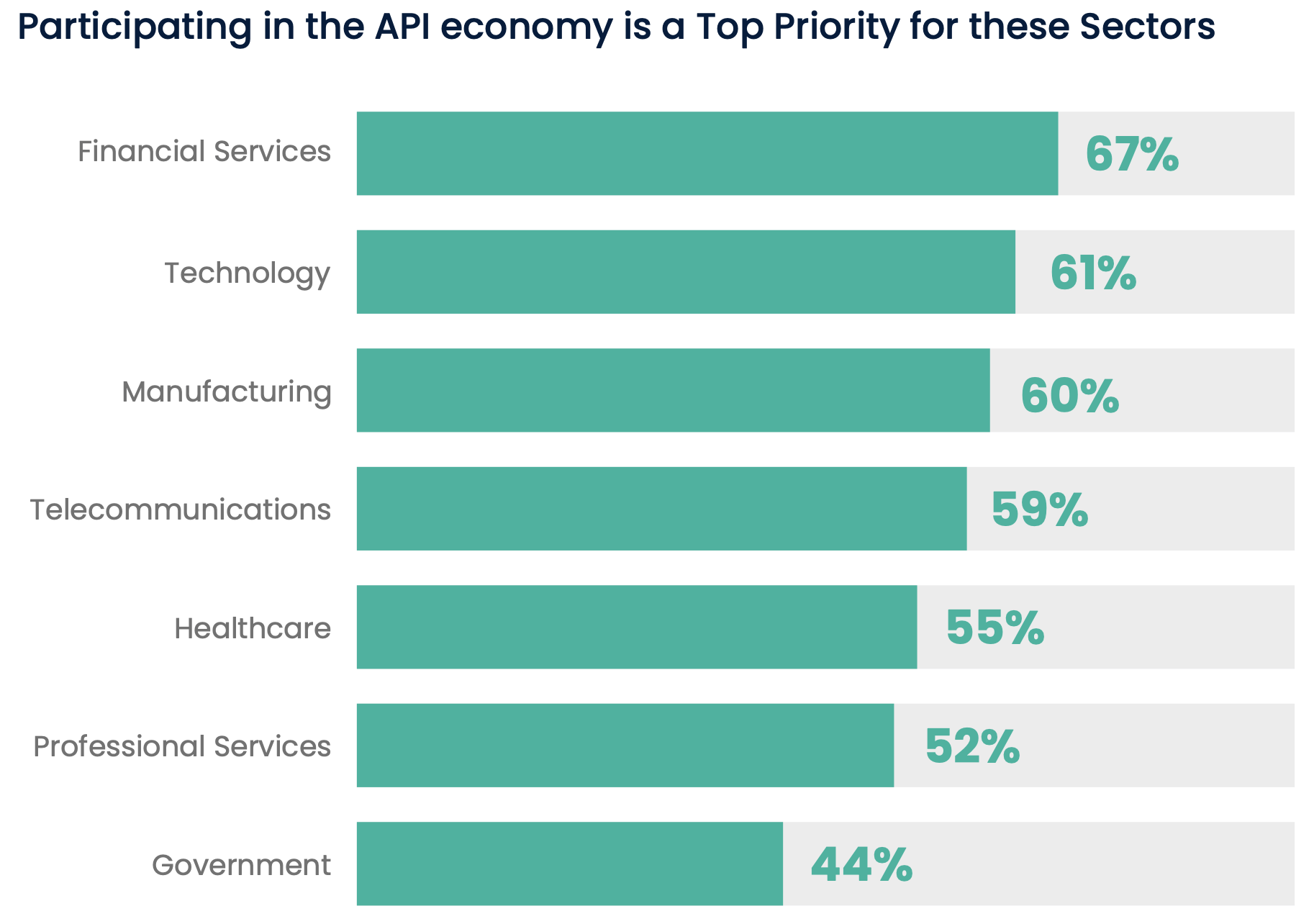
It’s not surprising, then, that 59% of enterprises say participating in the API economy is a top priority for their organization’s strategy, reports the State of APIs. This is especially true for the financial sector, which is often driven by Open Banking mandates.
The Rise of Microservices and Containers
As more enterprises migrate more significant tracts of their technology estates to the cloud, they are getting increasingly familiar with cloud-native technologies. As a result, many have started modernizing their applications, breaking them down into microservices that are hosted on containers, and that communicate via APIs. These APIs need to be tested rigorously to ensure that they are robust.
According to Java Developer Productivity Report, about a third (32%) of enterprises say they already use a microservices architecture for the primary application they develop. Additionally, a majority of developers report that they are looking forward to experimenting with microservices.
Developers Can’t Get Enough of APIs
Driven in part by an explosion in data, a need to link internal systems and digitalize processes end-to-end, the adoption of microservices, and more widespread Open API mandates, greater numbers of developers are relying on APIs.
Developers lean on APIs to connect internal systems. They also enable developers to couple applications with third-party sources of data and functionality, which can accelerate the creation of new features and drive innovation.
According to the 2021 State of the API Report, 49% of organizations say that over 50% of their development effort is spent on APIs.
Developer reliance on APIs is a trend that will continue to intensify. In 2022, 68% of developers expect to depend on APIs more than they did in 2021, shows data from the State of APIs survey.
All of this makes API testing more crucial. Already, API testing is the second most type of testing undertaken in organizations, according to the State of Quality Testing 2021. In a sign of things to come, a full 97% of testers say API testing is an important or very important skill to learn in order to succeed, says the State of Testing 2022.
As a result, testing loads are being shared with non-testers. Today, only 18% of development and testing teams say that “all testing is done by dedicated testers.” The dearth of testers has become so acute that in 36% of companies, 10-50% of testing is done by non-testers including developers, product owners, support teams, and end users, according to the State of Testing 2022.
API testing is significantly more efficient than time-intensive UI testing. Increased adoption of API testing automation can increase the efficiency of testing teams and potentially unburden other teams.
A Greater Demand for Speed and Agility
Software underpins the growth and success of digital economies and organizations. The ability to generate code quickly, flexibly and cost-efficiently is central to an organization’s ability to create competitive advantage, and be resilient in a business landscape characterized by extreme volatility.
This is why 86% of organizations use Agile or Agile-like development models, shows the State of Testing 2022. There are a few reasons developments teams adopt agile approaches to software development, but tied at the top of that list are two very telling ones. A full 64% of enterprises say that the two most important reasons for adopting Agile are to accelerate software delivery, and to enhance their ability to manage changing priorities, according to the State of Agile Report.
These methodologies are enabling teams to deliver more deployments more frequently. According to the State of Continuous Delivery Report, 30% of developers perform multiple deployments per week.
The challenge is that poor testing, and specifically API testing, practices are impeding the ability of these teams to deliver. According to the The State of Software Code Report, 84% of developers admit to being held back from deploying more often. According to the same report, 43% say testing is their biggest pain point. With 61% of organizations saying APIs are the leading type of testing they perform, it’s not hard to see how API testing is a significant challenge—one that automation can help alleviate.
The price of less-than-optimal API testing is high. Both poor software, and poor software delivery result in revenue losses and poor customer experience. According to the The Business of Software Report: Uncovering the Knowledge Gap, businesses risk up to $126 million in lost revenue due to ineffective software delivery. And 26% of organizations have actually reported losing a significant amount of users to errors, according to the The State of Software Code Report.
As organizations continue to compete in an increasingly digital battlefield, the importance of API testing automation will only grow. There is an urgent need for businesses to leverage solutions like Qyrus’ API Testing Automation Platform, which is 40% more efficient than existing code-based API testing systems—and can cut test execution time by at least 50%.
Back to school is around the corner in the Chicagoland area and though you may find yourself buying the same pens, pencils, and erasers as last year, while finding previously bought ones lying around the corners of the house, at least you won’t have to go rummaging across the store to find them again. And just as most stores adhere to the “back to school” atmosphere with defined sections for related items and requirements, a high quality testing solution does exactly the same. Coupling multiple related testing features can significantly impact test building process. This week’s Feature Friday is brought to you by Milton and Linto who will discuss Mobile performance profiling, a performance testing option that sits one click away from your functional tests on the Qyrus platform.
Tell us more about Mobile Performance Profiling offered by Qyrus, its use cases, and impact on testing and QA processes?
Milton: Performance profiling provides logs of memory, CPU, and network usage to show exactly how a device responds to any given application. While users like mobile applications, delays, battery consumption, memory consumption, and network requirements all play a vital role in application success.
Linto: And as different devices have different memory and network capabilities, covering a range of devices with the ability to monitor device vitals throughout the testing process enables maximum application coverage, leading to higher quality applications where functionality is device agnostic.
Does the same or similar functionality exist without Qyrus, and how do competitors address similar problems?
Linto: That’s a great question, and though there are multiple solutions for performance testing and profiling in the market, users would have to download, deploy, and maintain multiple devices and potential solutions to achieve similar performance profiling, metrics, and reporting capabilities.
Milton: Exactly, if end to end testing was required there would be a multiple solution approach, that requires a testing infrastructure, with devices, rather than a single solution answer. Qyrus differentiates itself by placing both performance and functional testing into a single integrated solution with all testing requirements in arms reach.
What is the overall impact of performance Profiling on the testing process?
Milton: Mobile performance profiling allows for insights on application functionality and usage across mobile devices. Dense applications that take a toll on mobile devices battery and memory requirements. Furthermore, high amounts of network usage make applications less accessible. Placing performance alongside functional testing ensures application functionality, accessibility, and integrity across a range of devices. Specifically, performance profiling, was developed to ensure that applications produce as minimal toll as possible on the devices.
Linto: And this data is then formulated into graphs and visual reports that can be downloaded and shared across teams. The ability to reuse functional tests for performance also gives you all of these testing advantages with little overhead or resource consumption.
How might Mobile Performance Profiling help testers, developers, and business technologists? What value can this feature bring?
Linto: Testers often use the full length of the features capabilities in converting a range of their functional sessions into performance tests as well. In doing so they can test mobile application accessibility and integrity across user scenarios and devices returning metrics and graphical reporting to Increase testing capabilities and coverage.
Milton: The developer is able to, alongside testing functionality, check the load times against different networks simulating high and low intensity scenarios while toggling network access. This allows developers to optimize their Mobile applications, run times, and loading speeds. Furthermore, toggling almost everything. including devices, developers can run a range of use cases across beta versions of application.
Linto: With graphical and visual reporting business analysts can easily build and execute functional and UI testing and performance profiling as well. Analyzing exactly which screens and network preferences cause delays. Referencing this data with user analytics and general traffic metrics business analysts can associate the most viewed or used application pages with optimal network, memory, and battery requirements to further assist in releasing high-quality, user-friendly applications.
How do you see the Qyrus’ performance profiling for mobility impacting day-to-day operations across organization?
Milton: Tests are built daily and though functional testing is important, having the perfect application is of no value if it only runs on a 5g network, with heavy memory consumption and battery usage. This is why throughout development and sprint cycles performance testing is pivotal. Qyrus places performance profiling clicks away from functional testing with minimal setup, or overhead.
Linto: And to navigate from functional to performance and back within the same application enables comprehensive testing. We see a large day to day impact as alongside every application release, feature update, or even UI change, testing functionality and performance of the application will be pivotal.
Having quick and easy access to all testing requirements streamlines the test building process. In this case specifically having functional and performance testing increases test coverage and offers another realm of testing, ensuring multiple facets of application integrity. In an era of technology, producing the best applications is a leading factor in success, making testing and quality assurance essential. Qyrus’ Mobile Performance Profiling streamlines performance testing making the overall testing process significantly more comprehensive with minimal cost and resource consumption. Join us next week as we discuss other Qyrus features that can enhance your quality assurance and testing lifecycle!
Jerin Mathew
Manager
Jerin Mathew M M is a seasoned professional currently serving as a Content Manager at Qyrus. He possesses over 10 years of experience in content writing and editing, primarily within the international business and technology sectors. Prior to his current role, he worked as a Content Manager at Tookitaki Technologies, leading corporate and marketing communications. His background includes significant tenures as a Senior Copy Editor at The Economic Times and a Correspondent for the International Business Times UK. Jerin is skilled in digital marketing trends, SEO management, and crafting analytical, research-backed content.